
A tulsi plant is more than a pot of green leaves in an Indian home. It is part of the morning routine, the evening diya, the cup of chai on a cold day and, for many families, a member of the household.
Yet it is also one of the plants people lose most often. If yours has gone dry, brown or lifeless, this guide will help you fix it. If you are just starting, it will help you pick the right type and grow it well.
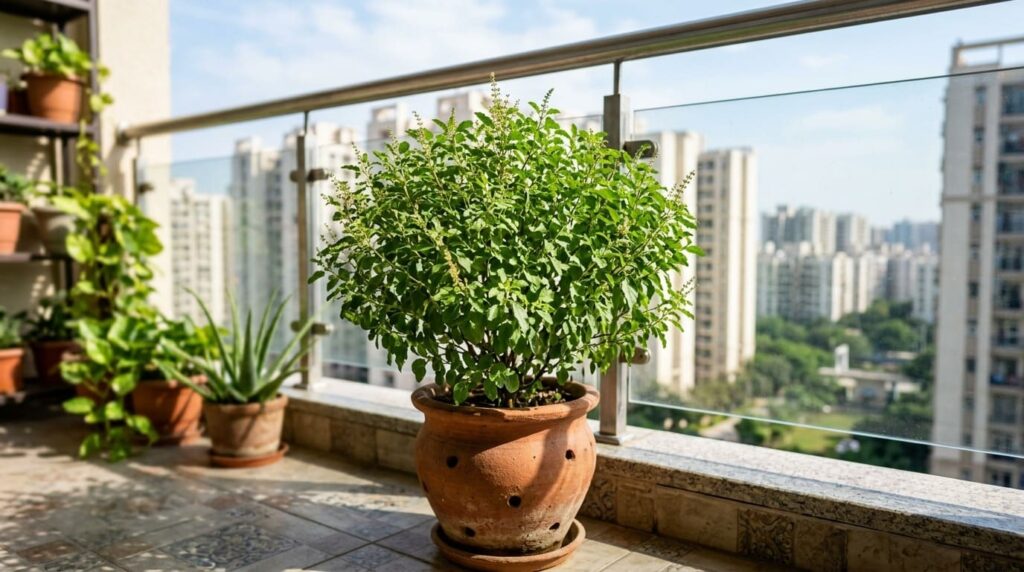
Quick Answer: What You Need to Know About the Tulsi Plant
- What it is: a sacred, aromatic herb also called holy basil.
- Scientific name: Ocimum tenuiflorum (also written Ocimum sanctum).
- Sunlight: 4 to 6 hours of direct sun every day.
- Water: only when the top inch of soil feels dry.
- Biggest killers: overwatering, cold, too little sun and letting it flower.
- Best direction: north, east or north-east, as long as it gets enough sun.
What Is a Tulsi Plant? (Tulsi Plant Information in English)
A tulsi plant is a small, bushy herb that belongs to the mint family. In English it is called holy basil. Most plants grow between one and three feet tall.
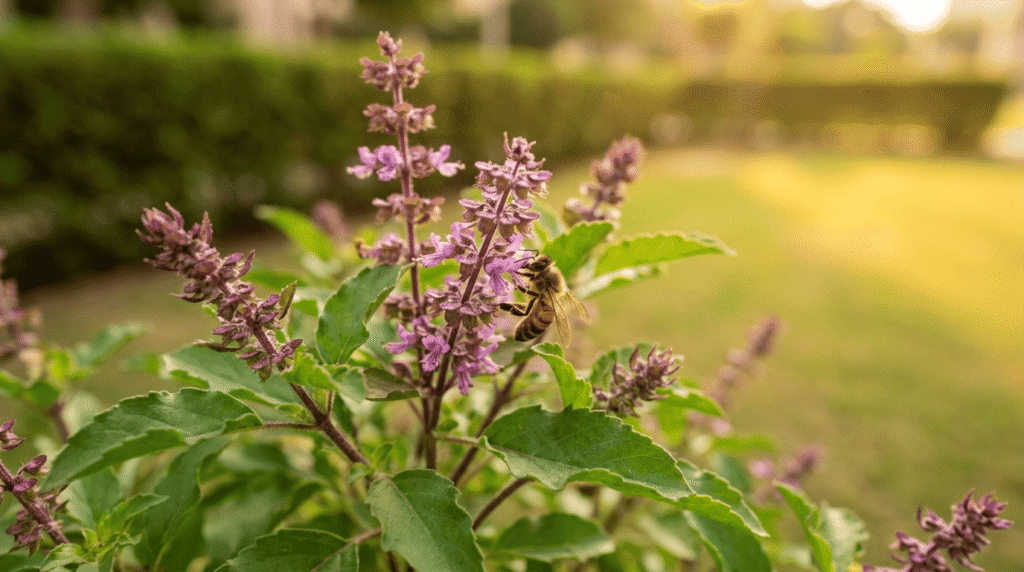
The leaves are oval with slightly ruffled edges and a strong, spicy fragrance. The stem is thin and a little hairy. Tiny purple or pinkish flowers grow in spikes called manjari, and these turn into tiny black seeds.
Scientific Name of the Tulsi Plant
The scientific name of the tulsi plant is Ocimum tenuiflorum. Many books and older sources still use Ocimum sanctum, so you will see both names. It belongs to the Lamiaceae family, the same family as mint, rosemary and lemon balm.
Why Is Tulsi So Sacred?
In Hindu tradition, tulsi is seen as a form of Goddess Lakshmi and is closely linked with Lord Vishnu. Families offer water to the plant every morning and light a diya near it in the evening. Many homes keep it in a raised stand called a Tulsi Vrindavan.
Tulsi Vivah, celebrated in the Kartik month around November, marks the ceremonial wedding of tulsi to Vishnu. Tulsi leaves are also offered during the Satyanarayan Pooja.
10 Lines on Tulsi Plant in English
- Tulsi is a sacred and medicinal herb found in almost every Indian home.
- Its scientific name is Ocimum tenuiflorum.
- It is also known as holy basil.
- It belongs to the mint family, Lamiaceae.
- The leaves are fragrant and are used in tea, kadha and puja.
- It grows well in pots, balconies and courtyards.
- It needs plenty of sunlight and well-drained soil.
- Regular pruning keeps the plant bushy.
- Tulsi is used in Ayurveda for coughs, colds and stress.
- It is worshipped daily by many Hindu families.
About Tulsi Plant in Hindi (तुलसी का पौधा)
तुलसी का पौधा भारतीय घरों में पूजा और आयुर्वेद, दोनों के लिए बहुत खास माना जाता है। इसे अंग्रेज़ी में होली बेसिल कहते हैं और इसका वैज्ञानिक नाम Ocimum tenuiflorum है।
Tulsi Plant Benefits in Hindi (तुलसी के फायदे) and Tulsi Plant Uses in Hindi
- सर्दी, खांसी और गले की खराश में तुलसी का काढ़ा या चाय पारंपरिक रूप से पी जाती है।
- तनाव कम करने के लिए तुलसी की चाय का इस्तेमाल होता है।
- पाचन ठीक रखने में तुलसी के पत्ते सहायक माने जाते हैं।
- मुंह की बदबू और मसूड़ों की सफाई के लिए पत्ते चबाए जाते हैं।
- त्वचा की हल्की समस्याओं पर पत्तों का लेप लगाया जाता है।
ध्यान रखें: ये पारंपरिक उपयोग हैं। किसी बीमारी में डॉक्टर की सलाह ज़रूर लें।
Types of Tulsi Plant: Which One Should You Grow?
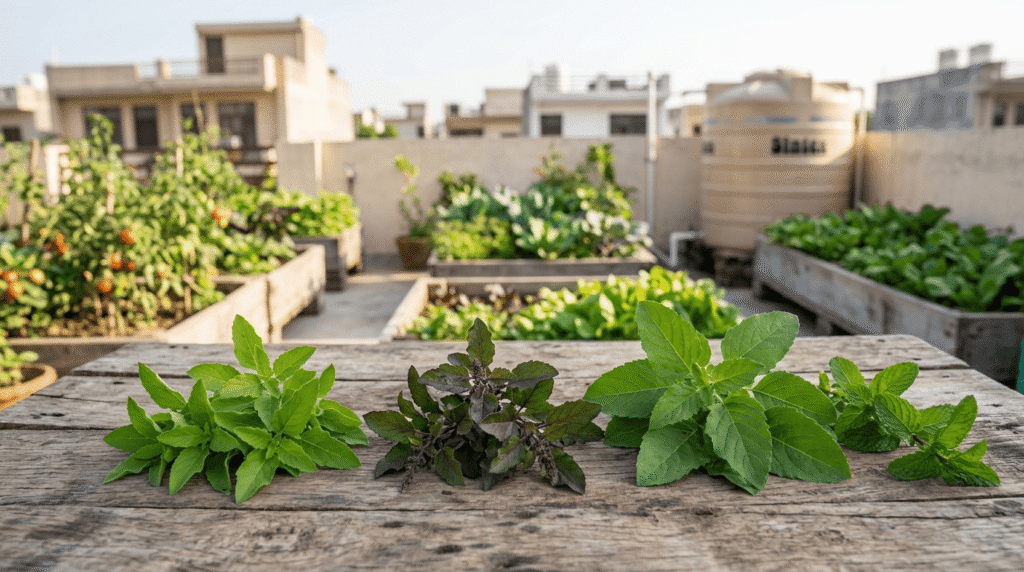
Many people think tulsi is just one plant. In reality, there are several types, and they differ in leaf colour, aroma and use. Names also change from region to region, which causes a lot of confusion.
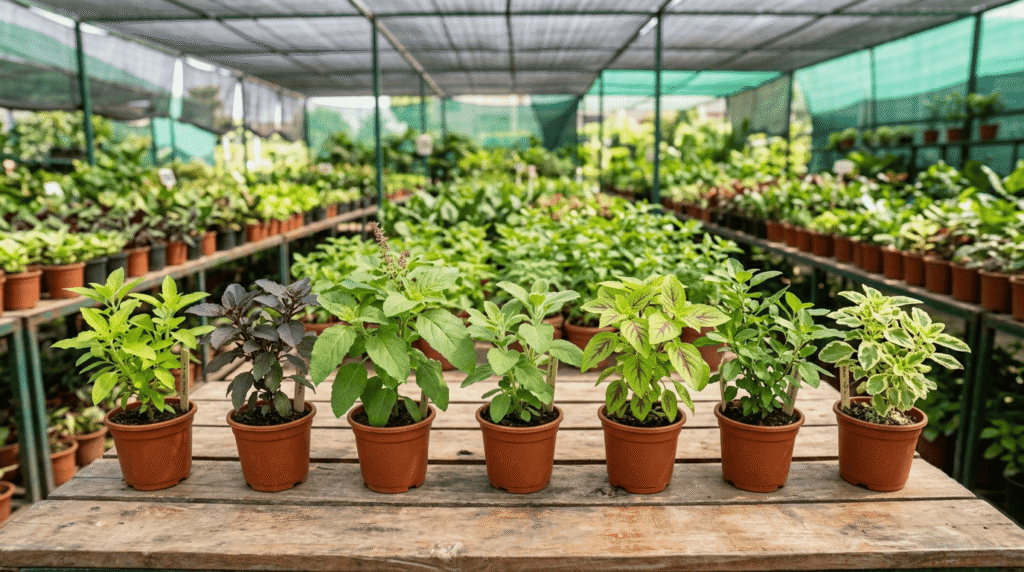
| Type | Leaf colour | Aroma and taste | Best for |
|---|---|---|---|
| Rama tulsi (green / sweet tulsi) | Light green | Mild, slightly sweet | Daily puja, tea |
| Krishna / Shyam tulsi (black tulsi) | Purple-green | Stronger, a little sharper | Kadha, medicinal use |
| Vana tulsi | Large, soft green leaves | Strong, clove-like | Outdoor gardens, bigger pots |
| Kapoor tulsi | Green, slightly fuzzy | Camphor-like | Cooler regions, tea |
| Laung tulsi | Green | Clove-like | Cooking, aroma |
| Tilak tulsi | Green | Mild, sweet | Ornamental, puja |
| Mint tulsi | Green | Minty, fresh | Teas and drinks |
Note: Vana and Rama tulsi are sometimes mixed up in nurseries. The botanical names also vary between sources. When buying, ask the nursery which species they are selling.
Krishna Tulsi Plant (Black Tulsi Plant)
The Krishna tulsi plant, also called Shyam tulsi or black tulsi, has purple-tinged leaves and stems. It tastes slightly sharper than the green type. Many families prefer it for kadha and for worship.
One interesting thing: the purple colour can fade when the plant is grown in different light. Some gardeners have seen a dark-leaved tulsi lose its purple tinge when moved outdoors.
Rama Tulsi Plant (Sweet Tulsi Plant)
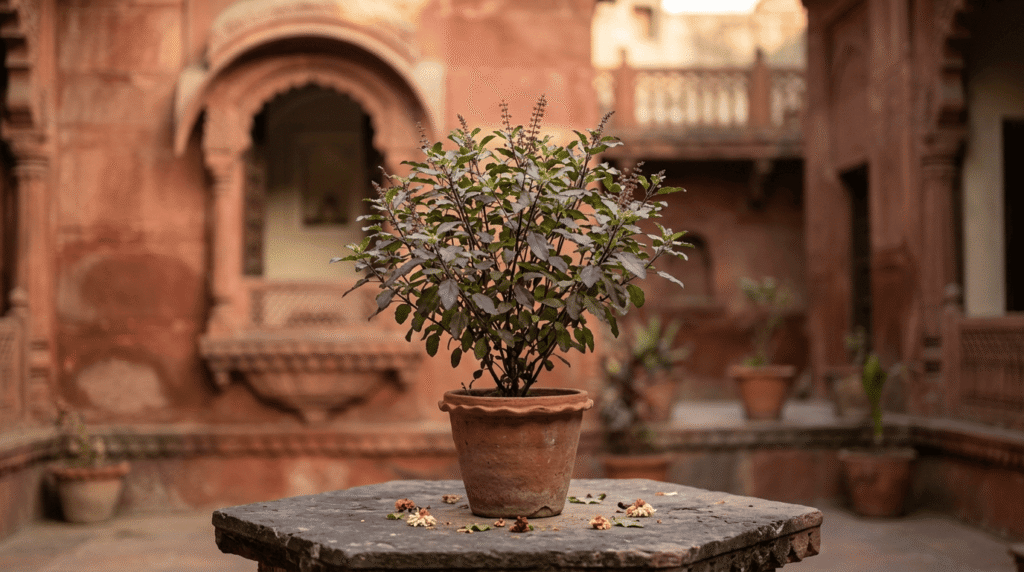
Rama tulsi has bright green leaves and a milder, sweeter taste. It is the most common type in Indian homes and the easiest to find in a nursery. If you want just one tulsi for the courtyard or balcony, this is a safe choice.
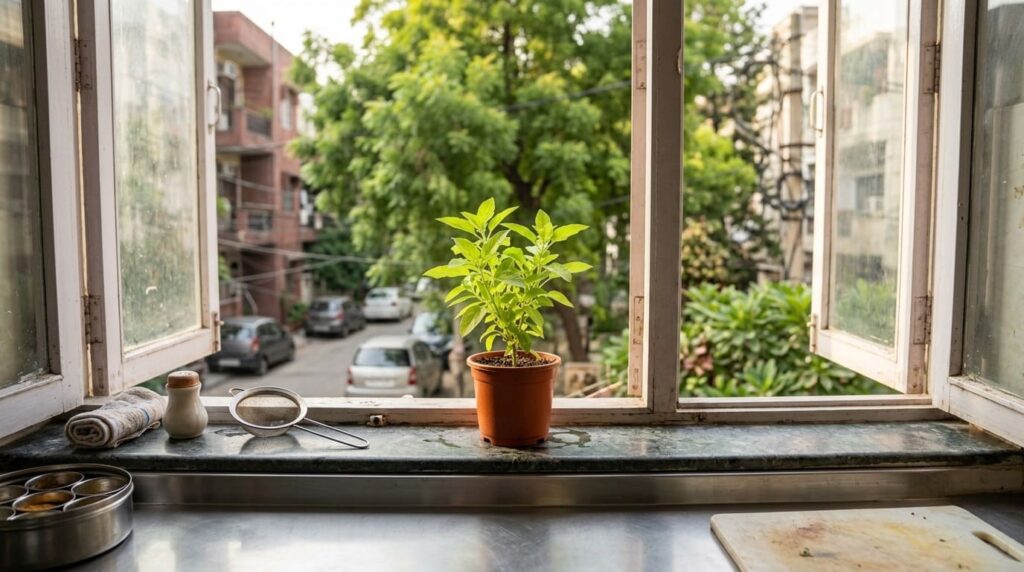
Vana Tulsi Plant and Kapoor Tulsi Plant
The Vana tulsi plant is a bigger, bushier type with soft leaves and a strong aroma. It does well outdoors and can grow quite tall.
The Kapoor tulsi plant smells like camphor. It copes better with cooler weather, which is why it is popular with growers in colder regions.
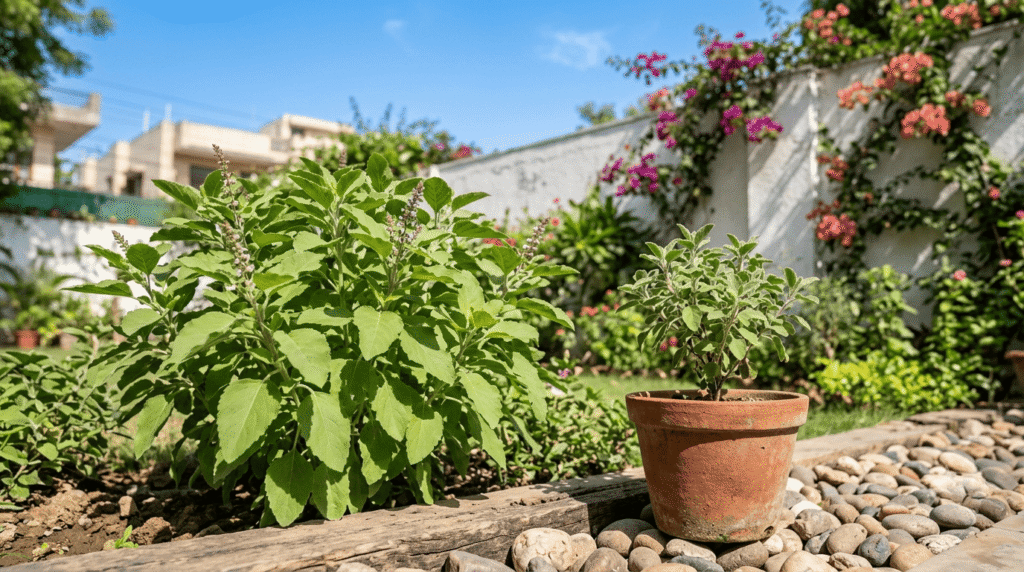
Laung Tulsi, Tilak Tulsi and Mint Tulsi Plant
Laung tulsi smells like cloves and is used for flavour. Tilak tulsi is a gentle, ornamental type. Mint tulsi has a fresh, minty smell and works well in drinks.
What Are the Benefits of a Tulsi Plant? (Tulsi Plant Benefits and Tulsi Plant Uses)
Tulsi is a popular holy basil tulsi plant in Ayurveda, and modern researchers are studying it too. Still, it is important to be honest: many benefits come from traditional use, and not all are proven in large human trials.
You can read a detailed scientific overview in this research review on tulsi.
Traditional and Everyday Uses
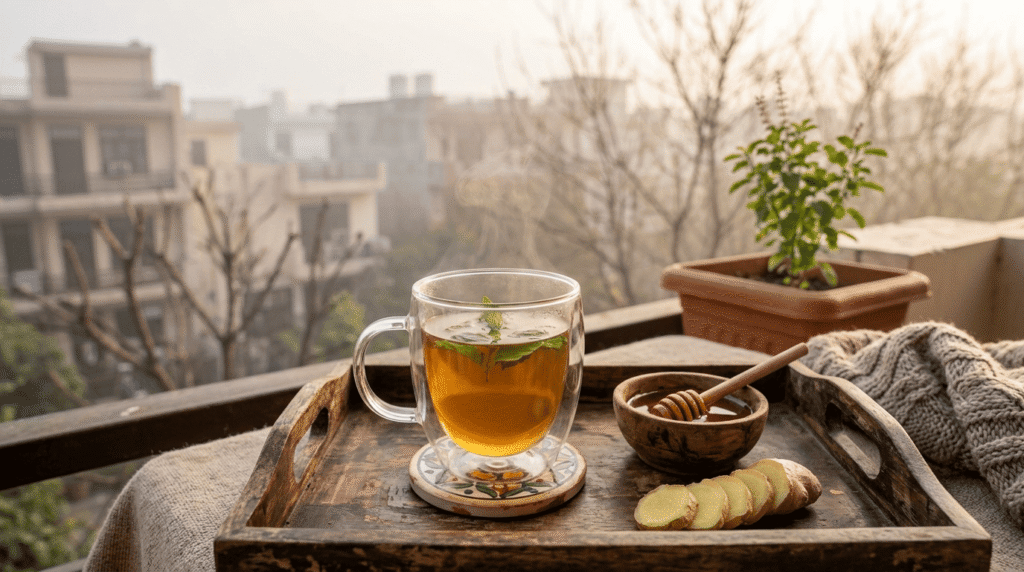
- Cough and cold: fresh leaves boiled with ginger and honey is a common home remedy.
- Stress: tulsi is called an adaptogen, meaning it may help the body cope with stress.
- Digestion: a few leaves in warm water after meals is a common habit.
- Mouth care: chewing leaves is a traditional way to freshen the mouth.
- Skin: crushed leaves are applied for minor skin problems.
- Air and mosquitoes: people believe tulsi purifies air and repels insects, but you would need a lot of plants for a noticeable effect.
The main compound behind its smell is eugenol, which is also found in cloves.
Easy Ways to Use Tulsi Leaves
- Tulsi tea: add 8 to 10 fresh leaves to boiling water, steep for 5 minutes and sip.
- Tulsi kadha: boil leaves with ginger, black pepper and a little jaggery.
- Tulsi water: soak leaves overnight and drink in the morning.
- Fresh leaves: a few leaves in your regular chai during winter.
Who Should Be Careful?
Tulsi is safe for most people, but speak to your doctor first if you are pregnant or breastfeeding. People on diabetes or blood-thinning medicines should also check first, because tulsi may affect blood sugar. Start with small amounts.
This article is for general information and is not medical advice.
Where to Keep a Tulsi Plant for Home: Direction, Light and Decoration
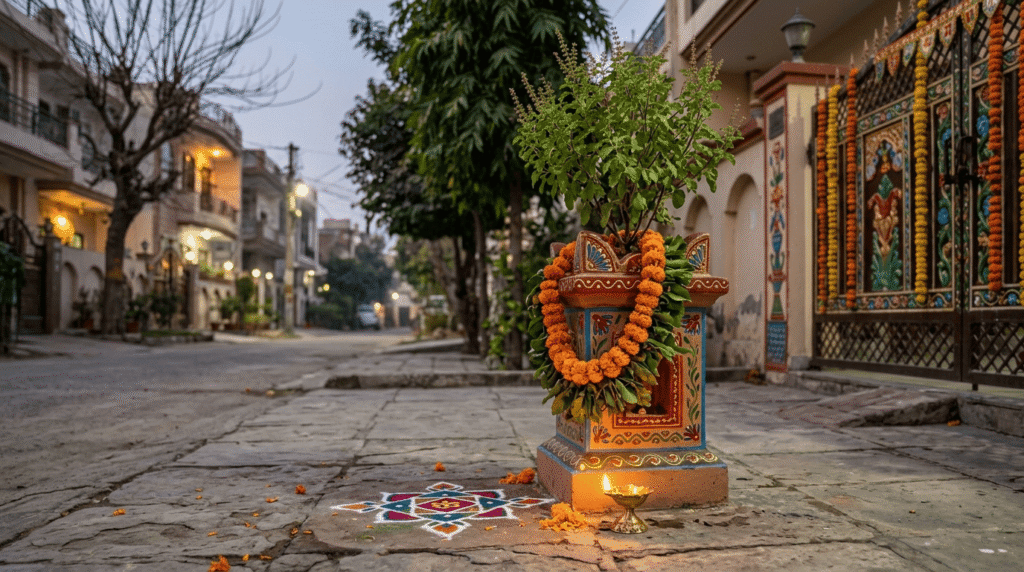
Tulsi Plant Direction
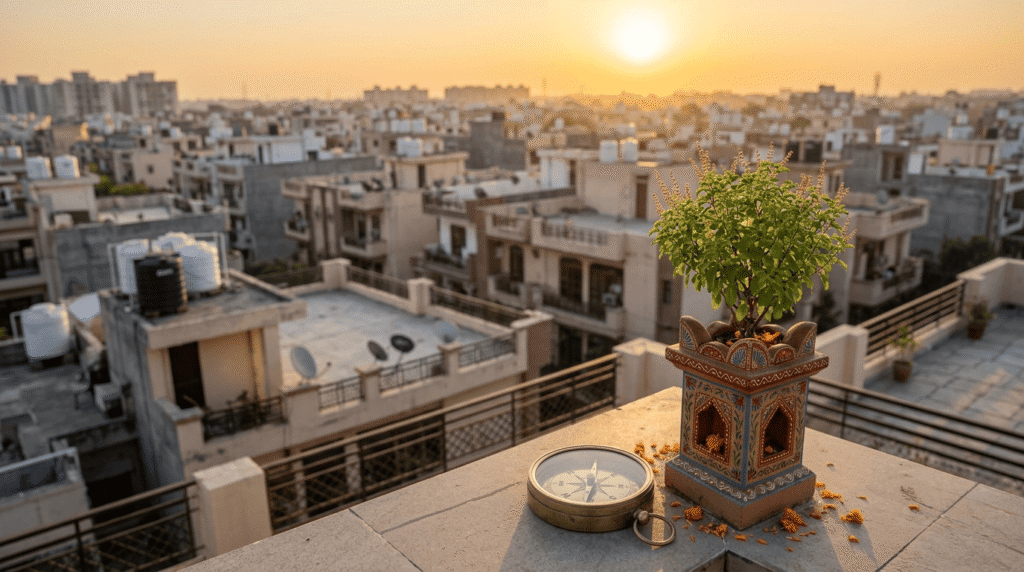
According to Vastu tradition, the best direction for a tulsi plant is north, east or north-east. Many people avoid keeping it in the south. This is a belief, not a rule of botany.
From a gardening point of view, sunlight matters more than direction. If your north-facing balcony gets no sun, the plant will struggle, so choose the sunniest spot that also suits your tradition.
Balcony, Window or Courtyard?
A south-facing or west-facing balcony in Delhi NCR gets very strong sun in summer. Tulsi can handle it, but pots may dry out fast. In that case, give it light shade from 1 to 4 pm in peak May and June heat.
If you live in an apartment, look at our terrace gardening ideas for ways to set up a small herb corner.
Tulsi Plant Decoration Ideas
- Tulsi Vrindavan: a traditional raised stand with a niche for a diya.
- Painted terracotta pots: simple, eco-friendly and festive.
- Rangoli around the base: especially during Tulsi Vivah.
- Hanging or wall-mounted pots: if you want to save space, see our tips on vertical garden care.
- Pair with marigold: a good match from our Indian flower list.
Best Tulsi Plant Pot: Size, Material and Drainage
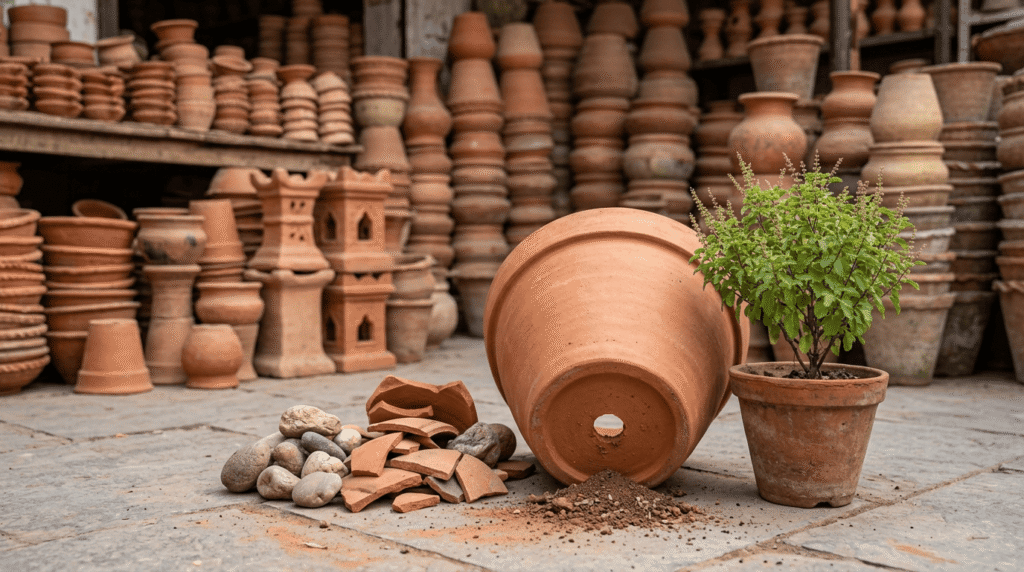
A good tulsi plant pot has drainage holes. Without them, water collects at the bottom and the roots rot. This is one of the most common reasons tulsi dies.
- Size: a 10 to 12 inch pot is comfortable for a full-grown plant. A small tulsi plant in a 6-inch pot will outgrow it within a couple of months.
- Terracotta: breathable and cheap, but dries faster in summer.
- Ceramic or plastic: hold water longer, so water less often.
- Grow bags: light and easy to move on a balcony.
Always fill the bottom with a thin layer of broken pot pieces or small stones, and keep the saucer empty after watering.
How to Plant Tulsi: Seeds or Sapling?
Starting with a Tulsi Plant Sapling
A tulsi plant sapling is the easiest way to begin. Local nurseries stock it almost year-round, and you can also buy tulsi plant online from several garden stores.
When choosing a sapling, look for:
- Bright, firm leaves with no spots
- A sturdy stem, not a floppy one
- No white fluff or tiny insects under the leaves
- Roots that are not circling out of the drainage hole
At the time of writing, a healthy tulsi plant online usually costs around ₹200 to ₹300, depending on the type and pot. Prices change, so always compare.
Growing from Seeds
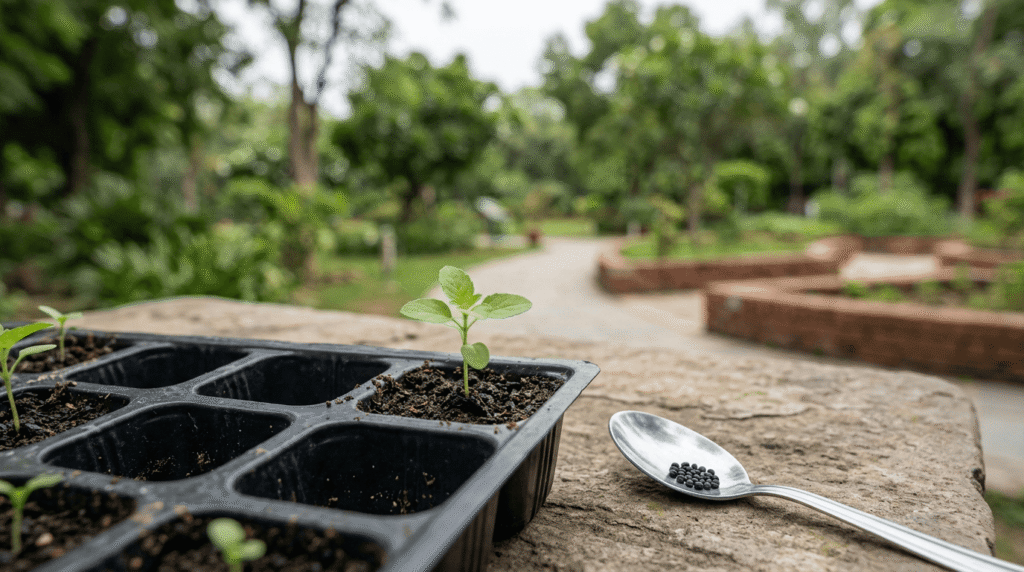
Tulsi seeds are tiny, like poppy seeds. You can buy them or collect them from the dried manjari of an old plant.
Step-by-Step: How to Plant Tulsi
- Fill a pot with a loose mix: garden soil, compost and a little sand.
- Wet the soil lightly.
- Sprinkle the seeds on top and press gently. Cover them with just a thin dusting of soil, because they need light.
- Keep the pot in a bright, warm spot.
- Mist lightly every day.
- Seeds usually sprout in about a week in warm weather.
- When seedlings have 4 to 6 leaves, thin them or move them to bigger pots.
Best Time to Plant in Delhi NCR
February to April and the early monsoon (July to August) work best. Avoid sowing in December and January. Delhi nights can drop to 4 to 6°C, and tulsi does not like cold.
Growth of Tulsi Plant: What to Expect
- Week 1–2: seeds sprout.
- Week 4–6: seedlings have several pairs of leaves.
- Week 8–10: the plant is bushy enough for light picking.
- After 3 months: flowering starts. Remove the manjari to keep the leaves coming.
Tulsi Plant Care: How to Take Care of Tulsi Plant at Home
If you have ever wondered how to care tulsi plant properly, the answer is surprisingly simple. Give it sun, water it carefully, prune it often and protect it from cold. Here is each step.
Sunlight
Tulsi loves sun. Give it at least 4 to 6 hours of direct light daily. If the leaves look pale or the stems grow long and thin, the plant needs more light.
Watering
Here is the golden rule: check the soil first. Push a finger into the soil. If the top inch is dry, water. If it is still damp, wait.
In peak summer, this may mean daily watering. In winter, once or twice a week is usually enough. Many guides tell you to water every day, but that is exactly how people end up with root rot.
Soil and Repotting
Tulsi likes loose, well-drained soil with some compost. Heavy clay holds too much water. Repot once a year, or when roots peek through the bottom.
Pruning Tulsi Plant: The Secret to a Bushy Plant
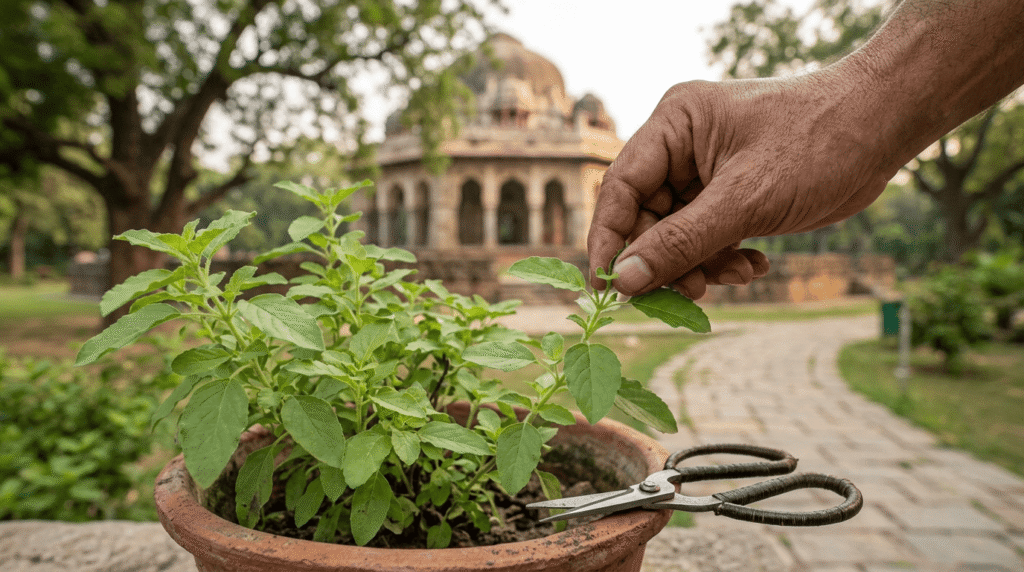
Pruning tulsi plant regularly is the single best way to get a thick, leafy plant. Without it, tulsi grows tall, thin and bare at the bottom.
- Wait until the plant has at least 6 to 8 leaves.
- Using clean scissors or your fingers, cut or pinch the top 2 to 3 inches.
- Cut just above a pair of leaves.
- Never remove more than one-third of the plant at once.
- Repeat every 2 to 3 weeks.
Pinch off flower buds (manjari) as soon as they appear. Once the plant flowers, it puts its energy into seeds and the leaves become fewer and smaller.
Homemade Fertilizer for Tulsi Plant
You do not need strong chemicals. Tulsi grows well with gentle, organic food:
- Vermicompost: a handful per 10-inch pot every 3 to 4 weeks.
- Garden compost: mix a thin layer into the top soil each month.
- Banana peel or kitchen-waste compost: only after it has fully broken down.
- Used tea leaves: wash them, dry them and mix a small amount into the soil.
Too much fertilizer can burn the leaves, so less is better. More nitrogen gives more leaves, but it does not make the plant stronger.
Seasonal Care in India
- Summer: give afternoon shade during peak heat and water in the morning or evening.
- Monsoon: make sure the pot drains well and air can move around the plant. Humidity is when fungus appears.
- Winter: move the pot to the sunniest spot, reduce watering and cover on frosty nights. Our winter flowers guide has more on cold-season watering.
- For general mulching and sustainable tips, see our outdoor plants guide.
Dying Tulsi Plant? How to Save a Tulsi Plant from Dying
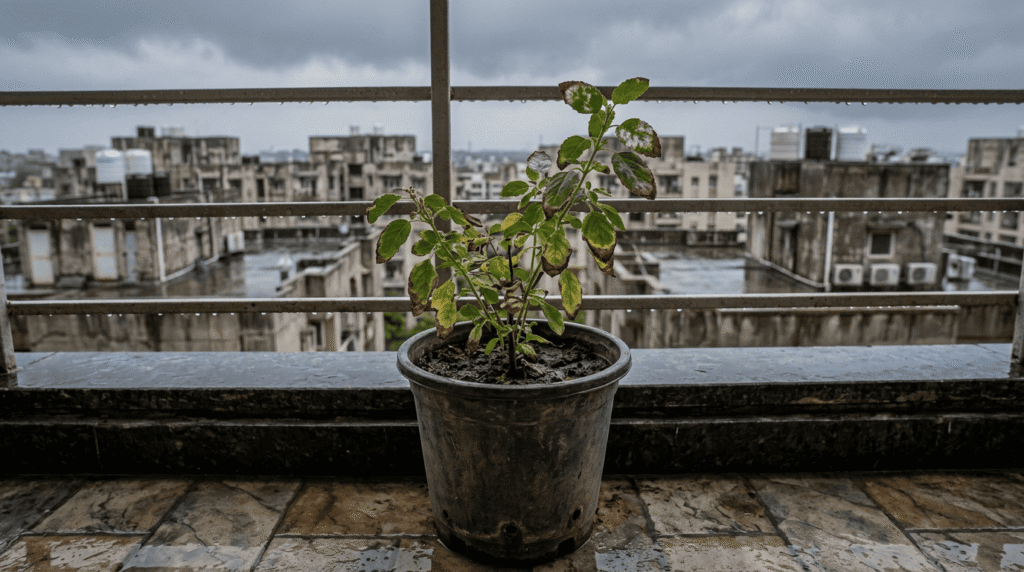
Don’t panic. Most dying tulsi plants can be saved if you act early. First, work out what is wrong.
Why Does a Tulsi Plant Die?
| What you see | Likely cause | What to do |
|---|---|---|
| Tulsi plant leaves turning brown at the edges | Too little water, strong afternoon sun, or fertilizer burn | Water deeply, give afternoon shade, flush the soil, stop feeding for a month |
| Yellow leaves and a soft, dark stem base | Overwatering and root rot | Stop watering, repot in dry, fresh soil, trim rotten roots |
| Leaves drooping, stems thin and long | Not enough sun | Move to a brighter spot, then prune |
| Leaves dropping in January | Cold stress | Move indoors or cover at night, reduce water |
| White fluffy patches or powder | Mealybugs or powdery mildew | See the next section |
| Plant flowers and looks tired | Natural seed cycle | Prune the manjari, cut back, feed lightly |
Tulsi Plant Leaves Turning Brown: The Simple Test
Look at where the browning starts. Crispy edges usually mean thirst or sun-burn. Brown, mushy patches at the bottom mean too much water.
Tulsi Plant White Fungus: What Is It?
Tulsi plant white fungus is usually one of two things. Powdery mildew looks like white dust on leaves, while mealybugs look like small cotton balls on stems and leaf joints.
To check, wipe the white patch with a tissue. Dust that smears is likely mildew. Tiny soft insects mean mealybugs.
What to do:
- Remove the worst leaves and throw them away, not into compost.
- Move the pot to a place with better airflow.
- Spray a mild neem oil mix: about 5 ml neem oil and a few drops of liquid soap in 1 litre of water.
- Spray in the evening and repeat weekly for 3 to 4 weeks.
- Avoid wetting the leaves at night.
Aphids, whiteflies and spider mites can also attack. The same neem spray works for most of them.
Step-by-Step Rescue Plan for a Dying Tulsi Plant
- Take the plant out of its pot and check the roots. White or light brown roots are healthy. Black, mushy roots are rotten.
- Trim rotten roots with clean scissors.
- Repot in fresh, loose soil with good drainage.
- Cut away dead stems and brown leaves.
- Place in bright light, but not harsh afternoon sun.
- Water lightly, then wait for the top inch to dry.
- Skip fertilizer for 3 to 4 weeks.
- Be patient. New leaves usually appear in 2 to 3 weeks.
Is Your Tulsi Dead or Just Dormant?
Scratch the stem gently with your thumbnail. If you see green underneath, it is alive. If it is brown and dry all the way through, and the roots are brittle, the plant is gone.
What to Do With a Dead Tulsi Plant
Many families do not throw a dead tulsi plant in the dustbin. Common practices include placing it at the base of a tree, immersing it in flowing water, or burying it in the soil. Customs differ, so ask your family or priest if you want to follow a specific tradition.
Collect the seeds from the dried manjari first. They will give you a new plant for free.
Buy Tulsi Plant Online or Find a Tulsi Plant Near Me
When you want to buy tulsi plant online, check a few things first:
- Does the seller show real photos of the plant, not stock images?
- Is the plant nursery-grown and shipped with its soil?
- What is the return or replacement policy?
- Which type is it? Krishna, Rama, Kapoor or something else?
For a tulsi plant near me search, visit a local nursery in person. You can see the plant, check for pests and ask for care advice. In Noida, Gurugram and across Delhi NCR, early morning is the best time to visit, when plants are fresh.
If you want help choosing and setting up a tulsi corner at home, our team offers chemical-free garden care and setup services. You can read more about our chemical-free gardening services.
Tulsi Plant for Students: How to Make a Herbarium Sheet
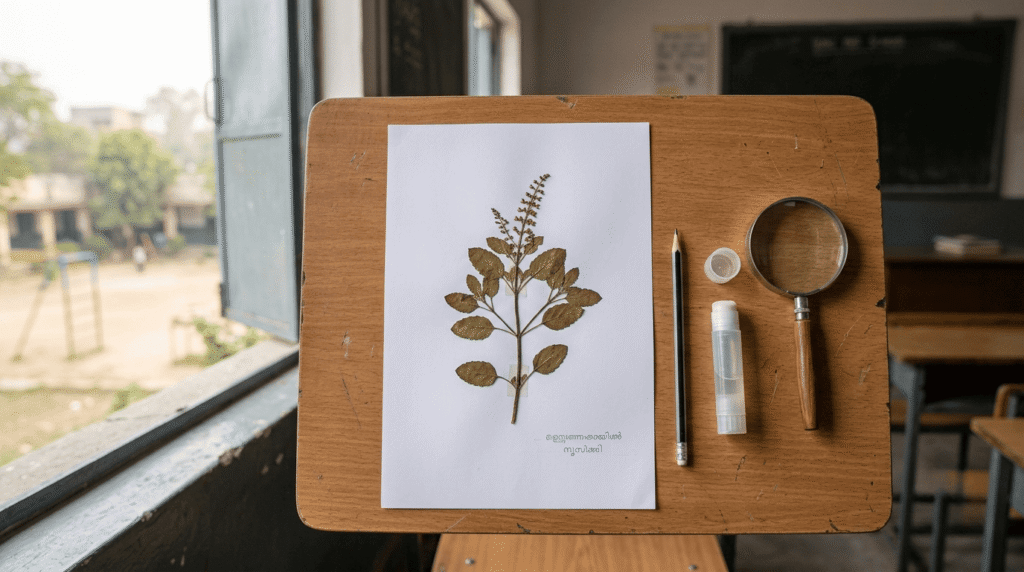
Teachers often ask students to make a herbarium sheet of tulsi plant. It is easy and fun.
- Pick a healthy stem with leaves and, if possible, a manjari.
- Place it between sheets of newspaper.
- Press under heavy books for 5 to 7 days. Change the paper once or twice.
- Glue the dried stem on a white drawing sheet.
- Write the common name, scientific name (Ocimum tenuiflorum), family (Lamiaceae), date and place of collection.
Grow Your Own Herb Corner
Tulsi pairs well with other easy herbs. Mint, coriander and basil share similar needs. You can also try to grow Brahmi at home, which loves more water than tulsi.
Final Thoughts on the Tulsi Plant
Growing a tulsi herb plant is easy once you know what it needs: sun, careful watering, regular pruning and a pot that drains well. Most problems come from too much love in the form of water.
Start small, watch the leaves, and adjust. Your tulsi will tell you what it needs.
FAQs About the Tulsi Plant
Rama tulsi is the easiest and most common. Krishna tulsi is a good second choice if you like a stronger taste.
Yes, if it gets 4 to 6 hours of direct light near a bright window. Without enough light, it becomes thin and weak.
Water when the top inch of soil feels dry. That could be daily in summer and once or twice a week in winter.
The most common reasons are overwatering, cold weather, too little sun, flowering and pests. Check the roots and soil first.
Yes, but pick a few at a time and take them from the tips. This also helps the plant grow bushier.
Speak to your doctor first. Safety information for pregnancy and breastfeeding is limited.
In warm climates it can live for years. In colder places, it may last only a season.
Tradition prefers north, east or north-east. For the plant’s health, pick a spot with good sunlight.
Need a hand with a struggling tulsi, or want a herb corner set up at home? Our team at Maali Bhaiya would be happy to help with chemical-free care across Noida, Gurugram and Delhi NCR.