
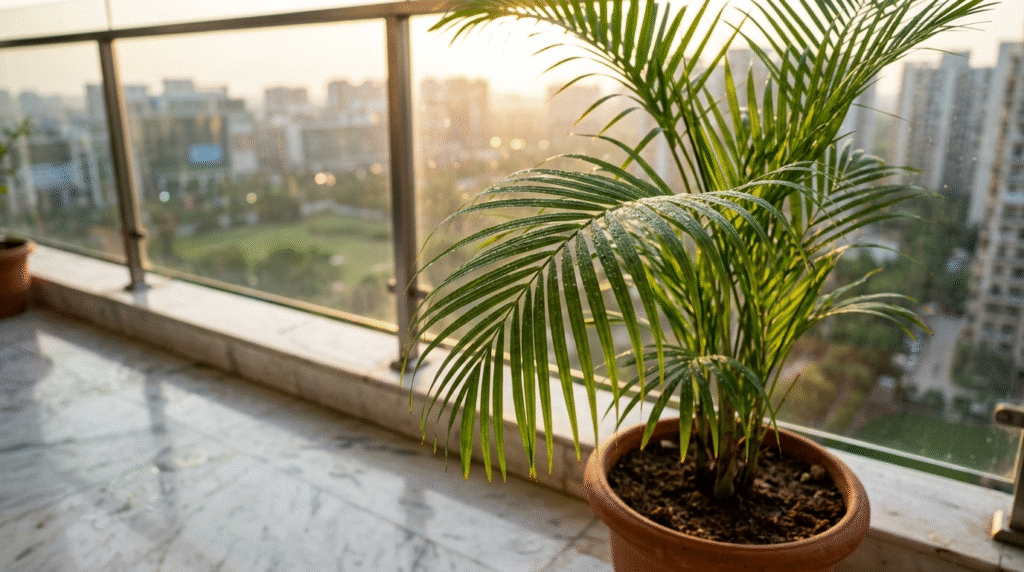
If you’ve ever walked past a nursery and stopped dead in your tracks because of a palm plant swaying gently near the entrance, you’re not alone. There’s something about those broad, arching fronds that instantly makes a space feel calmer, greener, and a little more like a holiday. But here’s the thing — not every palm plant suits every home. Some love bright light, some are perfectly happy tucked away in a dim corner. Some are safe around curious pets and toddlers, and a couple absolutely aren’t. This guide covers everything in one place: the best palm plant varieties for Indian homes, how to actually keep one alive (and thriving), common problems and how to fix them, and a straightforward buying guide so you don’t end up overpaying or bringing home the wrong plant for your space.
What Is a Palm Plant, Really?
Palms belong to the botanical family Arecaceae, and there are over 2,500 species of them growing across the world. Only a small number are suited to being grown indoors, and that’s really what this guide focuses on. Every palm plant has one thing in common — evergreen fronds. These leaves stay on the plant all year, though older ones do naturally yellow and drop off as new growth appears at the crown. Most palms are native to tropical and subtropical regions — think Madagascar, Southeast Asia, and the Caribbean. That’s exactly why they do so well in Indian homes, especially in warmer states, and why they’ve become such a popular choice for balconies, living rooms, and office corners alike.
Benefits of Keeping a Palm Plant at Home
A palm plant does a lot more than fill an empty corner. Here’s what you’re actually getting when you bring one home.
- Air purification — NASA’s Clean Air Study found several common palm varieties, including the Areca Palm and Bamboo Palm, help filter indoor air pollutants like formaldehyde.
- Natural humidity — palms release moisture through their fronds, which can genuinely help in dry, AC-heavy Indian homes.
- Low daily effort — most varieties only need watering every 7–10 days, making them ideal for people who travel often or simply forget.
- Instant visual impact — a single well-placed palm plant can make a room feel finished in a way that smaller plants often can’t.
- Cultural and vastu significance — more on this right below, because it’s a question we get asked constantly.
Vastu Shastra and Palm Plant Placement
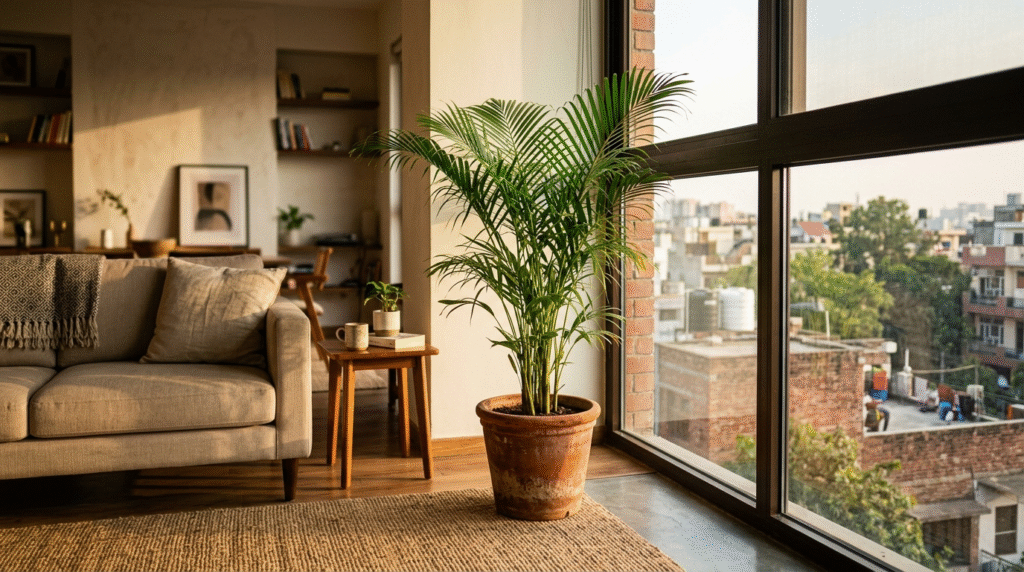
If you’ve been searching for a palm plant with vastu benefits in mind, you’re in good company — this is one of the most common questions we hear from customers setting up a new home. According to vastu principles, palm plants are considered auspicious when placed in the north or east direction of a room, where they’re believed to encourage positive energy flow and prosperity. The Areca Palm, in particular, is a popular vastu-friendly choice for living rooms and entryways. A quick practical tip: avoid placing any palm plant directly opposite your main entrance facing inward, as vastu experts generally recommend plants flank the sides rather than block the direct line of sight.
12 Best Types of Palm Plants for Indian Homes
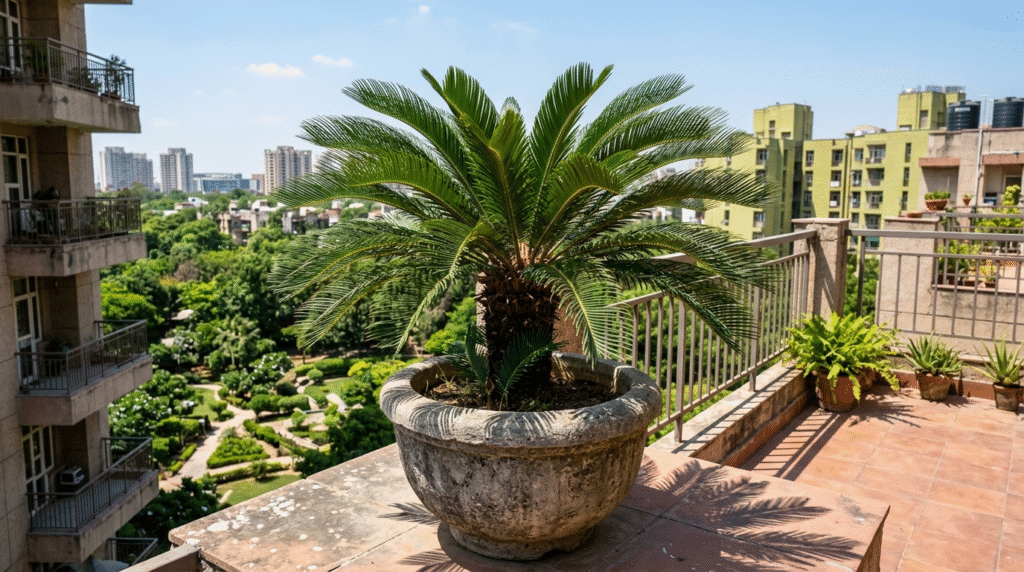
Here’s where it gets interesting. Not all palms look — or behave — the same way. Below are the 12 varieties most commonly available and best suited to Indian climates and homes.
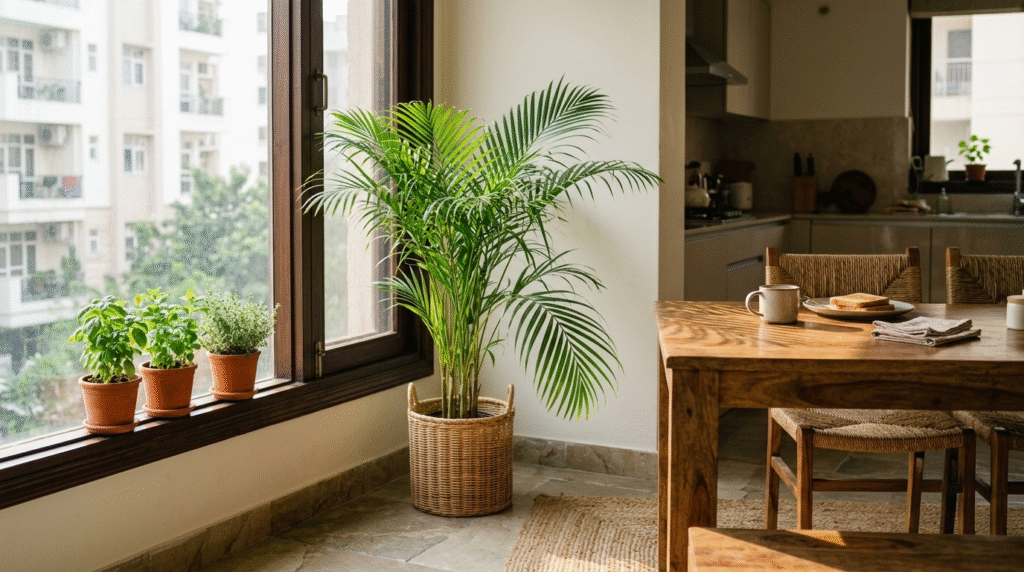
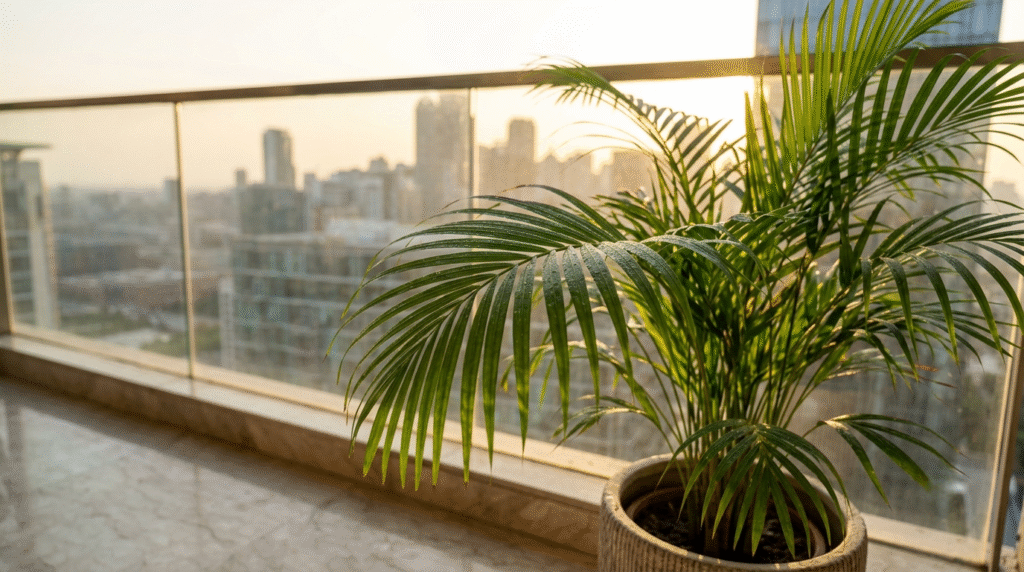
- Areca Palm (Dypsis lutescens) The Areca Palm is easily the most popular palm plant in Indian homes, and for good reason. Its feathery, bamboo-like fronds arch gracefully in every direction, giving it a full, bushy look that instantly softens a room. It’s also one of the better air-purifying options on this list, actively filtering out common toxins. Place it a few feet from a bright window, and it’ll reward you with steady, easy growth.
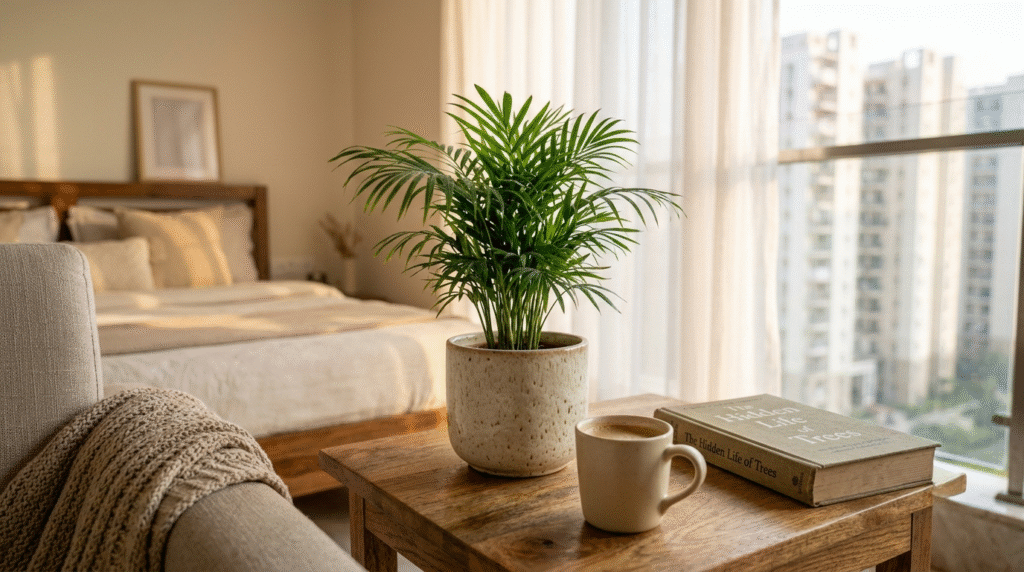
- Parlour Palm (Chamaedorea elegans) If you live in a small apartment in Mumbai or Bangalore, the Parlour Palm was practically made for you. It stays compact — usually 2 to 3 feet indoors — and is genuinely one of the most forgiving houseplants around. It tolerates low light better than most palms and doesn’t mind if you occasionally forget to water it. A great first plant if you’re new to indoor gardening.
- Lady Palm (Rhapis excelsa) The Lady Palm has fan-shaped, glossy green fronds that look almost architectural — it’s a favourite in office lobbies and hotel lounges for that exact reason. It handles fluctuating temperatures and light levels with ease. Because of its clumping growth pattern, it also works beautifully as a natural room divider in open-plan homes.
- Bamboo Palm (Chamaedorea seifrizii) Named for its slender, cane-like stems, the Bamboo Palm brings a genuinely tropical feel into any room. It releases more moisture into the air than most other varieties, acting almost like a natural humidifier. Here’s a real plus for pet owners: the Bamboo Palm is non-toxic to both cats and dogs, so it’s one of the safer palm plant choices if you share your home with animals.
- Kentia Palm (Howea forsteriana) The Kentia Palm has serious presence — tall, elegant, with sweeping fronds that create a canopy effect. It’s often the palm plant you’ll spot at Indian weddings and celebrations, symbolising growth and good fortune. It tolerates low light and general neglect better than you’d expect from something this striking, which makes it a favourite for statement corners in living rooms.
- Sago Palm (Cycas revoluta) Technically not a true palm (it’s a cycad, one of the oldest plant families on Earth), but everyone calls it one, so here it is. Its stiff, symmetrical fronds grow just once or twice a year, giving it a sculptural, almost prehistoric look. One important note: the Sago Palm is toxic if ingested, so keep it well out of reach if you have small children or pets who like to chew on leaves.
- Fishtail Palm (Caryota mitis) The Fishtail Palm gets its name from its jagged, fish-tail-shaped fronds — genuinely one of the more unusual-looking plants on this list. It grows faster than most palms, filling out a space quickly. It prefers bright, indirect light and higher humidity, so it does particularly well in a well-lit bathroom or a humid coastal city like Chennai or Kochi.
- Ponytail Palm (Beaucarnea recurvata) Don’t let the name fool you — the Ponytail Palm isn’t a true palm either, but its cascading leaves atop a bulbous, water-storing trunk have made “palm” stick as its common name. It’sdrought-tolerant and can genuinely go weeks without water. If you’ve killed every plant you’ve ever owned, start here. Overwatering is the only real way to hurt this one.
- Chinese Fan Palm (Livistona chinensis) With fan-shaped leaves that can spread up to a metre wide, the Chinese Fan Palm makes an instant tropical statement. It handles temperature swings better than most palms, which makes it a solid choice for covered balconies and terraces. Because it does eventually grow large, measure your space before committing to this one.
- Majesty Palm (Ravenea rivularis) True to its name, the Majesty Palm has tall, dramatic fronds and a lush, symmetrical growth pattern. It prefers bright light and higher humidity, so it thrives near a large window with regular misting. Give it room to spread — this is a palm plant that wants to be the centrepiece of a spacious living room.
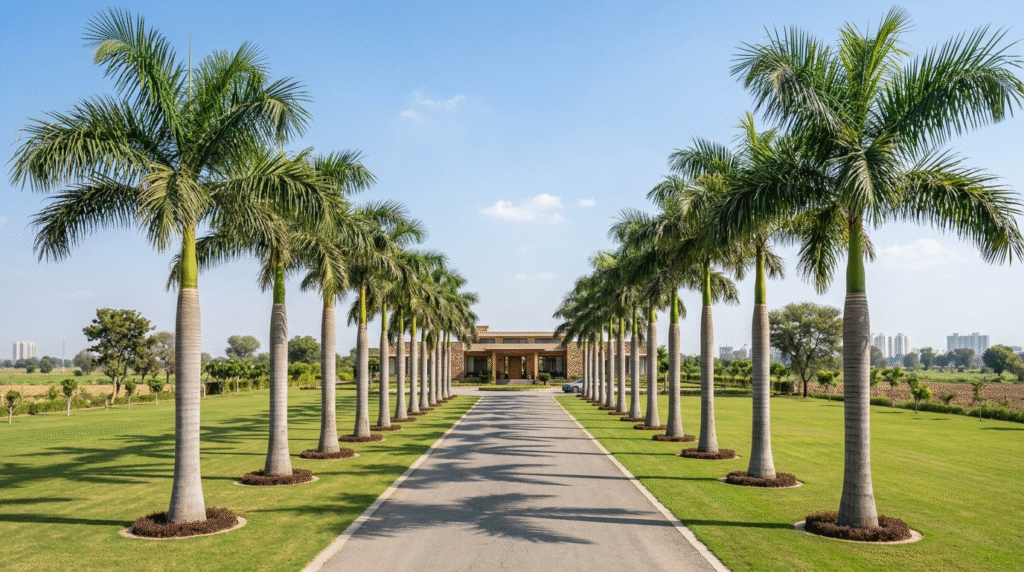
- Royal Palm (Roystonea regia) This is your outdoor, landscaping-grade palm plant — tall, majestic, and commonly seen lining avenues and hotel driveways across India. It’s not an indoor variety, but it’s a popular choice for bungalow gardens, farmhouses, and large terraces. If you have outdoor space to fill, a Royal Palm makes an unmistakable statement.
- Table Palm / Umbrella Palm (Cyperus alternifolius) Technically a sedge rather than a true palm, the Table Palm (also called Umbrella Palm) is a budget-friendly, easy-to-find option in most Indian nurseries. It actually enjoys consistently moist soil, unlike most palms on this list, making it a good fit for water gardens or pot saucers kept topped up. It’s compact, affordable, and a great starter plant if you’re testing the waters (literally) with palm plant care.
Quick Comparison Table
| Palm Plant | Light Needs | Watering Frequency | Max Indoor Height | Pet-Safe? |
| Areca Palm | Bright, indirect | Every 7–10 days | 6–7 ft | Yes |
| Parlour Palm | Low to medium | Every 10–14 days | 2–3 ft | Yes |
| Lady Palm | Medium to bright | Every 7–10 days | 4–6 ft | Yes |
| Bamboo Palm | Medium, indirect | Every 7 days | 5–7 ft | Yes |
| Kentia Palm | Low to bright | Every 10 days | 6–8 ft | Yes |
| Sago Palm | Bright, indirect | Every 10–14 days | 2–3 ft | No (toxic) |
| Fishtail Palm | Bright, indirect | Every 5–7 days | 5–6 ft | No (mildly toxic) |
| Ponytail Palm | Bright light | Every 2–3 weeks | 3–4 ft | Yes |
| Chinese Fan Palm | Bright to medium | Every 7–10 days | 6–8 ft (needs space) | Yes |
| Majesty Palm | Bright, humid | Every 5–7 days | 6–8 ft | Yes |
| Royal Palm | Full sun (outdoor) | Every 3–4 days | Outdoor only | Yes |
| Table/Umbrella Palm | Bright, indirect | Keep soil moist | 2–3 ft | Yes |
How to Care for a Palm Plant Indoors
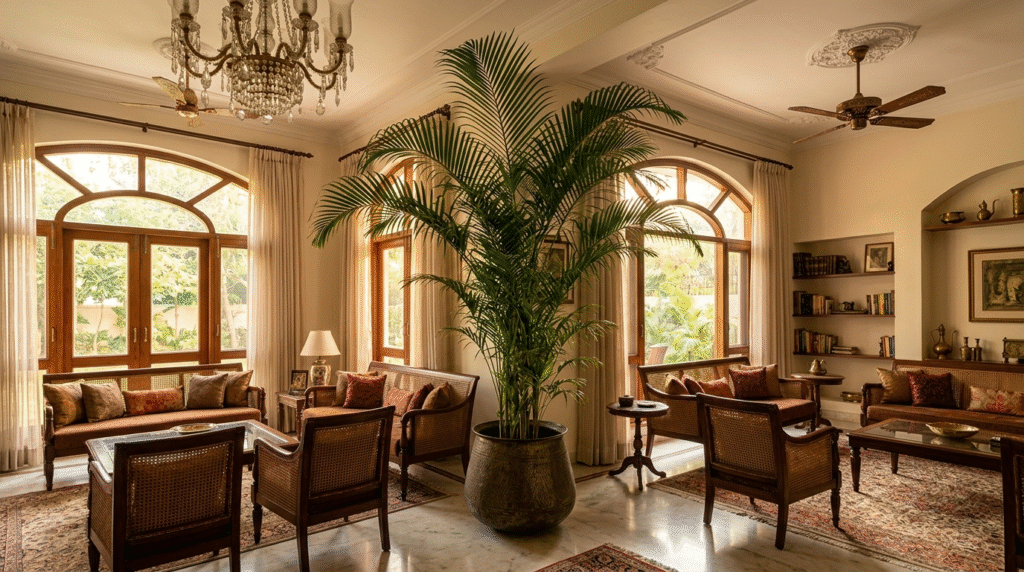
Once you’ve picked your variety, the actual care routine for a palm plant is refreshingly simple. Get these basics right and most palms genuinely take care of themselves.
Choosing the Right Pot and Soil
Pick a pot just slightly larger than the root ball — going too big leads to waterlogged soil and root rot. Whatever pot you choose, make sure it has drainage holes at the bottom; this one detail prevents most beginner mistakes. For soil, use a well-draining mix with added perlite or coco peat. A standard indoor potting mix works fine too, as long as it dries out within a week after watering.
Light Requirements
Most palm plant varieties prefer bright, indirect light — think a few feet away from a south or east-facing window, ideally behind a sheer curtain. Direct harsh afternoon sun can scorch the fronds, especially in North Indian summers. Low-light tolerant options like the Parlour Palm and Kentia Palm are your best bet for a windowless corner or a dim hallway.
Watering Schedule
Here’s the golden rule: water only when the top 2–3 inches of soil feel dry to the touch. For most homes, that works out to roughly once every 7–10 days. Water deeply until it drains from the bottom, then empty any excess collected in the saucer — standing water is the fastest way to invite root rot.
Temperature and Humidity
Palms genuinely dislike the cold. Keep them in spaces where the temperature stays above 15°C, and away from AC vents or drafty balcony doors during winter. If your home tends to be dry (which is common in AC-heavy apartments), a light misting twice a week helps species like the Fishtail Palm and Majesty Palm stay lush.
Fertilizing Your Palm Plant
Feed your palm plant once a month during the growing season (roughly March to October) using a balanced liquid fertilizer or a slow-release granular one. Cut this back to once every two months in winter, when growth naturally slows. Organic options like diluted compost tea also work well and are gentler if you tend to overfertilize.
Pruning Dead Fronds
Trim only completely brown or yellow fronds, cutting close to the base with clean, sharp scissors. Never remove green, healthy fronds — palms actually draw nutrients back from ageing leaves before they die off.
Repotting Guide
You’ll know it’s time to repot when roots start poking out of the drainage holes or circling the surface of the soil. Here’s a simple step-by-step:
- Water the plant a day before repotting to loosen the soil.
- Gently ease the plant out, supporting the base of the stem.
- Loosen the root ball slightly and remove old, compacted soil.
- Place it in a pot one size larger with fresh, well-draining mix.
- Water lightly and keep it out of direct sun for a week to recover.
Spring is the ideal season for repotting, giving the plant a full growing season to settle into its new home.
Seasonal Palm Plant Care in India
Indian weather swings hard between seasons, and your palm plant care routine should adjust with it.
Summer: Water more frequently (every 5–7 days), and shift plants away from harsh westfacing windows during peak afternoon heat.
Monsoon: Cut back on watering since humidity keeps soil moist longer, and check drainage holes regularly to avoid waterlogging during heavy rain spells.
Winter: Reduce watering to once every 10–14 days, keep plants away from cold drafts, and hold off on fertilizing until growth picks up again in spring.
Common Palm Plant Problems and How to Fix Them
Even well-cared-for plants run into trouble occasionally. Here’s how to read the warning signs.
- Yellowing fronds: Usually a sign of overwatering or natural ageing of older leaves. Check soil moisture first before assuming the worst.
- Brown leaf tips: Often caused by low humidity or fluoride/chlorine in tap water. Try switching to filtered or rested (overnight) water.
- Spider mites and mealybugs: Look for tiny webbing or white cottony spots under fronds. Wipe leaves with a damp cloth and use neem oil spray weekly until they’re gone.
- Root rot: A mushy, foul-smelling base usually means overwatering. Unpot immediately, trim away black or mushy roots, and repot in fresh, dry soil.
A quick diagnostic habit: check the soil with your finger before watering, every single time. Most palm plant problems trace back to this one step being skipped.
Is a Palm Plant Safe for Pets and Kids?
This is a genuinely important question, especially if you have curious dogs, cats, or toddlers at home. Here’s a quick reference:
| Palm Variety | Safe for Pets/Kids? | Notes |
| Areca Palm | Yes | Completely non-toxic |
| Parlour Palm | Yes | Safe for cats and dogs |
| Bamboo Palm | Yes | ASPCA-listed as non-toxic |
| Kentia Palm | Yes | Safe around pets |
| Ponytail Palm | Yes | Non-toxic despite the name |
| Sago Palm | No | All parts toxic, especially seeds — can be fatal if ingested |
| Fishtail Palm | Caution | Calcium oxalate crystals can irritate mouth and throat |
If you have pets that like to nibble on leaves, stick to Areca, Parlour, Bamboo, or Ponytail palms, and keep the Sago Palm out of the house entirely if there’s any risk of it being chewed.
Propagating Palm Plants at Home
Growing your own palm plant from an existing one is easier than most people assume, and it’s a great weekend project.
Division method: Many clustering palms like the Areca and Lady Palm can be gently divided at the roots during repotting. Separate a healthy offshoot with its own roots attached, and pot it separately in fresh soil.
Growing from seed: This works well for varieties like the Sago Palm, though it’s slower — expect germination to take anywhere from one to three months, with patience being the real requirement here.
Best Rooms to Place a Palm Plant
Where you place your palm plant matters almost as much as how you care for it.
- Living room: Go big — a Kentia Palm or Majesty Palm makes a strong visual anchor near a bright window.
- Bedroom: Choose lower-light, calmer options like the Parlour Palm or Bamboo Palm.
- Balcony or terrace: Chinese Fan Palm or a potted Royal Palm handle outdoor conditions well.
- Office desk: A compact Parlour Palm or small Areca Palm adds greenery without needing much space or light.
How to Buy the Right Palm Plant
A little care while buying saves you a lot of trouble later. Here’s what actually matters when picking out a palm plant at a nursery or online.
- Check the fronds — they should be firm and green, not yellowing, spotted, or drooping.
- Inspect the base — gently tug the stem; it should feel firmly rooted, not loose in the pot.
- Match the pot size to your space — a 6-inch pot suits a windowsill, while anything above 10 inches needs proper floor space.
- Budget realistically — smaller palm plants in India typically range from ₹ 300₹ 600, while larger, established ones can run ₹ 1,000₹ 3,000 depending on variety and size.
- Buy from a trusted source — nurseries that guarantee healthy, pest-free plants save you the heartbreak of a plant that dies within a week.
If you’re ready to bring one home, browse our full palm plant collection — every plant is nursery-checked before it ships to your door.
Frequently Asked Questions About Palm Plants
How often should I water a palm plant?
Most indoor palm plants need watering once every 710 days, but always check that the top 2–3 inches of soil are dry before watering rather than sticking to a fixed schedule.
Which palm plant is best for low light?
The Parlour Palm and Kentia Palm are the two most tolerant of low-light indoor spaces, making them ideal for hallways or north-facing rooms.
Can palm plants survive in AC rooms?
Yes, most palms handle AC rooms fine, but the dry air can cause brown leaf tips. A weekly misting session helps counter this.
Do palm plants need direct sunlight?
No — most indoor palm plant varieties actually prefer bright, indirect light, and too much direct sun can scorch their fronds.
Which palm plant is good for vastu?
The Areca Palm is widely considered the most vastufriendly palm plant, especially when placed in the north or east direction of a home.
How long do indoor palm plants live?
With proper care, most indoor palm plants live for 10 years or longer, with some varieties like the Kentia Palm easily lasting decades.
Ready to bring some green home?
Explore our full collection of palm plants, hand-picked and nursery-checked for Indian homes — whether you’re after a compact Parlour Palm for your desk or a statement Kentia Palm for your living room, we’ve got a variety that fits your space and your lifestyle.