
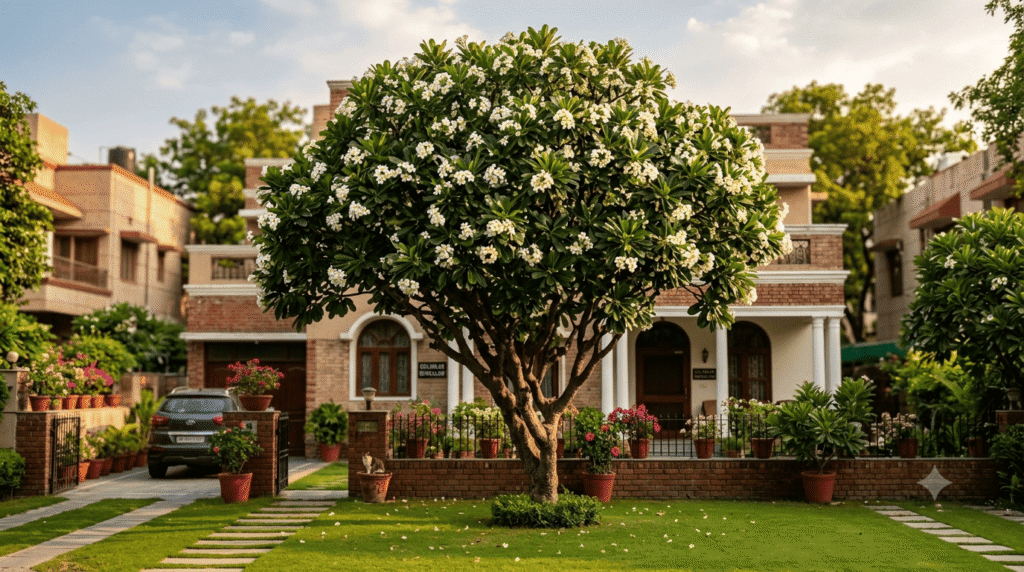
If you have ever walked past a temple in the evening and caught a sweet, heady fragrance in the air, you have probably met the champa plant. It is one of those plants that everyone recognises by smell before they even know its name.
At Maali Bhaiya, we get asked about the champa plant a lot, especially by clients in Noida and Gurugram who want a fragrant, low-maintenance tree for their terrace or front yard. In this guide, we will cover everything — what a champa plant actually is, its many varieties, how to grow it, and how to keep it healthy for years.
By the end, you will know exactly which champa variety suits your space and how to care for it, whether it is in the ground or in a large balcony pot.
What Is a Champa Plant?
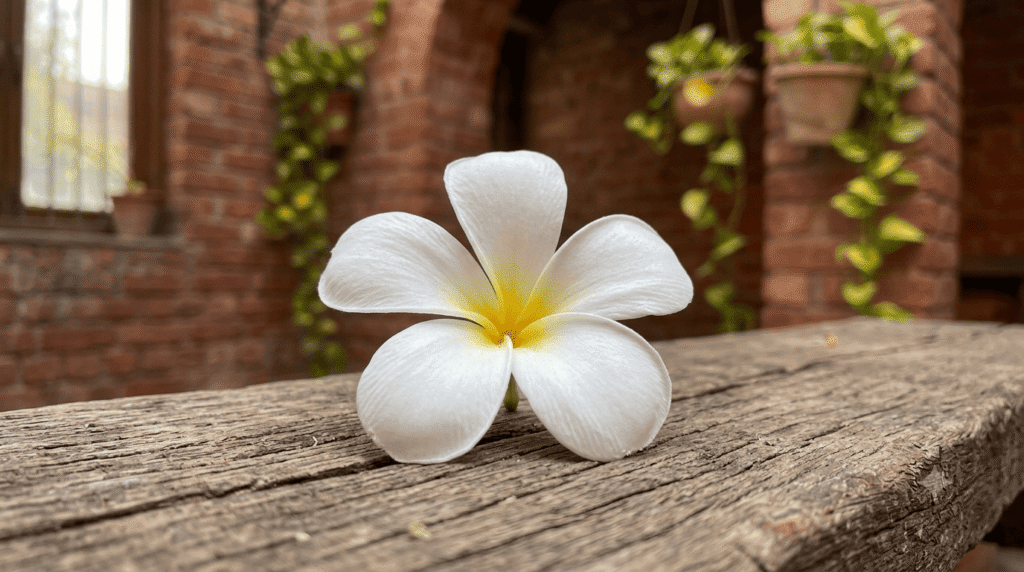
The champa plant is a small flowering tree, botanically known as Plumeria. It is famous for its thick, waxy petals and a fragrance that gets stronger in the evening.
In India, you will often find champa trees planted near temples, which is why many people also call it the “temple tree.” The flowers are used in worship across Hindu, Buddhist, and Jain traditions.
Here is what makes a champa plant easy to spot:
- Thick, rubbery branches with a milky sap inside
- Glossy, long leaves that cluster at the tips of branches
- Flowers in white, yellow, pink, or red, often with a contrasting centre
- A long blooming season, usually from March to October
- Very low maintenance once it settles into the ground or a pot
One small caution here — the milky sap can irritate skin and is mildly toxic if chewed by pets or small children. It is not dangerous to have in the garden, but it is worth keeping an eye on curious toddlers and pets around a fresh cut or broken branch.
Champa Plant in English: What Should You Call It?
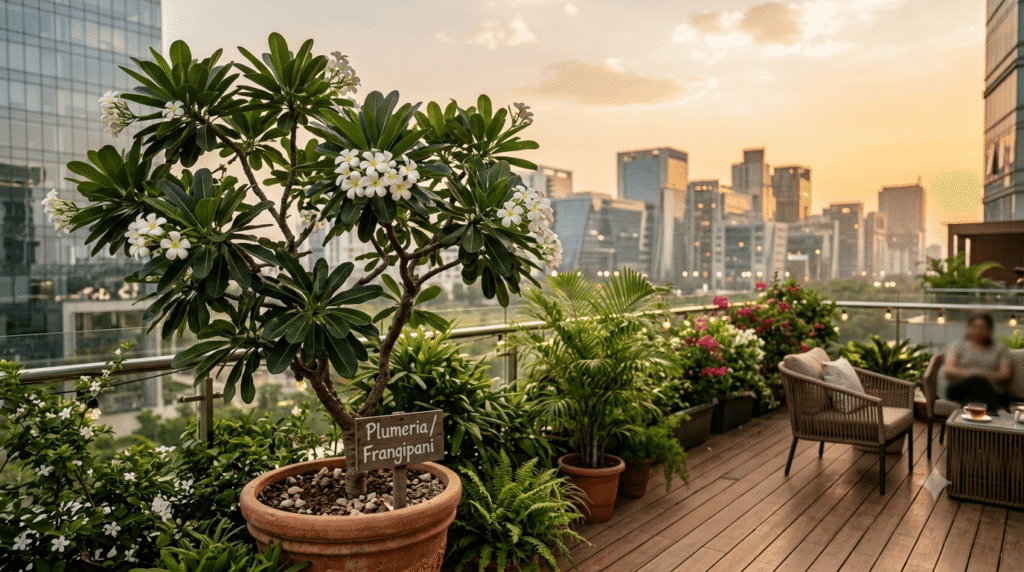
A lot of people search for “champa plant in English” because the name changes depending on where you are. This gets confusing fast, so let’s clear it up.
- Plumeria – the most common English and botanical name used worldwide.
- Frangipani – widely used in Southeast Asia, the Caribbean, and Australia.
- Temple Tree – a common English nickname in India, because of its presence near temples.
- Champak – a related but different tree (Magnolia champaca), often confused with champa.
So, if someone abroad asks you what a champa plant is, “Plumeria” or “Frangipani” is the safest answer. Just remember that champak is its own separate plant, even though the name sounds almost the same.
Cultural and Spiritual Significance of the Champa Flower
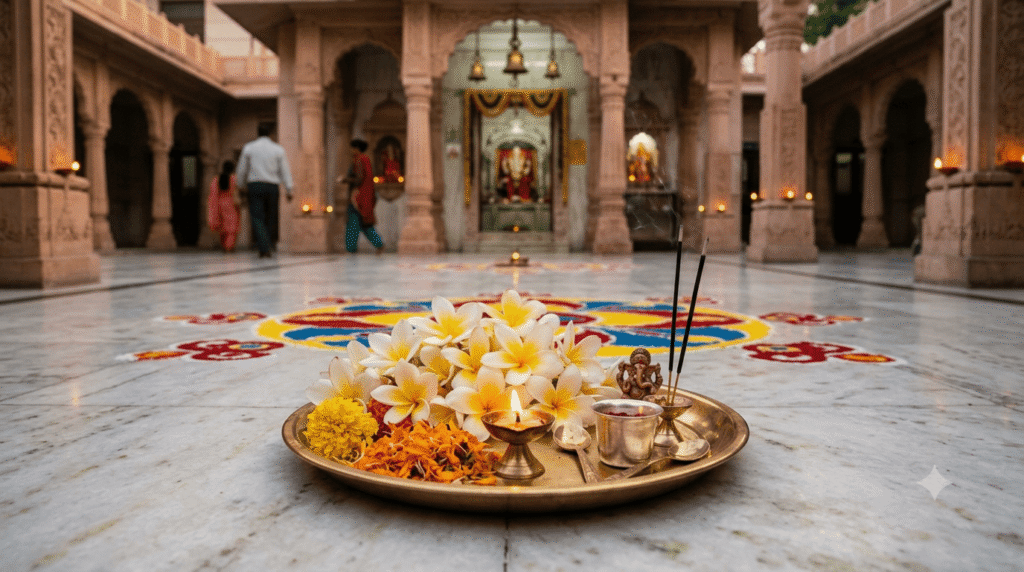
The champa flower is not just pretty. It carries deep meaning in Indian culture, and that is a big reason people want to grow it at home.
In many parts of India, champa flowers are offered during puja because they symbolise purity and devotion. In Karnataka, brides and grooms often exchange garlands made of cream-coloured champa flowers as part of their wedding rituals.
Interestingly, in some Southeast Asian countries like Indonesia and Malaysia, the same flower is linked to folklore around spirits rather than worship. In India, though, the champa plant has stayed firmly on the side of blessings, temples, and celebration.
Champa Plant Varieties You Can Grow
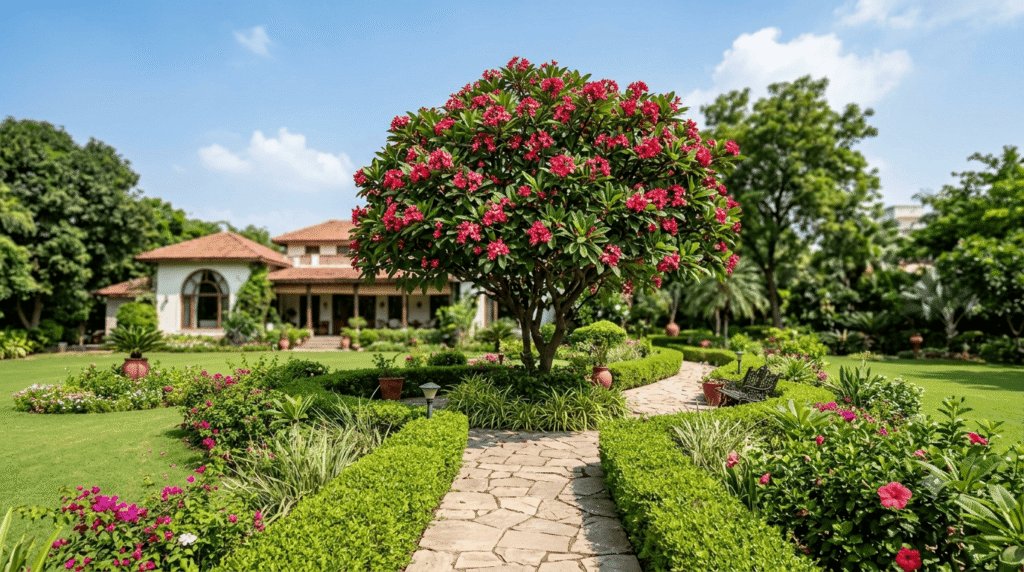
One of the best things about the champa plant is choice. You are not stuck with just one look or one fragrance.
Here are the main varieties you will come across in Indian nurseries:
- Red Champa Plant – Deep pink to red petals with a strong, sweet scent. This is one of the most popular choices for home gardens because of its bold colour.
- Golden Champa Plant / Swarna Champa Plant – Rich golden-yellow flowers with a fruity fragrance. “Swarna” means gold in Sanskrit, which is exactly what these blooms look like.
- White Champa Plant – Classic white petals with a yellow centre. This is the variety most commonly seen near temples.
- Nag Champa Plant – A compact variety with spoon-shaped leaves, usually white flowers, and a gentler fragrance. More on this one below, since it causes a lot of confusion.
- Singapore Dwarf Champa – A smaller, bushier plant with white-pink blooms, ideal for pots and tight balconies.
- Hybrid Champa Plant – Bred for bigger flowers, faster growth, or better disease resistance. We will get into this shortly too.
If you are choosing a variety for a small Delhi NCR balcony, the Singapore Dwarf or a young Nag Champa plant will fit far more comfortably than a full-sized red champa tree.
Nag Champa Plant: Clearing Up the Confusion
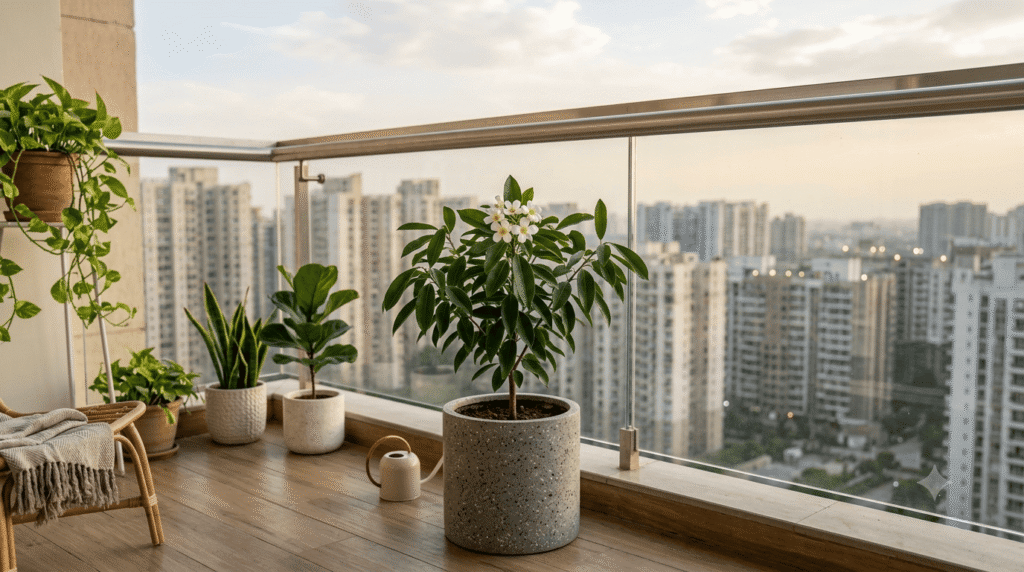
This is where most people get stuck, so let’s sort it out properly.
When you search “nag champa,” you will find two very different things. One is the nag champa plant sold at nurseries, usually a compact Plumeria variety with soft, spoon-shaped leaves. The other is Nag Champa incense, the famous fragrance sticks sold in almost every Indian gift shop.
Here is the important part — the incense is not made from this garden plant. Traditional Nag Champa incense is usually made from sandalwood blended with champak flower (Magnolia champaca), not from the Plumeria you plant in your garden. If you want to double-check this, Wikipedia’s entry on Nag Champa explains the fragrance’s actual ingredients in detail.
So, when someone asks for “nag champa plant benefits,” they usually mean the garden plant, not the incense. The real benefits of growing this compact variety are:
- A gentle, pleasant fragrance in the evening, especially near seating areas
- A smaller size that suits balconies, terraces, and even large indoor pots
- The same low-maintenance nature as other champa varieties
- A steady flush of flowers through the warmer months
If you specifically want the incense-style fragrance for your home, growing a champak tree alongside your champa plant gives you both the garden beauty and closer access to that classic scent.
Hybrid Champa Plant: What Makes It Different?
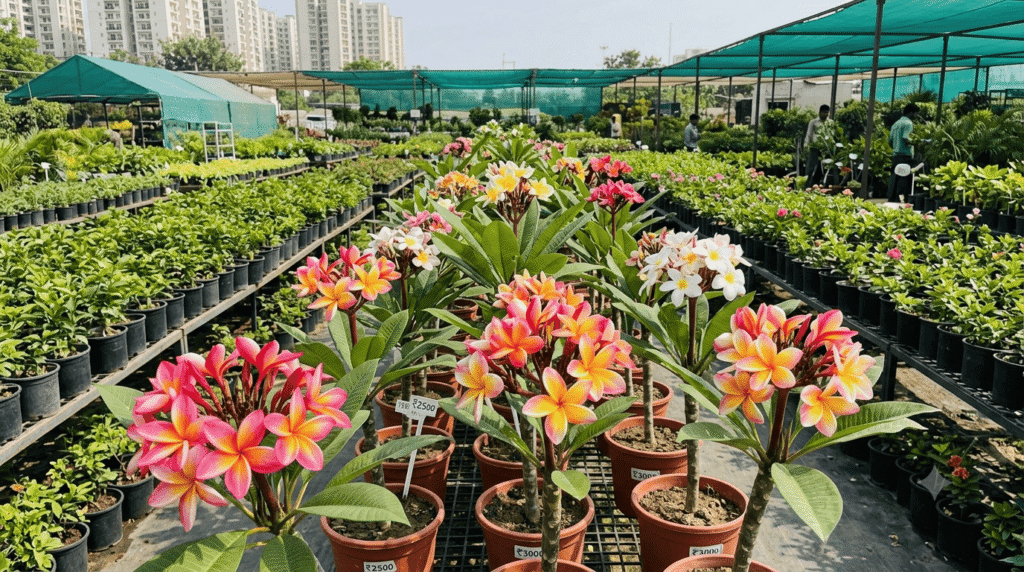
Nurseries increasingly sell hybrid champa plants, and it is worth understanding what that actually means before you buy one.
A hybrid champa plant is cross-bred, usually to get bigger blooms, a wider colour range, faster growth, or stronger resistance to common pests and rot. Think of it as a plumeria bred for a slightly easier life.
The trade-off is that hybrids sometimes have a milder fragrance compared to older, traditional varieties like the classic white or red champa. If a strong, temple-like fragrance matters more to you than flower size, stick with a traditional variety.
For beginner gardeners, or for anyone who wants quicker results in a new balcony garden, a hybrid champa plant is usually a safe and rewarding choice.
How to Grow a Champa Plant
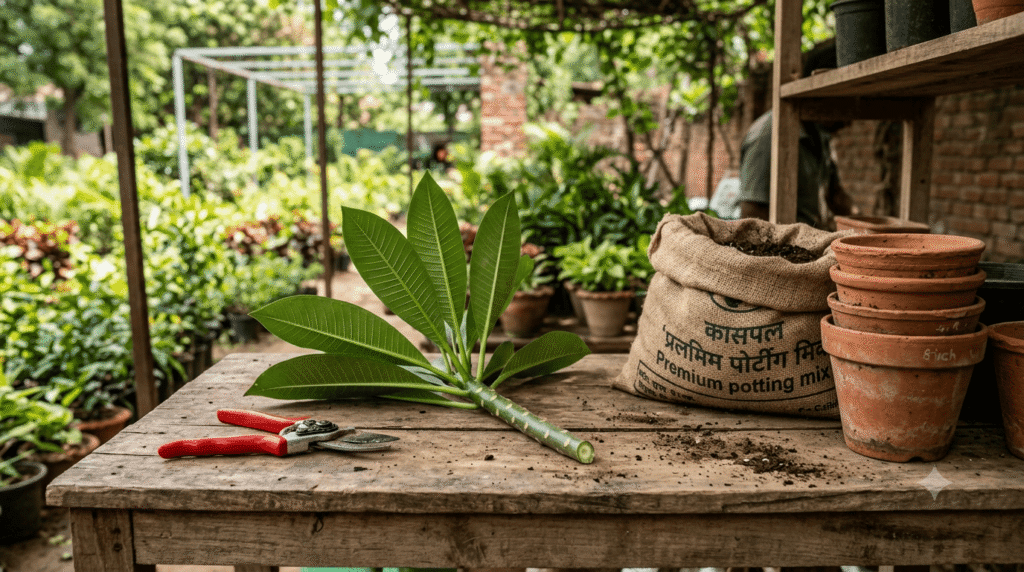
You can grow champa in two main ways — from stem cuttings or from seeds. Cuttings are faster and far more reliable, so most home gardeners in India go this route.
Growing Champa from Stem Cuttings
- Select a healthy, mature branch, around 8 to 12 inches long.
- Let the cut end dry and heal in shade for 5 to 7 days. Do not plant it fresh, or it may rot in the soil.
- Prepare a fast-draining potting mix, ideally with sand or perlite mixed in.
- Plant the cutting about 2 to 3 inches deep and water lightly.
- Keep the pot in bright, indirect light until new growth appears, usually within 3 to 6 weeks.
Growing Champa from Seeds
- Soak fresh champa seeds in lukewarm water for 24 hours.
- Sow them in a well-draining seed mix, about half an inch deep.
- Keep the soil consistently moist and place the tray somewhere warm.
- Once seedlings reach a few inches tall, move them into individual pots.
- Be patient — plants grown from seed can take two to three years before their first bloom.
If you want flowers sooner rather than later, cuttings are the way to go. Seeds are more of a long-term project, best suited for gardeners who enjoy watching a plant grow from scratch.
Best time to plant: March to July works well across most of North India, since the warmth helps roots establish quickly before the monsoon arrives.
Champa Plant Care: Keeping It Healthy Year-Round
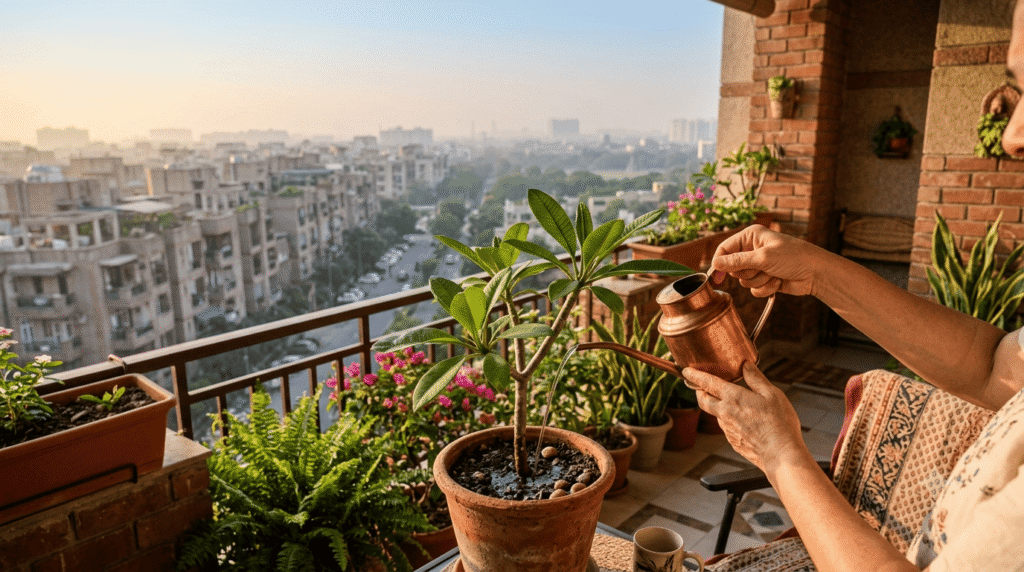
Once your champa plant is established, it does not ask for much. A little attention in the right places goes a long way.
Sunlight
Champa plants love the sun. Give them at least 6 to 8 hours of direct sunlight daily for the best flowering. A shaded corner will keep the plant alive, but you will see far fewer blooms.
Watering
Water your champa plant deeply, then let the soil dry out before watering again. In Delhi NCR summers, this usually means watering two to three times a week.
In winter, cut back watering significantly. Champa plants often go semi-dormant in the cold months and need very little moisture during this time.
Soil
A loose, well-draining soil mix is essential. A simple blend of garden soil, coarse sand, and compost in roughly equal parts works well for most home gardens.
Fertiliser
Feed your champa plant with a phosphorus-rich fertiliser during the growing season, roughly every three to four weeks between March and September. Skip fertilising completely during winter dormancy.
Pruning
Prune in late winter or early spring, right before new growth starts. Remove dead, weak, or overcrowded branches to keep the plant open and encourage stronger blooms.
Winter Care
North Indian winters can be tough on champa plants, especially young ones. If you are in Delhi, Noida, or Gurugram, move potted plants to a sheltered spot or indoors on the coldest nights, since frost can damage the branches.
If all of this feels like a lot to juggle alongside a full-time job, our garden care and maintenance team can set up a simple watering and feeding routine for your champa plant, so you get the flowers without the guesswork.
Champa Plant Growth and Height
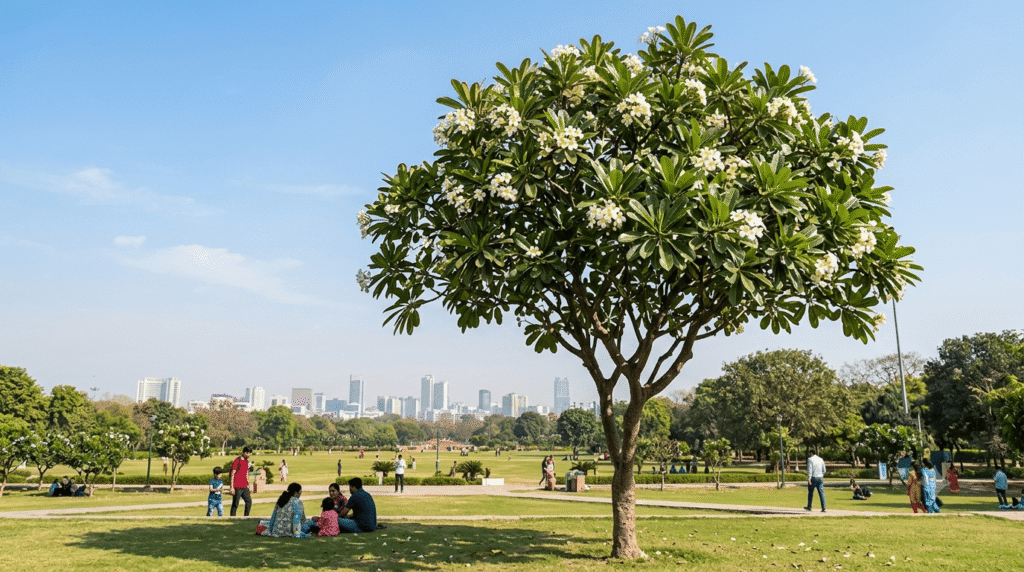
This is one of the most searched questions about champa, and it genuinely depends on where you plant it.
In open ground, a mature champa tree typically reaches 15 to 25 feet, with the golden and red varieties often growing on the taller side. In a large pot or grow bag, the same plant usually stays between 4 and 8 feet, since the container naturally restricts root growth.
Champa is a moderate grower. In good conditions, you can expect around 1 to 2 feet of new growth per year, with flowering usually starting within 1 to 2 years from a healthy cutting.
If you have a small balcony or terrace and want to control the height, three things help: regular pruning, choosing a dwarf variety like Singapore Dwarf, and keeping the plant in a pot rather than open ground.
Growing Champa Plant in Pots: Tips for Balconies and Terraces
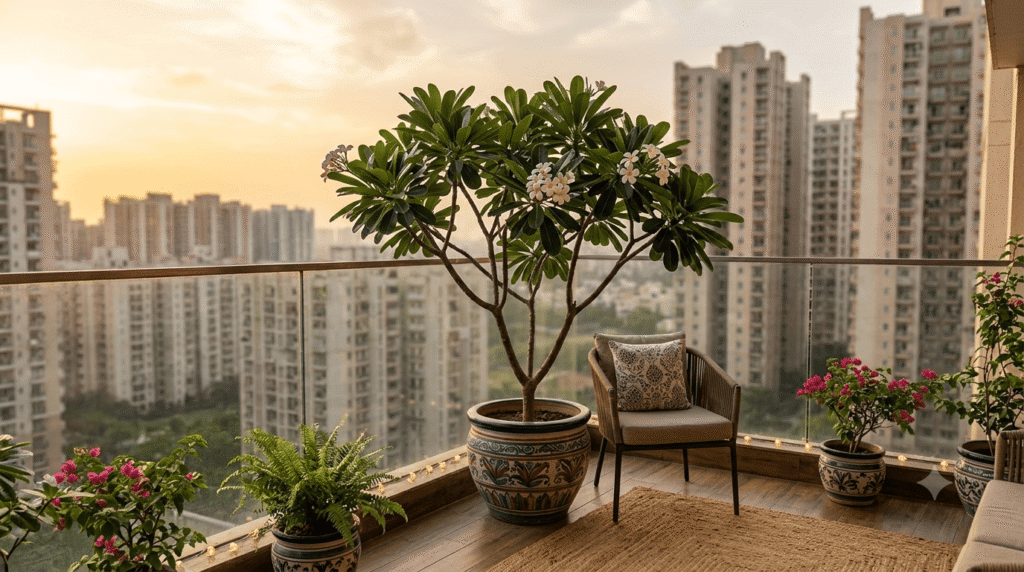
Many of our Delhi NCR clients want a champa plant on a balcony rather than in a garden bed, and that is absolutely doable.
Start with a pot that is at least 12 to 14 inches wide for a young plant, and move up to an 18 to 20 inch pot or a grow bag once it matures. This gives the roots enough room without overwhelming a small space.
Good drainage holes are non-negotiable here. Champa roots are prone to rot if water sits at the base of the pot for too long.
Repot your champa plant every 2 to 3 years, refreshing the soil each time to keep nutrients available. If your balcony gets strong winds, place the pot in a corner or near a wall for extra stability once the plant grows taller.
For more ideas on choosing the right container for a fragrant flowering plant like this, our guide to plant pot designs is worth a look before you buy.
Common Champa Plant Problems and Solutions
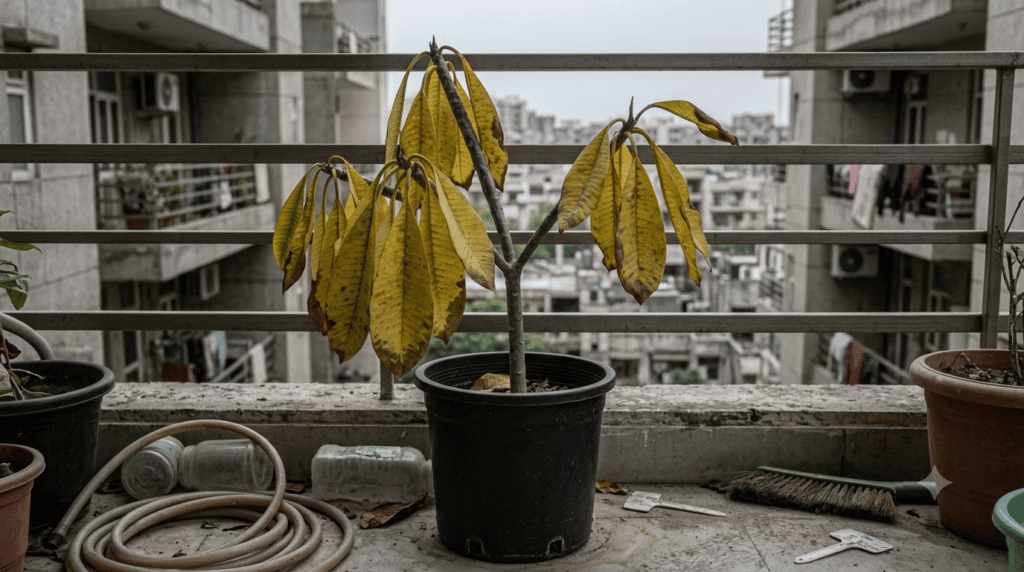
Even a hardy plant like champa runs into the occasional problem. Here is how to spot and fix the most common ones.
Not flowering: Usually caused by too little sunlight, overwatering, or too much nitrogen-heavy fertiliser. Move the plant to a sunnier spot and switch to a phosphorus-rich feed.
Yellow leaves: Often a sign of overwatering or the natural start of winter dormancy. Check the soil moisture before assuming the worst.
Black or soft stems: This points to stem rot, usually from excess moisture in cold weather. Cut away the affected part and improve drainage immediately.
Pests like mealybugs or spider mites: A weekly spray of diluted neem oil usually clears these up within a couple of weeks.
Is champa poisonous? The sap is mildly toxic and can irritate skin or cause stomach upset if ingested. Keep an eye on pets and young children around broken stems, and wash your hands after pruning.
Benefits of the Champa Plant
Beyond its good looks, the champa plant earns its place in a garden in several practical ways.
- Ornamental value – Few flowering trees give this much colour and fragrance for so little effort.
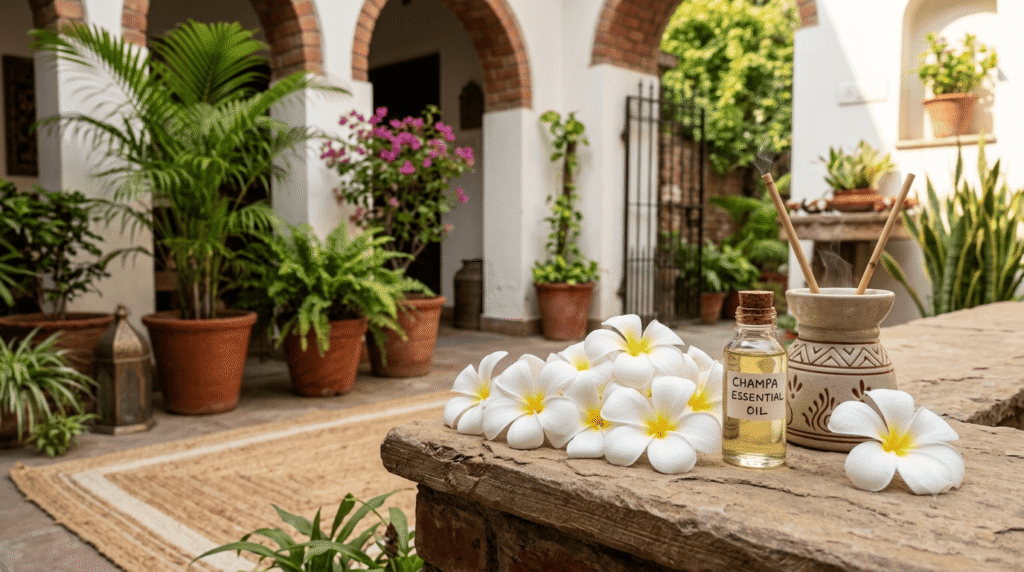
- Fragrance and aromatherapy – Champa flowers are used to extract essential oils valued for their calming scent.
- Pollinator-friendly – The flowers attract moths and butterflies, adding a bit of life to your garden in the evenings.
- Cultural and religious value – A steady, home-grown supply of flowers for daily puja or festive decoration.
- Low water needs once mature – A big plus for anyone trying to keep their garden eco-friendly and low-maintenance.
Buying Guide: How to Choose a Healthy Champa Plant
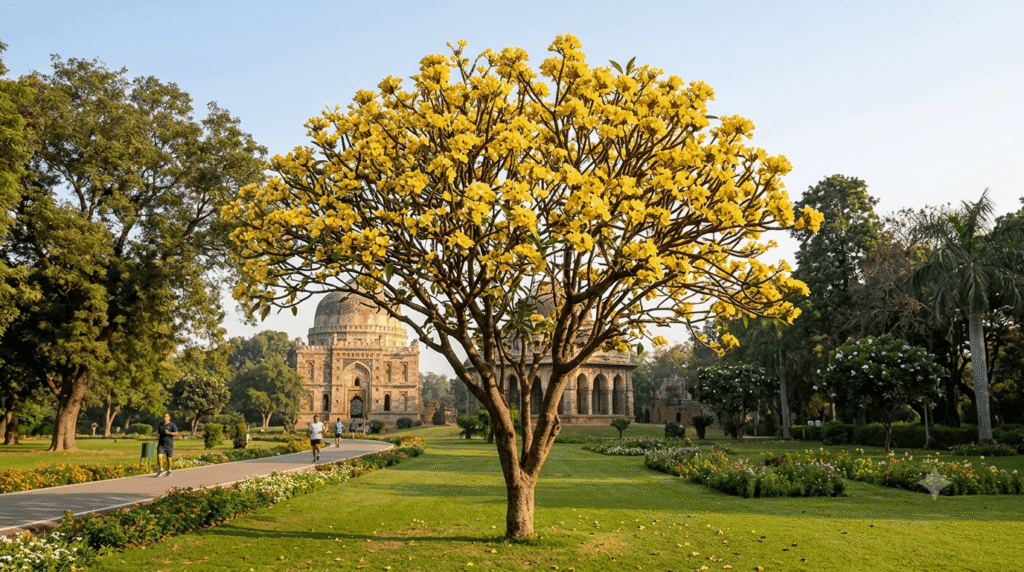
If you are buying a champa plant from a nursery, a few quick checks can save you a lot of trouble later.
Look for firm, unblemished stems without any black spots or soft patches. The leaves should be a healthy green, not yellowing or drooping.
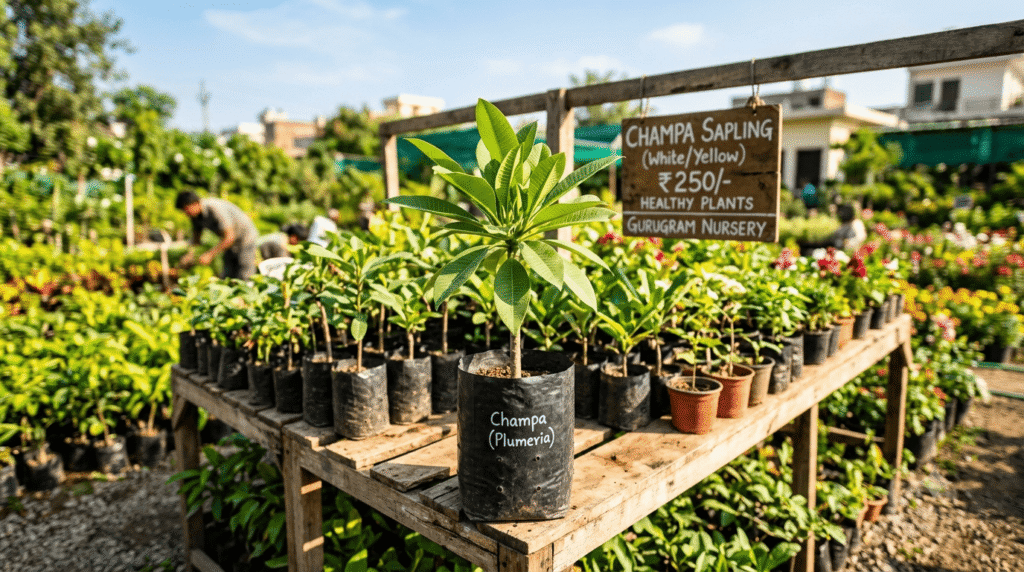
Gently check that the plant is not badly root-bound in its nursery pot, since this can slow it down once transplanted. A young, healthy champa plant in India typically costs somewhere between ₹300 and ₹600, depending on the variety and pot size.
If you are unsure which variety will suit your space, our team at Maali Bhaiya can recommend the right champa plant for your balcony, terrace, or garden based on sunlight and space, and even help you plant it correctly from day one.
Champa vs Other Fragrant Trees for Your Garden
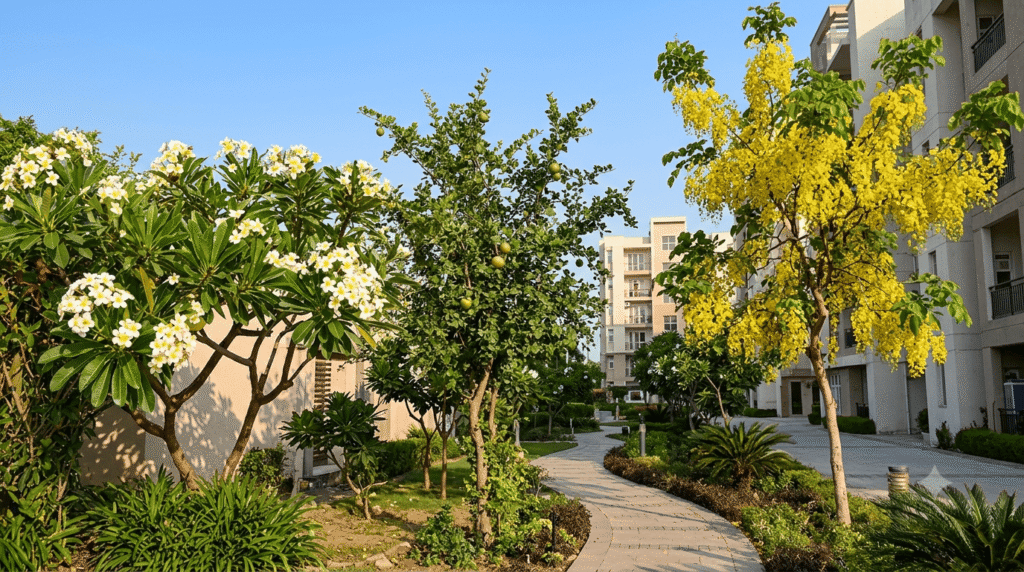
If you are still deciding what to plant, it helps to see champa alongside other popular choices. Many of our clients compare it to the bel plant, another temple favourite, or the bright yellow golden shower flower, also known as Amaltas.
Unlike the bel plant, which is grown mainly for its sacred leaves and fruit, champa is grown almost entirely for its flowers and fragrance. Compared to the golden shower tree, champa blooms for a longer stretch of the year and works far better in pots on a balcony garden.
If your space allows for more than one flowering tree, all three can happily share a terrace or backyard, each blooming at slightly different times for colour almost all year round.
FAQs About the Champa Plant
It is called Plumeria, and it is also widely known as Frangipani or Temple Tree in English.
No. The nag champa plant is a compact Plumeria variety grown in gardens, while nag champa incense is traditionally made from sandalwood and champak flower, a different plant entirely.
In open ground, it can reach 15 to 25 feet. In a pot, it usually stays between 4 and 8 feet.
Yes. A dwarf variety like Singapore Dwarf, or a young plant of any type kept pruned, grows well in a large pot with good drainage.
Water two to three times a week in summer, letting the soil dry between waterings, and cut back significantly in winter.
The most common reasons are too little sunlight, overwatering, or too much nitrogen fertiliser. Fix the sunlight and feeding first.
The sap is mildly toxic and can irritate skin or the stomach if chewed. It is safe to keep around the house as long as pets and children are not eating the leaves or stems.
Golden or Swarna Champa has rich yellow flowers with a fruity scent, while red champa has deep pink-red petals with a stronger, sweeter fragrance.
Need Help Growing a Champa Plant at Home?
A champa plant rewards very little effort with a lot of fragrance and colour, but getting the variety, placement, and early care right makes all the difference. At Maali Bhaiya, our expert gardeners across Delhi, Noida, and Gurugram can help you pick the right champa variety, plant it correctly, and set up an easy care routine for your balcony, terrace, or garden.
Get in touch with our team for a free consultation, and let’s get your champa plant blooming the way it should.