
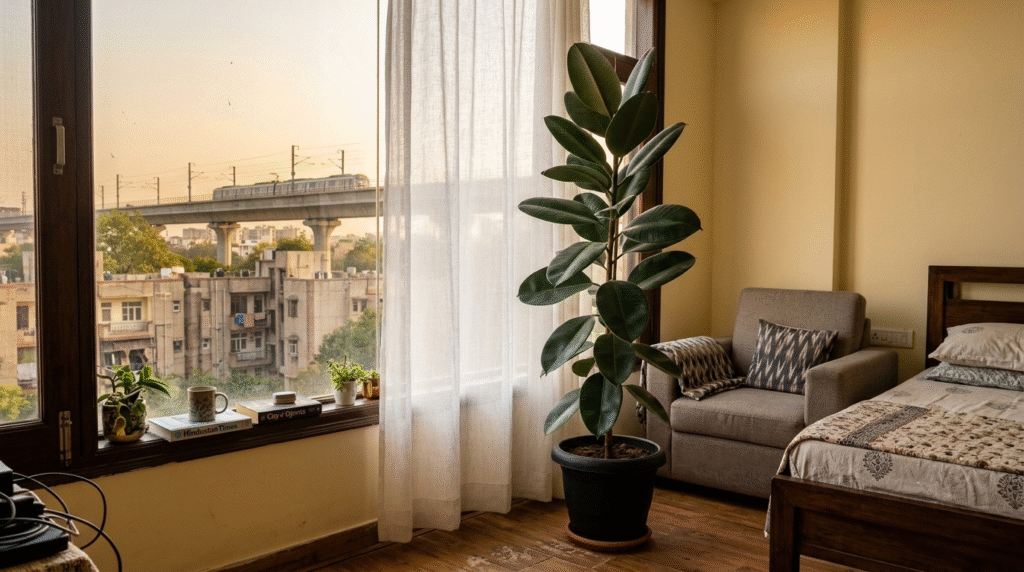
Choosing the right indoor plants for bedroom spaces sounds easy until you start reading about it. One website says a snake plant gives you fresh oxygen all night. Another says plants steal your air while you sleep.
The truth sits somewhere in the middle. The right plant can make your room calmer, softer and nicer to wake up in. But it will not clean Delhi’s winter air, and some popular bedroom plants are not safe if you have a cat, a dog or a toddler at home.
In this guide, we cover the best bedroom plants for Indian homes, based on what we see in flats and houses across Noida, Gurugram and Delhi. You will learn which plants work in low light, which are pet-safe, where to place them, and how to keep them alive through summer heat, smog and monsoon.
Short on time? Start with these five:
- Snake plant: for a dim corner (not pet-safe)
- Spider plant: for a shelf or hanging pot (pet-safe)
- Money plant: for easy, trailing greenery (not pet-safe)
- ZZ plant: for people who forget to water (not pet-safe)
- Areca palm: for a bright corner (pet-safe)
Best Indoor Plants for Bedroom at a Glance
Here is a quick look at 12 plants before we go into detail. Use it to make a shortlist, then read the profiles below. Prices are for a small plant in a nursery pot and change with size and season: ₹ means under ₹300, and ₹₹ means about ₹300–₹700.
| Plant | Light | Water | Pet-safe? | Difficulty |
|---|---|---|---|---|
| Snake plant | Low to bright | Every 2–3 weeks | No | Very easy |
| ZZ plant | Low to medium | Every 2–3 weeks | No | Very easy |
| Money plant (pothos) | Low to medium | Weekly | No | Very easy |
| Spider plant | Medium, indirect | Weekly | Yes | Easy |
| Peace lily | Low to medium | Weekly | No | Easy |
| Areca palm | Bright, indirect | Every 7–10 days | Yes | Easy |
| Aloe vera | Bright, some sun | Every 2–3 weeks | No | Easy |
| Rubber plant | Medium to bright | Every 1–2 weeks | No | Easy |
| Boston fern | Medium, humid | Keep slightly moist | Yes | Medium |
| Parlour palm | Low to medium | Every 10–14 days | Yes | Easy |
| Heart-leaf philodendron | Low to medium | Weekly | No | Easy |
| Lavender / jasmine (mogra) | Bright, sunny | When top soil is dry | Check first | Medium |
This list has many of the best plants for bedroom use in India. Every plant is a good fit for a different type of room, so the next sections help you match the plant to your room.
Do Indoor Plants Really Help in a Bedroom?
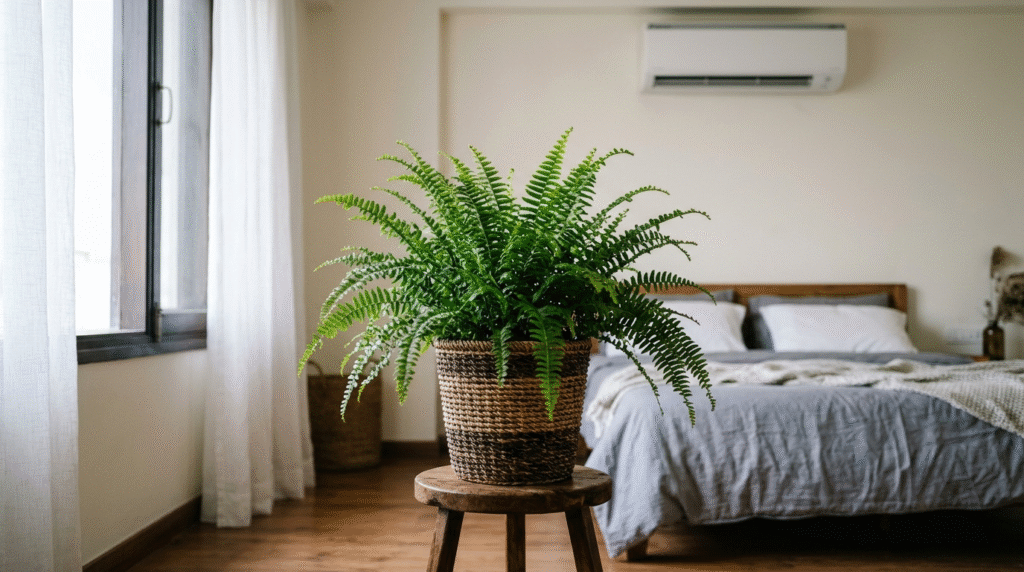
Yes, but not in the ways social media promises. Plants help with mood, softness and the feel of a room. They do not replace an air purifier or an open window. Let us separate fact from myth, so you can choose with confidece
Do oxygen plants for bedroom really work at night?
Most plants make oxygen in the day and take in a little at night. A small group works differently. Snake plant, aloe vera and some orchids and succulents use a method called CAM photosynthesis. They open their leaf pores at night, take in carbon dioxide and keep releasing oxygen.
That is why a snake plant gets called the best of the oxygen plants for bedroom use. Here is the honest part: one or two plants make a tiny amount of oxygen compared to the air in your room. Money plant, areca palm and peace lily are often listed as night-time oxygen plants, but they are not CAM plants.
So, keep a snake plant because it is easy and good-looking, not because it will change how you breathe.
Do air purifier plants for bedroom really clean the air?
You have probably heard that NASA found plants clean the air. That study was done in 1989 inside a small, sealed chamber with one chemical at a time. A real bedroom is very different. Air keeps moving in and out through doors, windows and your AC.
A later review by researchers at Drexel University found that houseplants barely change indoor air in real homes. They estimated you would need at least 10 plants per square metre, and possibly far more, to match the effect of simply opening a couple of windows. The American Lung Association says much the same.
This does not mean air purifying plants for bedroom use are useless. It means you should treat them as decoration with extra benefits. In Delhi’s smog season, keep windows shut on bad days, use a proper air purifier if you can, and let your plants do what they do best: make the room feel alive. The Plants & Flowers Foundation Holland explains how air-purifying houseplants work and what they really do if you want to read more.
So what do bedroom plants actually do?
Here is what you can honestly expect from a few healthy plants:
- A calmer mood. Looking at green leaves helps many people relax.
- A softer look. Plants make a plain bedroom feel warmer and finished.
- A little extra humidity. Leaves release some moisture, which helps a little in dry, AC-heavy rooms.
- A small daily routine. Checking your plant for two minutes each morning is a nice way to start the day.
We should also say this clearly: the evidence for stress relief is stronger than the evidence for better sleep. No plant releases a “sleep hormone”. If a plant helps you sleep, it is mostly because the room feels peaceful.
Is it safe to sleep with plants in your bedroom?
Yes. The old story that plants “steal your oxygen” at night is a myth. At night, a plant uses a tiny amount of oxygen and gives out a tiny amount of carbon dioxide. A few plants in a room will not change the air you breathe.
The real bedroom risks are different. They are plants that are toxic to pets, soil that stays damp and grows mould, and tiny flies called fungus gnats. We cover each of these below.
How to Choose the Right Plant for Your Bedroom: 5 Simple Checks
When friends ask us, “which plant is good for bedroom use?”, we always answer with three questions. How much light does your room get? Do you have pets or small children? And how much time do you really have for plant care?
The five checks below help you answer all three. Spend ten minutes on them before you buy, and you will save money and plants.
Check your light first
Stand in your bedroom at 11 am and look around. Where does the light fall? A room that is more than two metres away from a window, or lit only by tube lights, counts as low light.
Use this simple guide:
| Your bedroom window | What to expect | Good plants |
|---|---|---|
| East-facing | Gentle morning sun | Areca palm, rubber plant, spider plant, aloe vera |
| North-facing | Soft, steady light | ZZ plant, money plant, parlour palm, peace lily |
| South-facing | Brightest light all day | Aloe vera, snake plant, lavender (use a sheer curtain in summer) |
| West-facing | Strong afternoon heat | Snake plant and aloe vera, kept a little back from the glass |
| No window | Very little light | ZZ plant or snake plant. They survive, but will grow slowly. |
Imagine a Noida flat where the bedroom window faces the next tower. The light is soft and indirect, so a ZZ plant and a money plant will be happy there. An aloe vera would slowly get thin and weak.
Check pets and children
This is the check most websites skip. Several popular bedroom plants are toxic if a cat, dog or toddler chews them. Snake plant, ZZ plant, peace lily, aloe vera and money plant all appear on pet-toxicity lists, including the ASPCA toxic and non-toxic plant list.
If you have a curious pet, choose spider plant, areca palm, parlour palm or Boston fern. Or keep toxic plants on a high shelf or in a room your pet cannot enter. Always check any plant you buy on the ASPCA list first.
Match your time, space and allergies
Be honest with yourself about each of these:
- Care time. If you travel often, pick snake plant or ZZ plant. They are happy with water every two or three weeks.
- Room size. In a small bedroom, use one tall plant or a few small ones. Too many plants make a room feel crowded.
- Allergies. If you get headaches or sneezing from strong smells, skip very fragrant plants like jasmine near your bed.
- AC airflow. Cold air blowing straight on a plant dries it out. Keep plants away from the AC vent.
- Budget. Most small bedroom plants cost between ₹250 and ₹700. A good pot can cost as much as the plant, so plan for both.
12 Best Indoor Plants for Bedroom
These are the plants we recommend most often for bedrooms in Delhi NCR. Each profile tells you what it is best for, how much light and water it needs, whether it is pet-safe, and one tip for placing it in your room.
1. Snake Plant (Sansevieria)
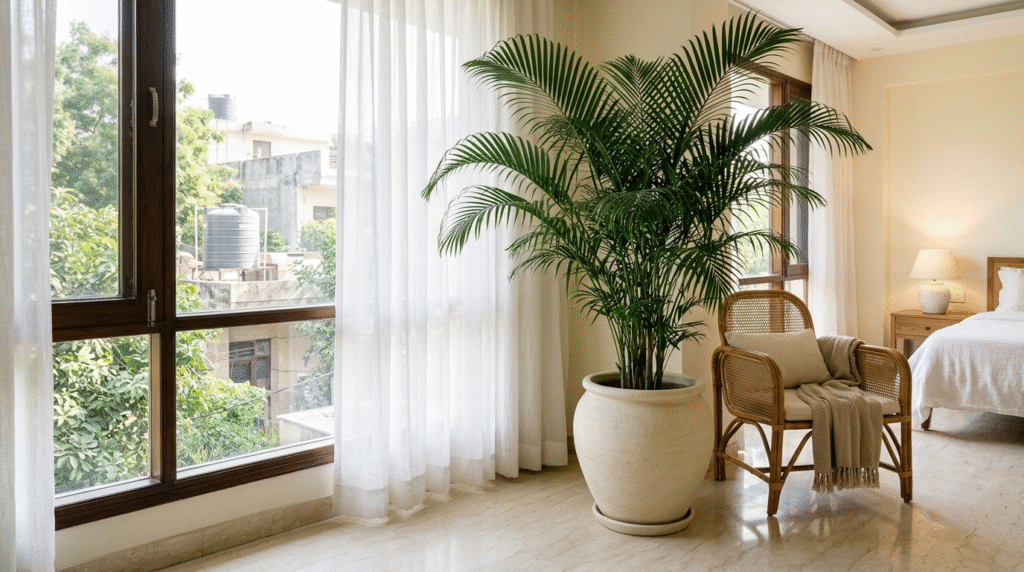
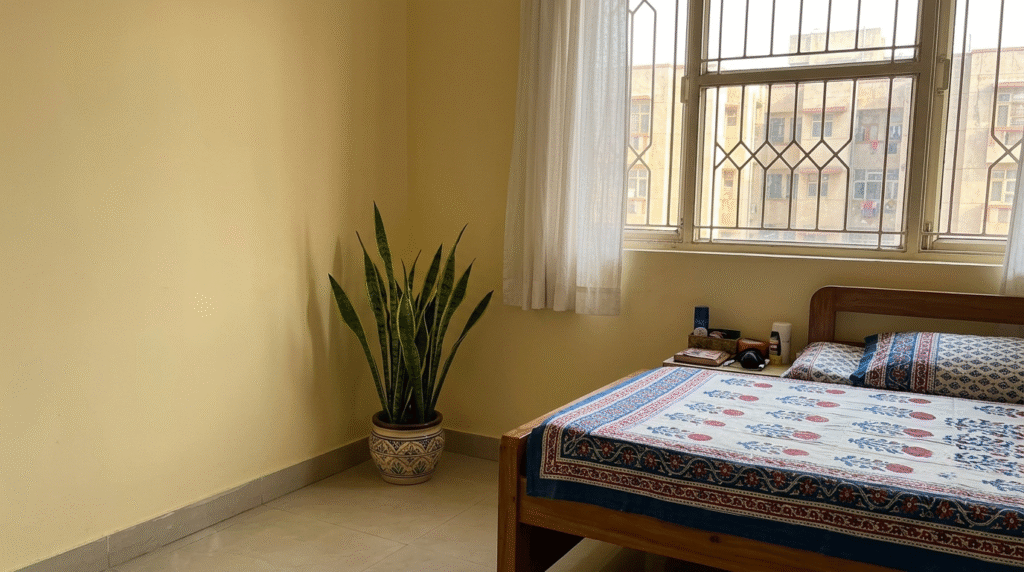
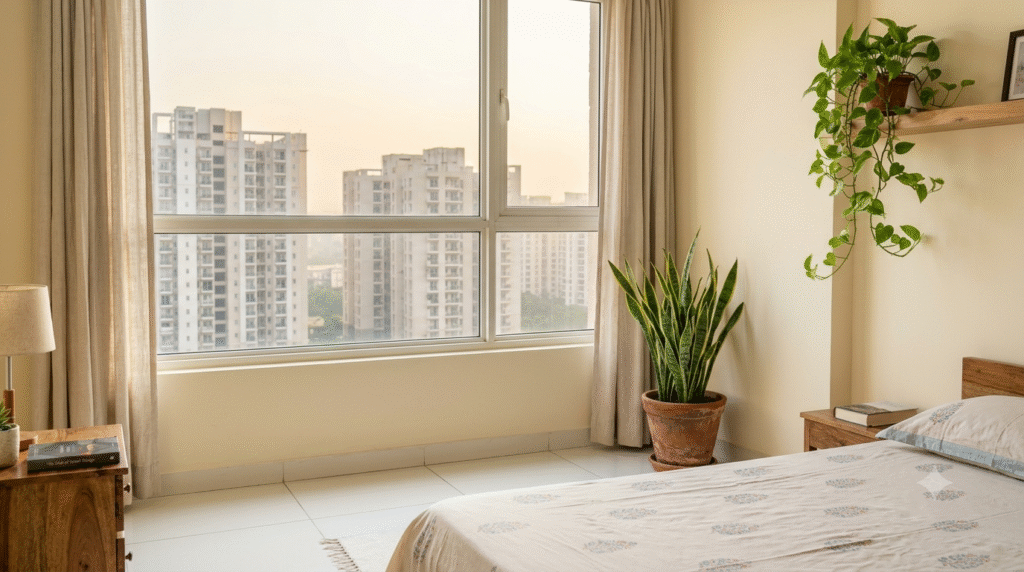
A snake plant in bedroom corners is the plant we get asked about most. It handles dim light, forgets about missed waterings, and looks neat with its upright, striped leaves. It is also a CAM plant, so it takes in carbon dioxide at night.
The leaves have pointed tips, so keep it a little away from the bed. It is mildly toxic to cats and dogs if chewed.
- Light: low to bright indirect
- Water: every 2–3 weeks; once a month in winter
- Pet-safe: no
- Bedroom tip: use it in a floor corner or on a dresser, away from where you walk at night
- Price: about ₹300–₹600 for a small plant
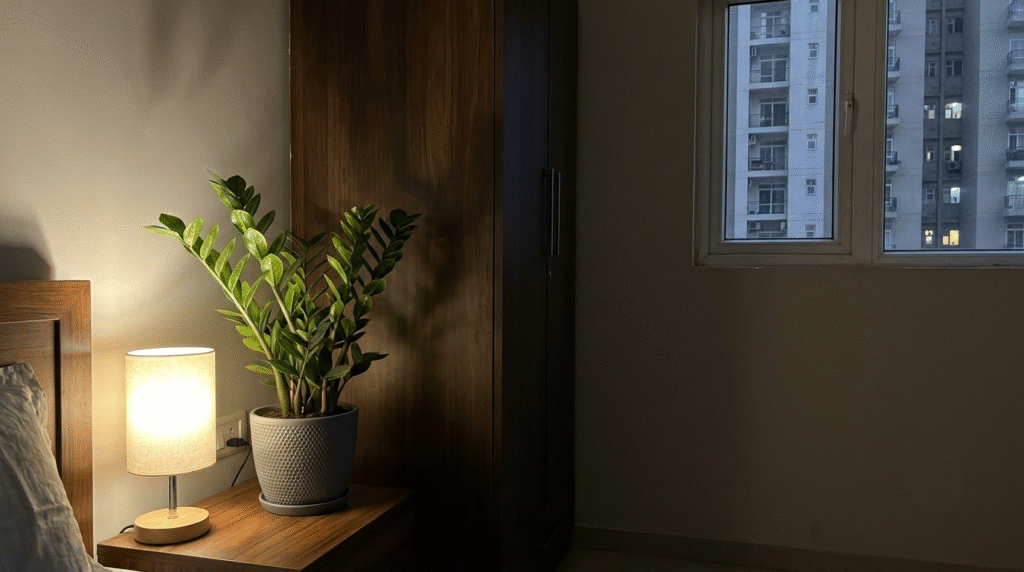
2. ZZ Plant (Zamioculcas)
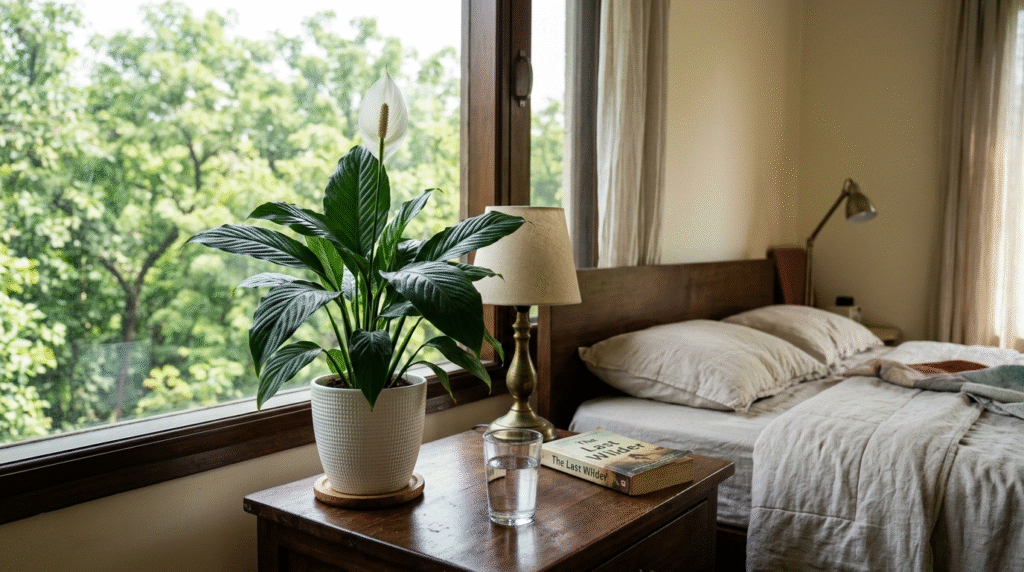
The ZZ plant is the best choice if you travel a lot. Its thick roots store water, so it survives weeks without a drink. The glossy leaves look smart in any room, even one with a small window.
It grows slowly, so buy the size you want. Wash your hands after touching it, because the sap can irritate skin. It is toxic to pets.
- Light: low to medium
- Water: every 2–3 weeks
- Pet-safe: no
- Bedroom tip: a great pick for a north-facing window or a dim corner
- Price: about ₹350–₹1,200, depending on size and pot
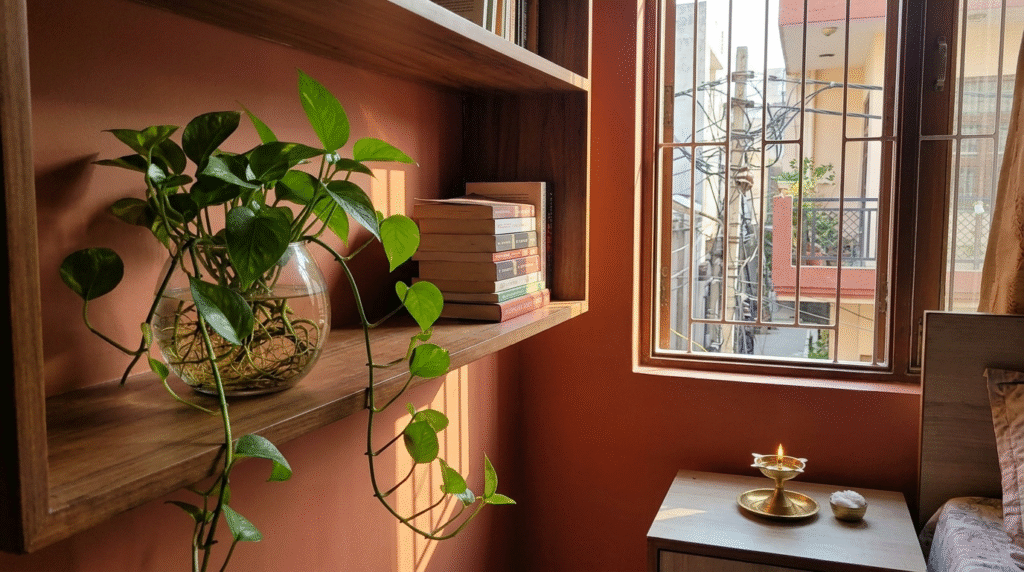
3. Money Plant (Pothos)
Almost every Indian home has a money plant, and there is a reason. It grows fast, forgives mistakes and looks lovely trailing from a shelf. If you are wondering about a money plant in bedroom spaces, it is a very safe choice for most people.
If you grow it in a glass or bottle of water, change the water every week and cover the mouth of the bottle. Standing water can breed mosquitoes. Money plant is not a CAM plant and it is toxic to pets.
- Light: low to medium
- Water: weekly, when the top soil is dry
- Pet-safe: no
- Bedroom tip: a shelf, a high cabinet or a hanging pot keeps trailing vines out of reach
- Price: about ₹100–₹350
4. Spider Plant (Chlorophytum)
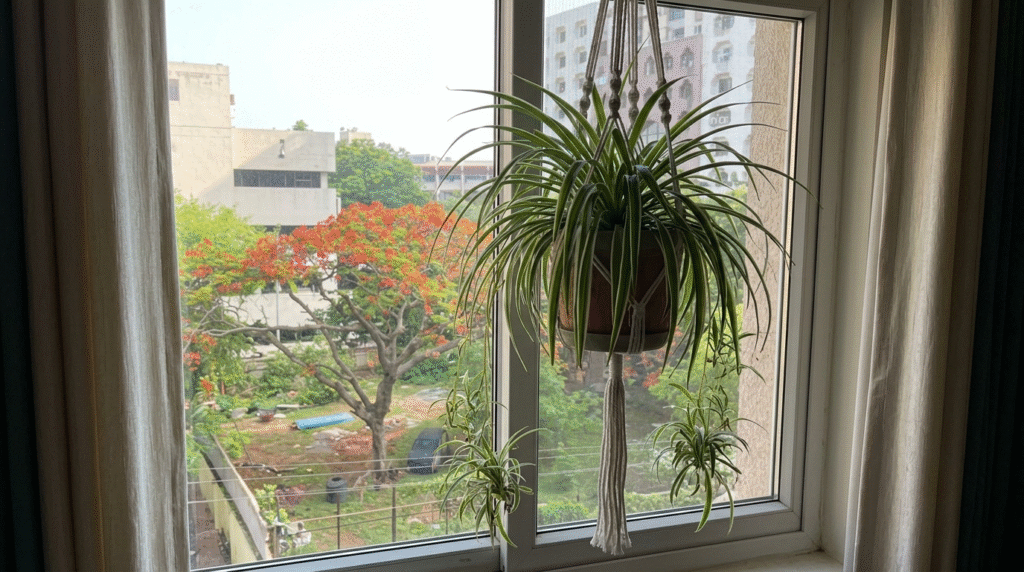
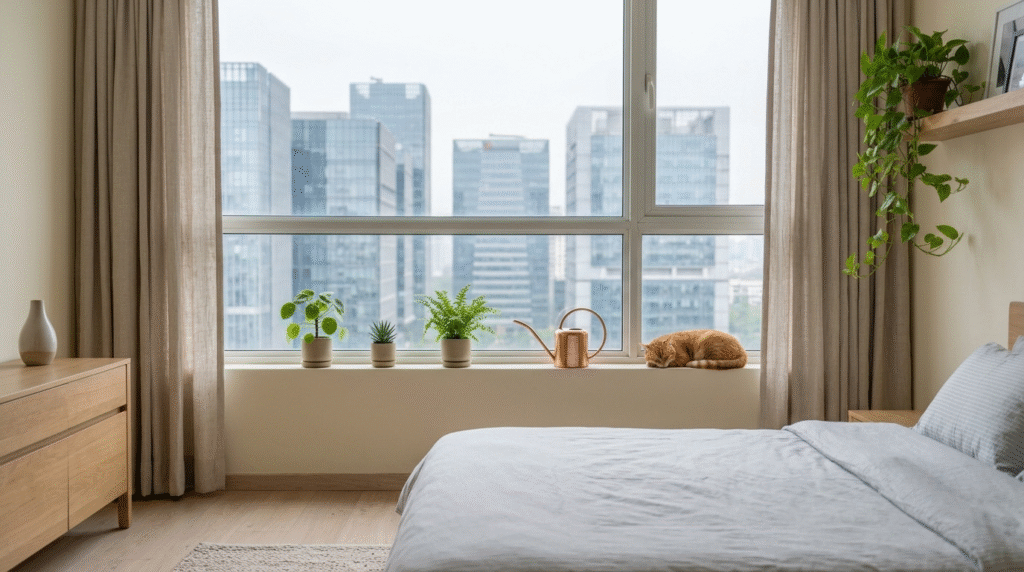
Spider plant is one of the safest good plants for bedroom use if you have pets. Its arching green-and-white leaves and baby plantlets look playful and fresh. Cats love the dangling leaves, so expect a few nibbles.
The tips can turn brown if your tap water is hard or the air is very dry. Using filtered or overnight-rested water usually fixes this.
- Light: medium, indirect
- Water: weekly
- Pet-safe: yes
- Bedroom tip: hang it near an east-facing window, or place it on a high shelf
- Price: about ₹250–₹350
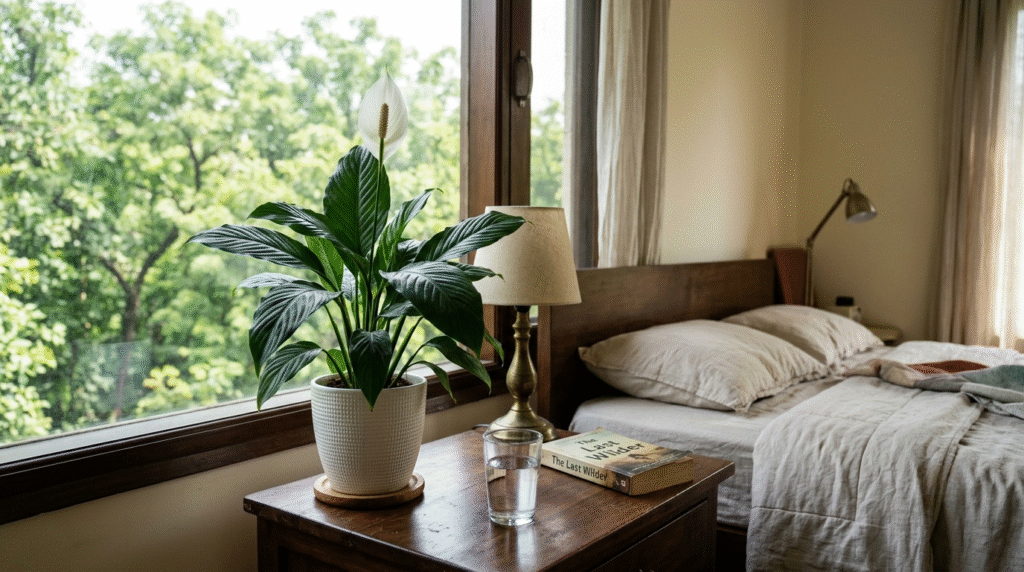
5. Peace Lily (Spathiphyllum)
Peace lily gives you glossy leaves and white flowers, even in a room with soft light. It also tells you when it is thirsty: the leaves droop, then perk up soon after watering. That makes it a friendly plant for beginners.
It contains calcium oxalate crystals, which can burn the mouth of a pet or child who chews it. Keep it away from cold AC air. You can read more in our guide to peace lily benefits.
- Light: low to medium
- Water: weekly; keep the soil slightly moist
- Pet-safe: no
- Bedroom tip: a bedside table or dresser, out of reach of pets
- Price: about ₹250–₹500
6. Areca Palm (Dypsis lutescens)
If your bedroom has a bright corner, an areca palm adds a soft, tropical feel. The feathery leaves arch outwards and fill a corner nicely. It is safe for cats and dogs, which makes it one of the best bedroom plants for pet owners.
It does not like harsh afternoon sun through glass, which can scorch the tips in a North Indian summer. A sheer curtain helps. For more varieties, see our palm plant guide.
- Light: bright, indirect
- Water: every 7–10 days
- Pet-safe: yes
- Bedroom tip: a floor corner beside a window, a few feet from the glass
- Price: about ₹400–₹600 for a small plant; larger ones cost more
7. Aloe Vera
Aloe vera is another CAM plant, and it is easy to love. It looks clean and simple, and many families keep it at home for small skin irritations. Patch-test the gel first if your skin is sensitive.
It needs a bright window. In a dim room, aloe turns thin and floppy. It is toxic to cats and dogs, so keep it out of reach.
- Light: bright, with some direct morning sun
- Water: every 2–3 weeks, only when the soil is fully dry
- Pet-safe: no
- Bedroom tip: an east- or south-facing windowsill
- Price: usually under ₹300
8. Rubber Plant (Ficus elastica)
The rubber plant gives you big, glossy leaves and a bold look. One tall plant in a corner can make a bedroom feel styled, even with very little else in the room. Wipe the leaves with a damp cloth once a month to remove dust.
The milky sap can irritate skin and is mildly toxic to pets. Check the ASPCA list if you have animals at home.
- Light: medium to bright, indirect
- Water: every 1–2 weeks
- Pet-safe: no
- Bedroom tip: a floor pot near an east-facing window
- Price: about ₹650 and up
9. Boston Fern
Boston fern has soft, feathery fronds that make a bedroom feel like a quiet garden. It is safe for cats and dogs. It is also one of the fussier plants on this list.
It wants moist soil and humid air, and it hates dry AC blasts and winter heaters. Group it with other plants, or place it in a bedroom with a bathroom attached. If you often forget plants, skip this one.
- Light: medium, indirect
- Water: keep the soil slightly moist, never soggy
- Pet-safe: yes
- Bedroom tip: keep it out of the AC airflow
- Price: about ₹350–₹700
10. Parlour Palm (Chamaedorea elegans)
Parlour palm stays small, usually 2 to 3 feet indoors, so it suits a side table or a corner of a small bedroom. It copes with low light better than most palms and is safe for pets. That makes it a great gift for a first-time plant parent.
- Light: low to medium
- Water: every 10–14 days
- Pet-safe: yes
- Bedroom tip: a dresser or side table, away from a cold AC vent
- Price: about ₹450–₹600
11. Heart-Leaf Philodendron
Heart-leaf philodendron has soft, heart-shaped leaves and trails beautifully from a shelf or hook. It grows well in low light and does not need much care. It looks lovely with a money plant in the same corner.
It is toxic to pets if chewed, so hang it high.
- Light: low to medium
- Water: weekly, when the top soil is dry
- Pet-safe: no
- Bedroom tip: a high shelf or hanging pot
- Price: about ₹250–₹300
12. Lavender and Jasmine (Mogra)
These two are for people who love fragrance. Lavender has a calm, clean scent, and jasmine (mogra) smells sweet in the evening. Both need a lot of sun, so they only work if your bedroom has a bright, sunny window.
The scent can be too strong for some people, especially at night. If you get headaches or have allergies, keep them in the living room instead. Lavender is mildly toxic to pets, and jasmine is generally listed as non-toxic, but check the ASPCA list before you buy. Learn more in our posts on mogra flowers and aromatic plants.
- Light: bright, with several hours of sun
- Water: only when the top soil is dry; lavender hates wet roots
- Pet-safe: check before buying
- Bedroom tip: a sunny windowsill, not next to your pillow
- Price: about ₹100–₹500
Best Bedroom Plants by Need
Maybe you already know what you need. Here are quick lists for the most common situations. Each plant is explained in the profiles above.
Best low light plants for bedroom (no sunlight)
Plants for a bedroom without sunlight need to survive on soft light. Your best choices are snake plant, ZZ plant, money plant and parlour palm. They will grow slowly, but they will stay green.
If your room is very dark, move the plant to a brighter spot for a few hours every week. A small LED grow light also helps.
Best pet-friendly bedroom plants
If you share your room with a cat or dog, choose spider plant, areca palm, parlour palm or Boston fern. These are listed as non-toxic to cats and dogs. Even safe plants can upset a stomach if eaten in large amounts, so watch your pet.
Best bedroom plants for sleep and relaxation
Lavender, jasmine and peace lily are the most popular. Remember that no plant is proven to make you sleep better. The calm comes from the scent, the greenery and the feeling of a well-cared-for room.
Best small and low-maintenance plants
For a small bedroom, pick small plants that sit on a shelf or hang from a hook. Money plant, ZZ plant, spider plant and heart-leaf philodendron are good low maintenance plants for bedroom use. They do not need much space or time.
Best plants for an AC bedroom
AC air is cold and dry, which dries out leaves. Snake plant and ZZ plant handle it well. Keep ferns and peace lilies away from the vent, or they will turn brown at the tips.
Indoor Plants for Bedroom as per Vastu
Plants to Avoid in the Bedroom
Not every plant belongs next to your bed. The plants to be kept in bedroom spaces should be calm, safe and easy to look after. Here is what we suggest you skip:
- Toxic plants, if you have pets or toddlers. Sago palm is very dangerous for dogs, so do not keep it at home if your dog chews plants. Peace lily, snake plant and ZZ plant are less serious, but still keep them out of reach.
- Very fragrant flowers, if you have allergies. A strong smell all night can cause headaches in some people.
- Fussy, high-humidity plants in an AC room. Ferns and calatheas dry out quickly in cold, dry air.
- Large trees and sharp-leaved plants near the bed. They take space and can scratch you in the dark.
- Any plant you will forget about. A dying plant is not relaxing to look at.
Where to Place Plants in Your Bedroom
Here are the plants to keep in bedroom spots that work best, and a few simple rules. Most people put plants on the floor or the nightstand and then wonder why they struggle. Light and safety should decide the spot.
Nightstand and shelf
Small plants like a spider plant, money plant or small snake plant sit nicely here. Put the pot in a saucer so water does not damage your furniture. Do not place anything heavy on a high shelf above the bed.
Windowsill
This is the brightest spot in the room. It suits aloe vera, lavender and jasmine. In summer, move plants a little back from the glass, because west-facing windows can burn the leaves.
Corners and floor
One tall plant in a corner, like an areca palm or rubber plant, makes a room feel complete. Keep it a few feet from the window if the light is strong. Leave enough space to walk around it at night.
Hanging and trailing
Money plant and philodendron look good in a hanging pot or on the edge of a shelf. If floor space is tight, a small wall shelf or a vertical garden is another good idea.
Three placement rules to remember:
- Never place a plant directly in the AC airflow.
- Keep plants away from pillow height and the head of the bed.
- Always use a tray under the pot and empty it after watering.
Bedroom Plant Care in Delhi NCR
Delhi’s weather is tough on plants. Summers are very hot, winters are dry and smoggy, and the monsoon brings damp air. Plants need small changes in care through the year.
The simple watering rule
Water only when the top 2–3 cm of soil feels dry. Check with your finger every time. Water slowly until it drains from the bottom, then empty the saucer.
Use a pot with drainage holes. Overwatering kills more bedroom plants than anything else. If you want to read more about common errors, see our guide on mistakes to avoid for a healthy plant garden.
Summer heat and AC
Plants dry out faster in summer, so check the soil more often. Palms such as areca may need water every 5–7 days in peak heat. Keep plants away from hot west-facing glass and from the cold blast of the AC.
Winter smog and dry heaters
Dust and smog settle on leaves and block light. Wipe leaves with a damp cloth every two weeks. Water less, because plants grow slowly in cold weather, and keep them away from heaters and cold draughts.
Monsoon humidity
Soil stays wet for longer, which leads to root rot and fungus gnats. Water less and make sure the pot drains well. Empty saucers every day, because standing water also attracts mosquitoes. A lighter, well-draining soil mix with some coco peat can help.
A simple care calendar:
- March to June: water more often, shade from harsh sun, feed once a month
- July to September: water less, watch for gnats and mould, empty saucers
- October to November: wipe dust, cut back on feeding, check for pests
- December to February: water least, keep away from heaters, no feeding
Common Bedroom Plant Problems and How to Fix Them
| What you see | Likely cause | What to do |
|---|---|---|
| Yellow leaves | Too much water or poor drainage | Water less, check the drainage hole, remove yellow leaves |
| Brown tips | Dry AC air, hard water or strong sun | Move away from the vent, use filtered or rested water |
| Drooping leaves | Thirst, or root rot | Check the soil: dry means water; wet and smelly means repot |
| Long, thin growth | Too little light | Move closer to a window or add a small grow light |
| White mould on soil | Wet soil, poor airflow | Scrape off the top layer, let the soil dry, water less |
| Tiny flies near the pot | Fungus gnats in damp soil | Let the top soil dry out, use yellow sticky traps |
| Sticky leaves or white cotton-like spots | Aphids or mealybugs | Wipe with a soapy cloth, then spray neem oil weekly |
How Much Do Bedroom Plants Cost in India?
Small bedroom plants usually cost about ₹250 to ₹700 in a nursery pot. Larger, established plants can cost ₹1,000 to ₹3,000, depending on the variety and size. Prices change with the season, so check before you buy.
A simple starter set is a snake plant, a spider plant and a money plant. That usually costs about ₹650 to ₹1,300 for all three, plus pots. A good pot can cost as much as the plant, so plan for both. Our guide to plant pot designs will help you choose.
Final Thoughts: Start Small, Match the Plant to the Room
The best indoor plants for bedroom use are the ones that suit your light, your pets and your routine. Check those three things first, and the rest becomes easy. Start with one or two plants, see how they do for a month, and then add more.
Do not expect a plant to clean the air or fix your sleep. Expect a calmer, greener room that is nice to wake up in. For many people, that is already worth it. You can also read our guide to indoor plants and their benefits for more ideas around the home.
Frequently Asked Questions About Indoor Plants for Bedroom
Which plant is good for bedroom use?
Snake plant, ZZ plant, money plant, spider plant and areca palm are all good choices. They are easy to care for and tolerate normal bedroom light. If you have pets, pick spider plant or areca palm, because both are listed as non-toxic.
Is it good to keep plants in the bedroom?
Yes, in small numbers. One to three healthy plants can make a bedroom look and feel calmer. Choose plants that suit your light, keep them away from AC air, and avoid damp soil.
Can I sleep with a snake plant in my room?
Yes. A snake plant is safe to keep in a bedroom, and it is a CAM plant that takes in carbon dioxide at night. Just keep it away from pets and young children, because it is mildly toxic if chewed.
Which plants release oxygen at night?
Snake plant, aloe vera and some orchids and succulents use CAM photosynthesis and keep releasing oxygen after dark. The amount is small, so do not rely on them to change the air in your room. Good ventilation matters more.
Can I keep a money plant in the bedroom?
Yes. A money plant is easy to grow and looks good on a shelf. If you follow Vastu, many guides suggest the east or southeast and away from the head or foot of the bed. It is toxic to pets, so keep it out of reach.
Which plants should not be kept in the bedroom?
Avoid plants that are toxic to your pets, very strongly scented flowers if you have allergies, large trees, and thorny plants near the bed. Also skip fussy plants like ferns if your room has a strong AC.
Which indoor plants are safe for cats and dogs?
Spider plant, areca palm, parlour palm and Boston fern are listed as non-toxic to cats and dogs. Always double-check on the ASPCA list, and watch your pet. Even safe plants can cause a mild stomach upset if eaten in large amounts.
Which plant is best for a bedroom with no sunlight?
ZZ plant and snake plant cope best with very low light. Money plant and parlour palm also do well in dim rooms. They will grow slowly, so be patient and do not overwater them.
How many plants can I keep in a bedroom?
One to three plants is a good number for most bedrooms. This keeps the room open and easy to clean. In a larger room, you can add a few more, as long as you can give each one enough light.
Do bedroom plants attract mosquitoes or insects?
Healthy plants do not attract mosquitoes by themselves. Standing water in trays or bottles does. Empty saucers daily and keep the top soil dry to avoid fungus gnats. Some herbs help a little (see our list of mosquito repellent plants), but plants alone will not keep mosquitoes out, so use window screens as well.
Need Help Choosing the Right Plants for Your Bedroom?
If you are still not sure which plant suits your room, we are happy to help. Send us a photo of your bedroom and window, and our gardeners will suggest plants that fit your light, pets and budget. We offer plant selection, setup and regular care across Noida, Gurugram and Delhi NCR, using chemical-free methods.
See our indoor plants service or contact us to get started. Working from home? We also offer plants on rent for offices.