
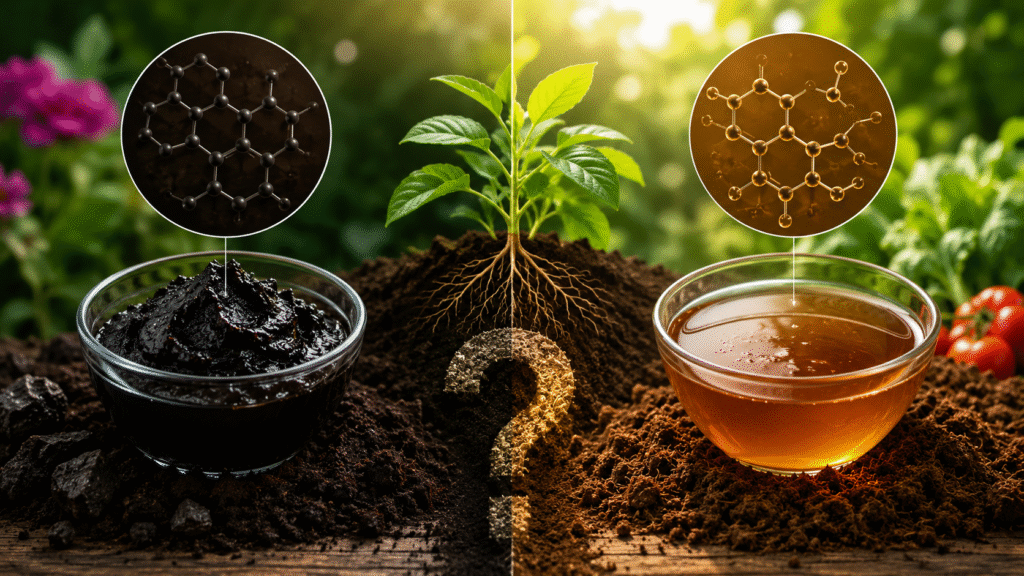
If you have ever walked into a nursery or picked up a bag of fertilizer from a garden store, you may have noticed some names that sound a little scientific like Humic Acid and Fulvic Acid. These two names often appear together on product labels, but very few people actually stop to ask what they mean or why they matter. When we talk about Humic Acid vs. Fulvic Acid, we are talking about two of the most powerful natural substances that exist in healthy soil substances that have been quietly helping plants grow for millions of years, even before humans started gardening.
Both humic acid and fulvic acid come from nature. They are not chemicals made in a factory. They are formed when dead leaves, plants, and organic matter break down slowly over thousands of years deep inside the earth. The result is a rich, dark organic material that makes soil incredibly healthy and fertile. Today, gardeners and farmers across the world including right here in Delhi NCR are adding these two substances to their gardens to improve plant growth, make soil richer, and reduce the need for chemical fertilizers.
But here is the problem most people have no idea which one to use, how they are different, or whether they even need both. The names sound similar. The products look similar. And the information available online is often too technical and confusing to understand. So naturally, even experienced gardeners and farmers end up scratching their heads when they have to choose between the two.
Do not worry you are absolutely not alone in this confusion! The good news is that once you understand the basic idea behind each of these substances, the difference becomes very clear and very simple. You do not need a science degree to understand it. Think of it like this both humic acid and fulvic acid are helpers for your plants, but they help in different ways and at different levels. One works in the soil, and the other works inside the plant itself.
In this blog, we are going to break down everything in the simplest way possible no heavy science, no complicated words, just clear and easy explanations. We will talk about what humic acid and fulvic acid actually are, where they come from, how they are different from each other, what benefits each one offers, and most importantly which one your garden really needs right now. Whether you have a small balcony garden, a terrace farm, or a full kitchen garden in Delhi, Noida, or Gurugram, this guide will help you make the right choice for your plants.
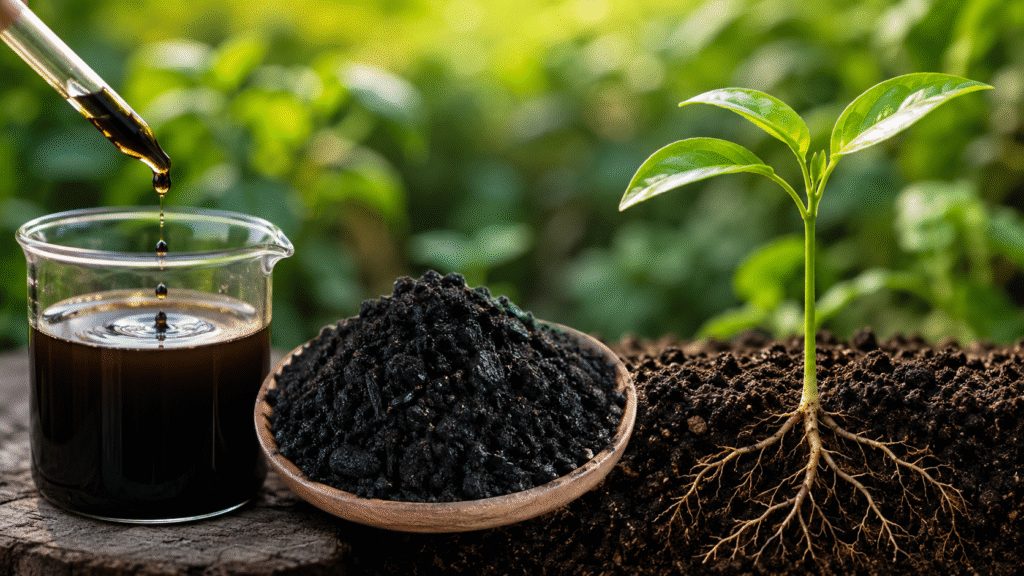
What is Humic Acid?
Humic acid is a natural substance that is found in the soil. It is formed when dead plants and animals break down slowly over thousands and thousands of years. This process is called humification. The end result is a dark brown or black material called humus, and humic acid is a key part of it.
Think of humic acid like a sponge in your soil. It holds water, nutrients, and minerals and slowly releases them to plant roots when they need it. Humic acid has very large molecules. Because of this, it does not enter the plant directly. Instead, it works mostly in the soil around the roots.
Here is what humic acid does for your garden:
- It improves the structure of soil so that it does not become too hard or too loose
- It helps the soil hold water for longer, so plants do not dry out quickly
- It acts as a natural fertilizer booster by making nutrients more available to roots
- It encourages healthy bacteria and microorganisms in the soil
- It reduces the need for chemical fertilizers over time
Humic acid is especially great for long-term soil health. If you keep using it season after season, your soil becomes richer, darker, and better for plant growth. It is like investing in your garden for the future.
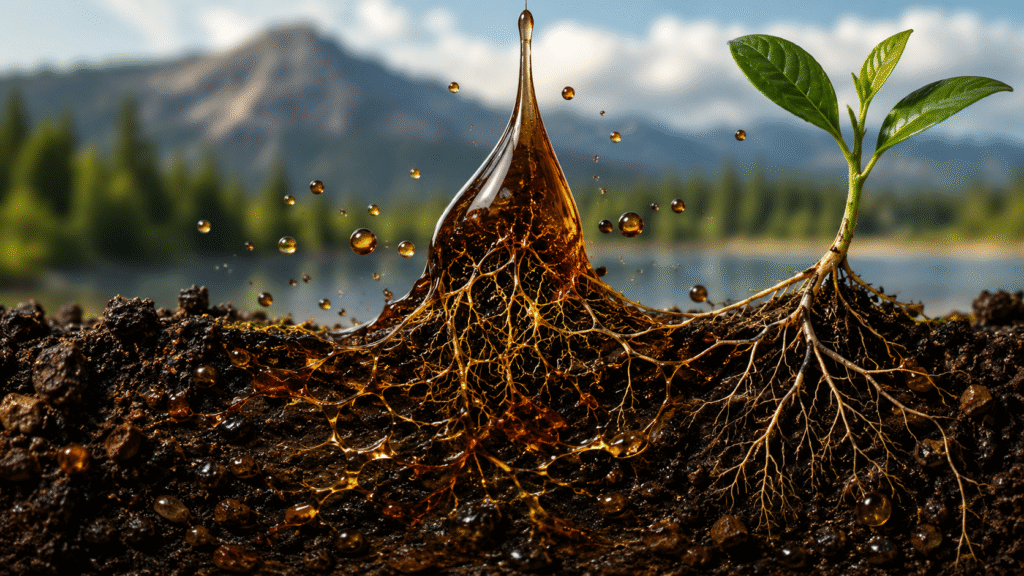
What is Fulvic Acid?
Fulvic acid is closely related to humic acid. In fact, both come from the same natural process of decomposition. But fulvic acid is a smaller molecule and it is yellow or light brown in colour. The biggest difference is that fulvic acid is soluble in water at all pH levels meaning it dissolves easily in both acidic and alkaline conditions.
Because its molecules are so small, fulvic acid can actually enter plant cells directly. It works like a delivery truck it picks up minerals and nutrients from the soil and delivers them straight to the inside of the plant. This makes it very fast and effective for plant nutrition.
Here is what fulvic acid does for your garden:
- It delivers nutrients directly into plant cells quickly
- It improves the plant’s ability to absorb minerals like iron, zinc, and magnesium
- It boosts root growth and makes roots stronger
- It helps plants handle stress from heat, drought, or disease
- It improves photosynthesis the process plants use to make food from sunlight
If humic acid is the long-term builder, fulvic acid is the quick-action helper. It gives plants a fast boost and makes sure they are absorbing all the nutrients available in the soil.
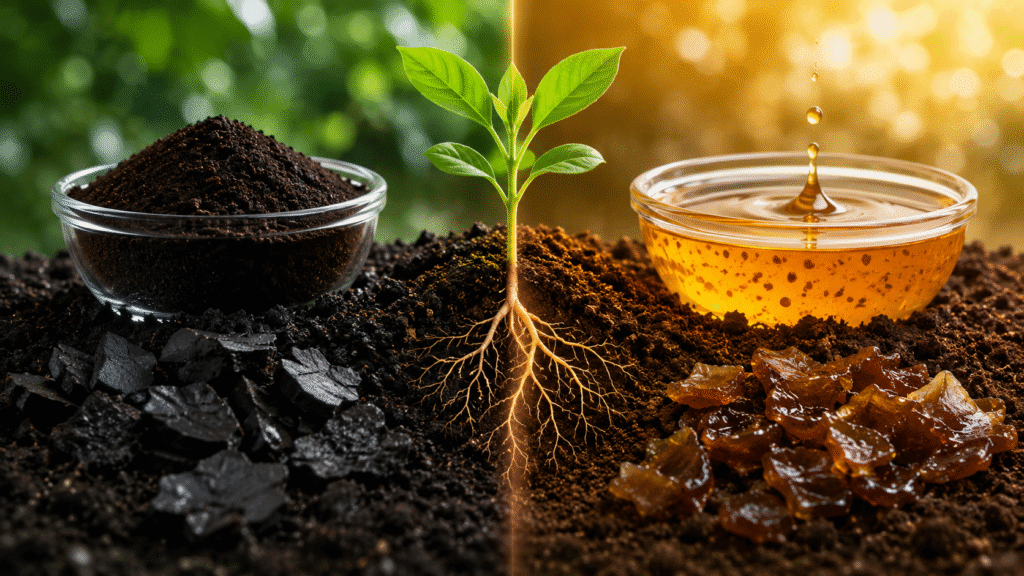
Humic Acid vs. Fulvic Acid: Key Differences You Should Know
Now let us put both of them side by side to understand the real difference. When we talk about Humic Acid vs. Fulvic Acid, the most important things to compare are molecular size, solubility, where they work, and how fast they act.
1. Molecular Size
Humic acid has very large molecules. Fulvic acid has small molecules. This one difference changes everything about how they work. Humic acid stays in the soil. Fulvic acid goes inside the plant.
2. Solubility in Water
Humic acid dissolves only in water with a higher pH (alkaline). Fulvic acid dissolves in both acidic and alkaline water. This makes fulvic acid easier to use in liquid sprays and foliar applications.
3. Colour
Humic acid is dark brown or black. Fulvic acid is light yellow or golden in colour. So if you are buying them, this colour difference helps you identify them.
4. Where They Work
Humic acid works in the soil it improves soil structure and feeds soil organisms. Fulvic acid works inside the plant it moves nutrients directly into plant tissues and cells.
5. Speed of Action
Humic acid works slowly but its effects last for a long time sometimes months or even years. Fulvic acid works quickly and gives fast results, but it needs to be reapplied more often.
6. Best Used For
Humic acid is best for improving poor or depleted soil. Fulvic acid is best when plants are not absorbing nutrients properly or when they look weak and stressed.
Can You Use Both Together?
Absolutely yes! In fact, using both humic acid and fulvic acid together is the best approach for a healthy garden. They are not competitors they are a team.
Think of it this way: humic acid prepares the soil and makes it rich and healthy. Fulvic acid then takes all those available nutrients and delivers them efficiently to the plant. Together, they create the perfect environment for strong, healthy plant growth.
Many good quality organic fertilizers and soil conditioners in India already contain both humic acid and fulvic acid in a combined formula. Look for labels that say “Humic + Fulvic 98% water soluble” these are very effective for home gardens and terrace gardens.
When Should You Use Humic Acid?
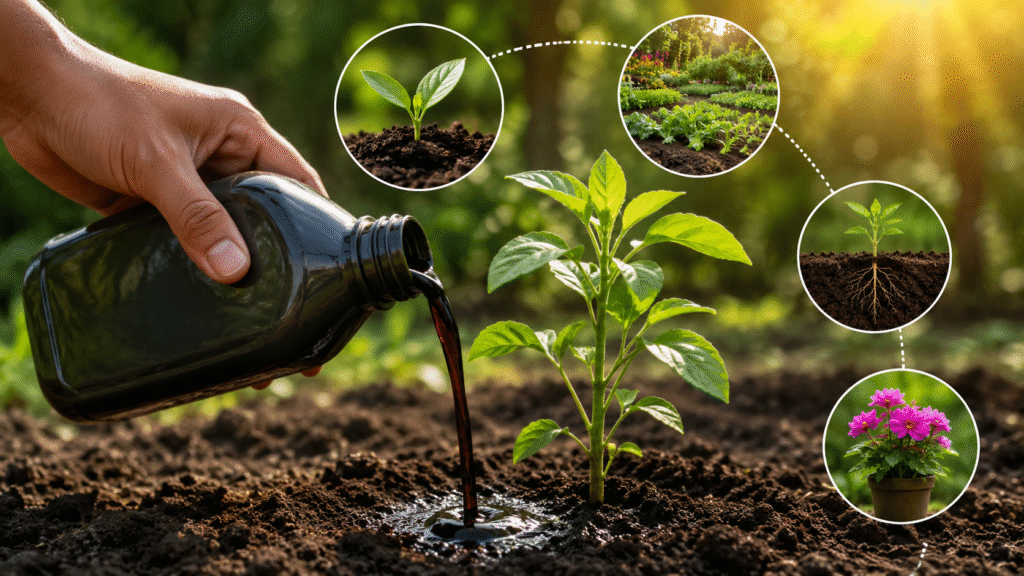
Use humic acid when:
- Your soil is hard, dry, or poor in quality
- You are starting a new garden bed or terrace garden
- Your plants are growing slowly even after regular watering and fertilizing
- You want to reduce the use of chemical fertilizers over time
- You are doing organic farming or want chemical-free gardening
In cities like Delhi, Noida, and Gurugram, the soil available for gardening is often not the best quality. It can be sandy, full of clay, or completely lacking in organic matter. Adding humic acid to your soil every season can make a big difference over time. It helps hold moisture during hot summers and improves drainage during heavy monsoon rains.

When Should You Use Fulvic Acid?
Use fulvic acid when:
- Your plants look yellow or pale a sign of nutrient deficiency
- Leaves are curling, wilting, or falling off
- Plants are not flowering or fruiting properly
- You are growing vegetables, fruits, or flowering plants that need extra nutrition
- You want fast results in a short time
Fulvic acid is excellent for plants like tomatoes, peppers, flowering plants, and leafy vegetables. It helps them absorb iron, zinc, and other micronutrients that are often locked in the soil and not available to roots. If your plants look dull or are not growing at the speed you expect, fulvic acid is often the answer.
How to Apply Humic Acid and Fulvic Acid in Your Garden
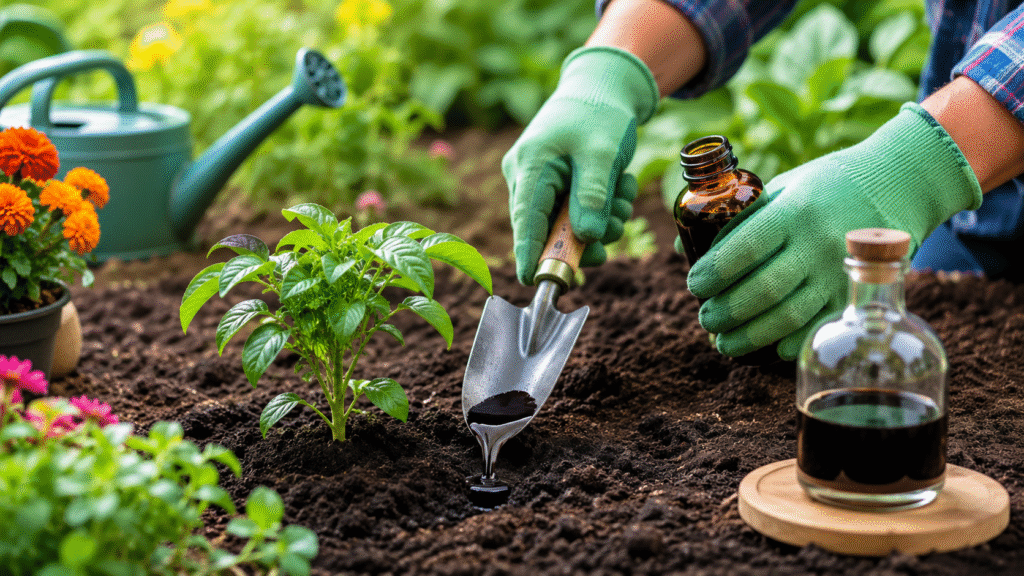
Method 1: Soil Drench
Mix humic acid or fulvic acid in water as directed on the product label. Pour it around the base of your plants. This is the most common and easy method. Do this once a month for best results.
Method 2: Foliar Spray
Mix fulvic acid in water and spray it directly on the leaves of your plants. Because fulvic acid can enter through leaf pores, this gives very fast results. Do this early in the morning or in the evening to avoid leaf burn.
Method 3: Mix with Compost or Organic Matter
You can mix humic acid powder with your compost or organic matter before adding it to your garden beds. This boosts the microbial activity in your compost and makes it even more nutrient-rich.
Method 4: Use During Transplanting
When you are moving a plant from one pot to another or planting a sapling in the ground, mix a small amount of fulvic acid in the water you use for watering. It will reduce transplant shock and help roots settle in faster.

Are These Safe for Home Gardens?
Yes, Both humic acid and fulvic acid are completely natural and safe for home gardens. They are non-toxic for humans, pets, and wildlife. You do not need to wear special gear or worry about harmful chemicals.
They are also safe for organic gardening. In fact, many certified organic farmers across India use them regularly. They help reduce dependence on synthetic fertilizers, which is good for your plants, your health, and the environment.
One more thing you cannot really “over-apply” these acids in a harmful way. If you use a little extra, the worst that happens is you waste some product. But always follow the directions on the label to get the best results.
Conclusion
So now you know the complete story of Humic Acid vs. Fulvic Acid. Both are powerful, natural, and completely safe for your garden. They come from the same source but work in very different ways.
Humic acid is your soil’s long-term best friend. It builds up the soil, improves its structure, and makes it a perfect home for your plants. Fulvic acid is the fast-acting helper that makes sure your plants are actually absorbing all the good stuff available in the soil.
If you are serious about growing a healthy, thriving garden whether it is a small balcony garden, a terrace farm, or a full backyard using both humic acid and fulvic acid together is one of the smartest things you can do.
Start small, be consistent, and watch your plants transform. And if you ever need expert help with your garden in Delhi NCR, remember that Maalibhaiya.com is always here to help you with professional maali services and gardening guidance.
Happy Gardening! 🌿
Frequently Asked Questions
Q1. Which is better humic acid or fulvic acid?
Neither is “better” they serve different purposes. Humic acid improves soil over time. Fulvic acid gives plants a quick nutrient boost. Using both together gives the best results.
Q2. Can I use humic acid and fulvic acid for terrace gardens?
Yes! They work very well for terrace gardens, especially in cities like Delhi and Noida where soil quality is often poor. They help container soil stay healthy and nutritious for longer.
Q3. How often should I apply these acids?
Humic acid can be applied once a month or once every two months. Fulvic acid, since it works quickly, can be applied every two to four weeks, especially as a foliar spray.
Q4. Is humic acid good for all plants?
Yes, Humic acid works for all types of plants vegetables, fruits, flowers, trees, and even grass. It is a universal soil conditioner that benefits every kind of garden.
Q5. Will these help my plants grow faster?
Yes! When plants absorb nutrients more efficiently and grow in healthy soil, they grow faster, look greener, and produce better fruits and flowers. Many gardeners see visible results within 2 to 4 weeks of regular use.