
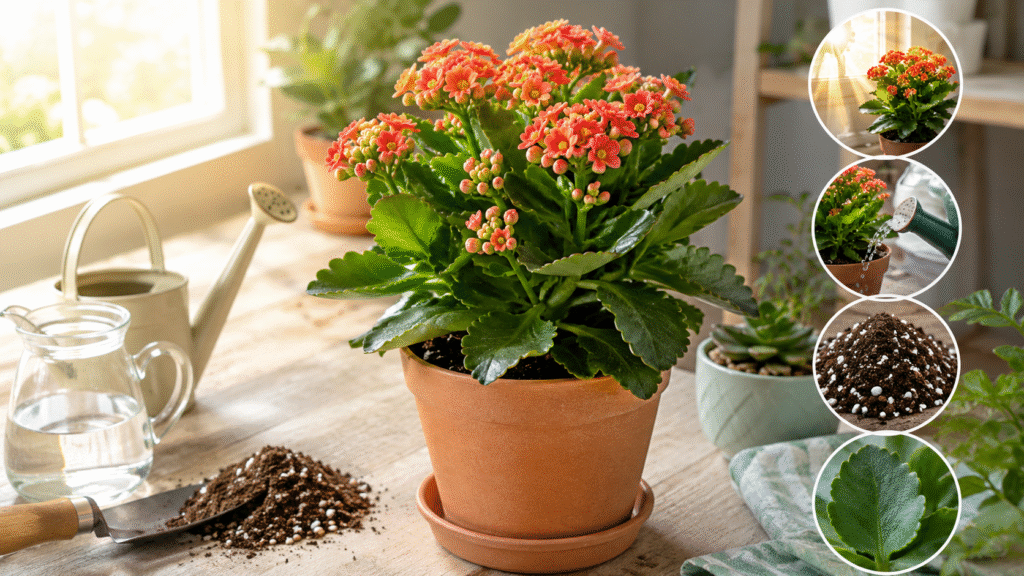
Have you ever wanted a plant that looks gorgeous, does not fuss over water, and practically takes care of itself? Then let us introduce you to the Kalanchoe plant one of the most loved flowering houseplants in the world, and honestly, one of the most forgiving ones too.
Whether you have a green thumb or you have accidentally killed every plant you have ever owned, the Kalanchoe plant is here to change that story. It is tough, adaptable, and incredibly beautiful. It blooms in vivid shades of red, orange, pink, yellow, and white and those flowers do not disappear after just a few days. They stick around for weeks at a time, giving your home a constant splash of colour without asking much in return.
The Kalanchoe plant has its roots in Madagascar, a tropical island known for its rich and unique plant life. From there, it made its way into homes, offices, and flower shops around the world. Today, it is one of the top-selling houseplants globally and it is easy to see why. It survives dry spells, handles average room temperatures, and grows happily on a simple windowsill.
But even the easiest plants need a little guidance to truly thrive. That is exactly what this blog is for. From sunlight and watering schedules to soil type, fertilising, and fixing common problems we have covered every single thing you need to know. Read on, and by the time you finish, your Kalanchoe plant will be in the best hands it has ever been.
What Is a Kalanchoe Plant?
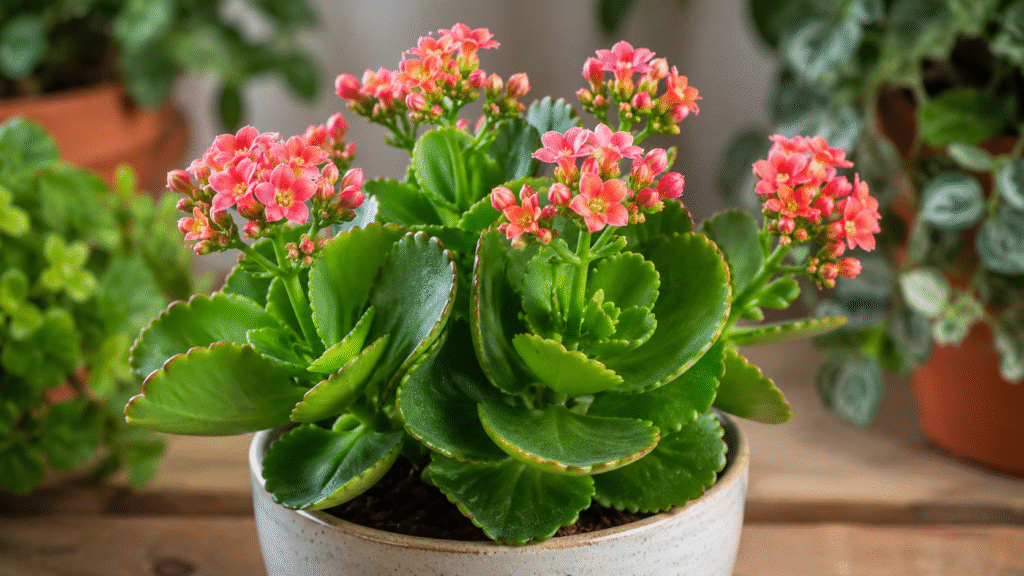
Before we get into the care tips, let us first understand what this plant actually is. The Kalanchoe plant belongs to a family of plants called Crassulaceae, which also includes other popular succulents. The most common variety you will find in homes and flower shops is called Kalanchoe blossfeldiana. It is known for its thick, shiny green leaves and clusters of tiny flowers that last for several weeks.
With over 125 different species, there is a Kalanchoe plant for everyone. Some are famous for their flowers, while others are loved for their unique leaf shapes. No matter which variety you pick, the basic care routine stays almost the same.
How Much Light Does a Kalanchoe Plant Need?
Light is one of the most important things for a Kalanchoe plant. Get this right, and the rest becomes much easier.
Here is what you need to know about light:
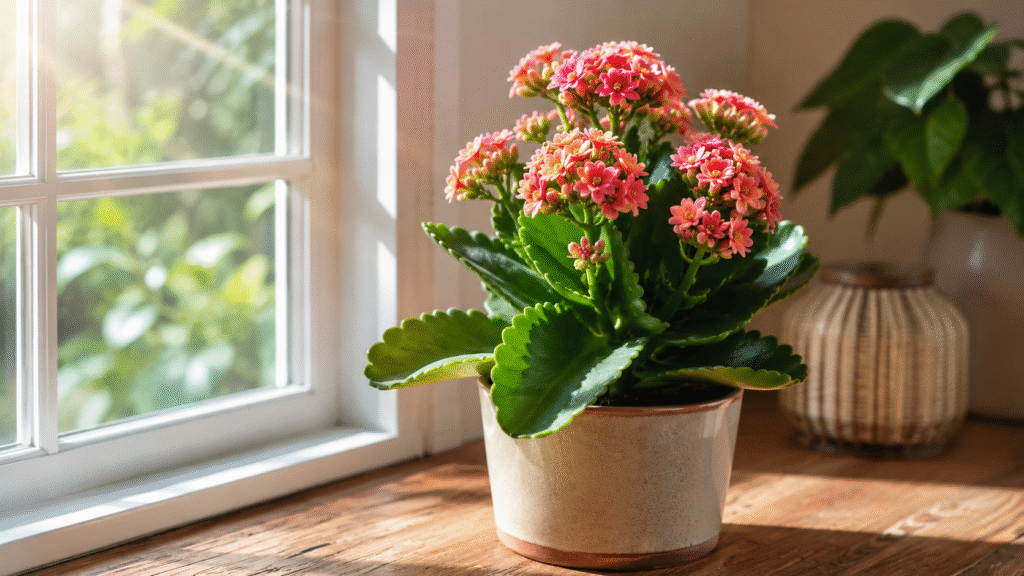
- Place your Kalanchoe plant near a window that gets bright but indirect sunlight. A south-facing or east-facing window works really well.
- Direct, harsh afternoon sun can burn the leaves and turn them yellow or brown. If you see this happening, move the plant a little further from the window.
- Ideally, your Kalanchoe plant needs about 6 hours of bright light every day.
- If you are growing it outdoors, keep it in a spot with partial shade during the hottest part of the day.
One cool thing about the Kalanchoe plant is that it is what scientists call a “short-day plant.” This means it needs longer periods of darkness to produce flowers. If your plant has stopped blooming, try giving it 12 to 14 hours of complete darkness every day for about 6 weeks. Many people cover the plant with a box or move it to a dark room at night. After this, it should start blooming again!
How to Water a Kalanchoe Plant
Overwatering is the number one reason why people end up killing their Kalanchoe plant. Since it is a succulent, it stores water in its thick leaves and does not need a lot of it.
Follow these simple watering tips:
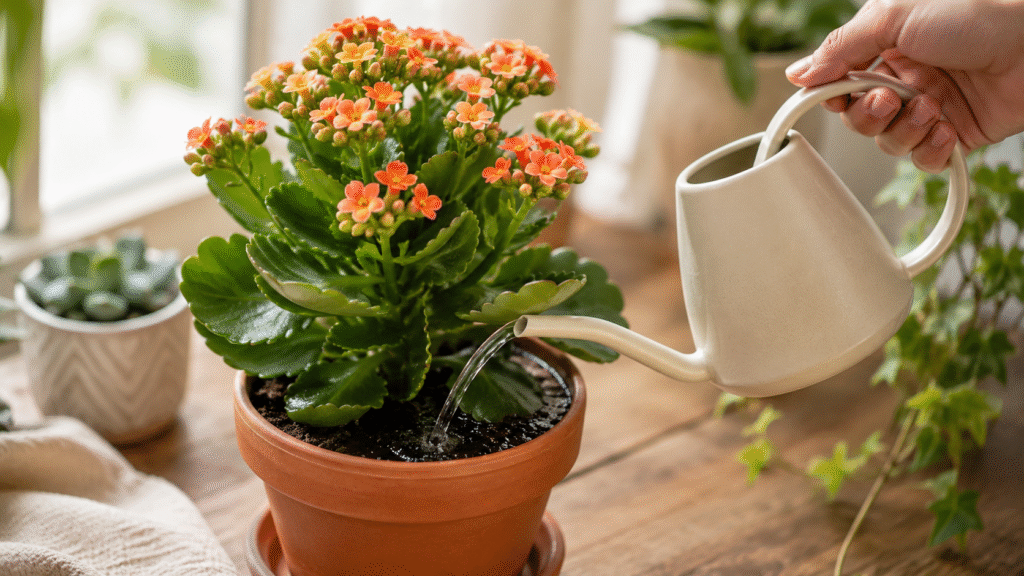
- Water your Kalanchoe plant only when the top inch of the soil feels dry. Stick your finger into the soil if it is still moist, wait a few more days.
- In summer, you may need to water once every 10 to 14 days. In winter, once every 2 to 3 weeks is usually enough.
- Always water deeply, so the water reaches the roots. Then let the excess drain out from the bottom of the pot.
- Never let the Kalanchoe plant sit in a plate full of water. Standing water leads to root rot, which can kill the plant quickly.
- Use room-temperature water if possible. Cold water can sometimes stress the plant.
A simple rule to remember: when in doubt, do not water. Your Kalanchoe plant will handle dry soil much better than soggy soil.
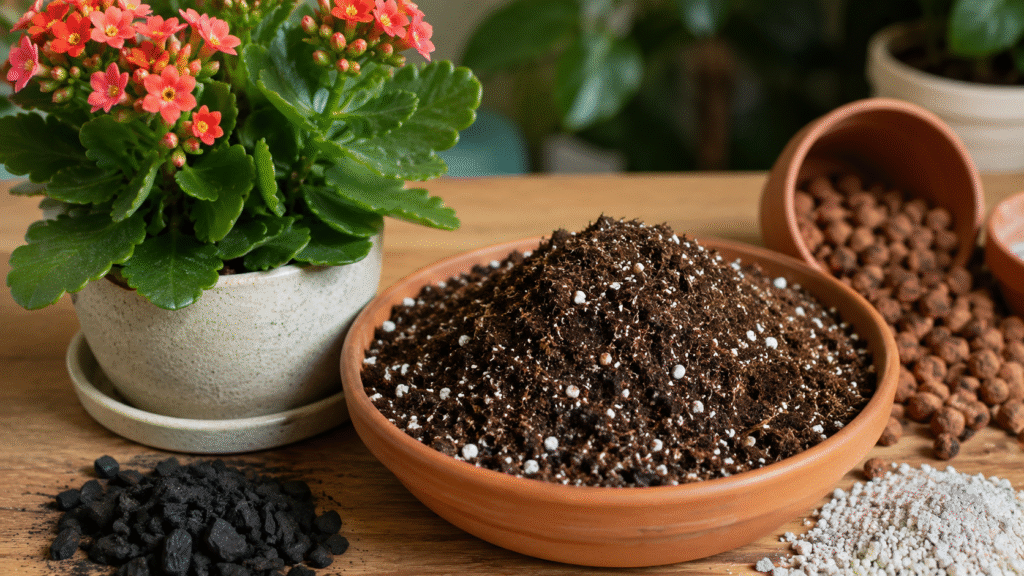
Best Soil for a Kalanchoe Plant
The right soil makes a big difference for a Kalanchoe plant. Since it is a succulent, it needs soil that does not hold too much moisture. Regular garden soil is too heavy and holds water for too long, which can damage the roots.
Here is what works best:
- Use a well-draining succulent or cactus potting mix. You can find these easily at any garden store.
- If you only have regular potting soil, mix it with some coarse sand or perlite (about 50-50) to improve drainage.
- The soil should be slightly gritty and loose, not compact or clay-like.
- The ideal pH for a Kalanchoe plant is between 6.0 and 7.0, which is slightly acidic to neutral.
You should also think about the pot you use. A terracotta pot is a great choice because it is porous and allows extra moisture to evaporate through the walls. Make sure the pot has drainage holes at the bottom this is non-negotiable for a healthy Kalanchoe plant.
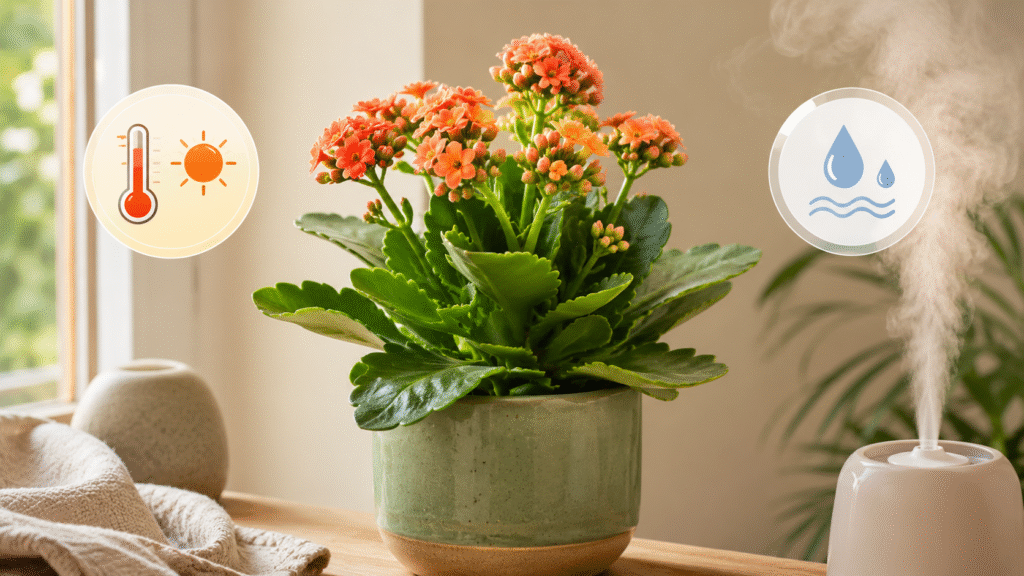
Temperature and Humidity: What Your Kalanchoe Plant Likes
The Kalanchoe plant is originally from a warm tropical region, so it loves warmth and does not do well in the cold.
- The ideal temperature range is between 18°C and 29°C (65°F to 85°F). Most homes fall right in this range, which makes it a perfect indoor plant.
- Your Kalanchoe plant does not like temperatures below 10°C (50°F). If you live in a cold climate, always keep it indoors during winter.
- Keep the plant away from cold drafts, air conditioning vents, and windows in the winter. Sudden changes in temperature can stress it out.
- The Kalanchoe plant handles average indoor humidity well. You do not need to mist it or use a humidifier. In fact, too much moisture in the air can lead to fungal problems.
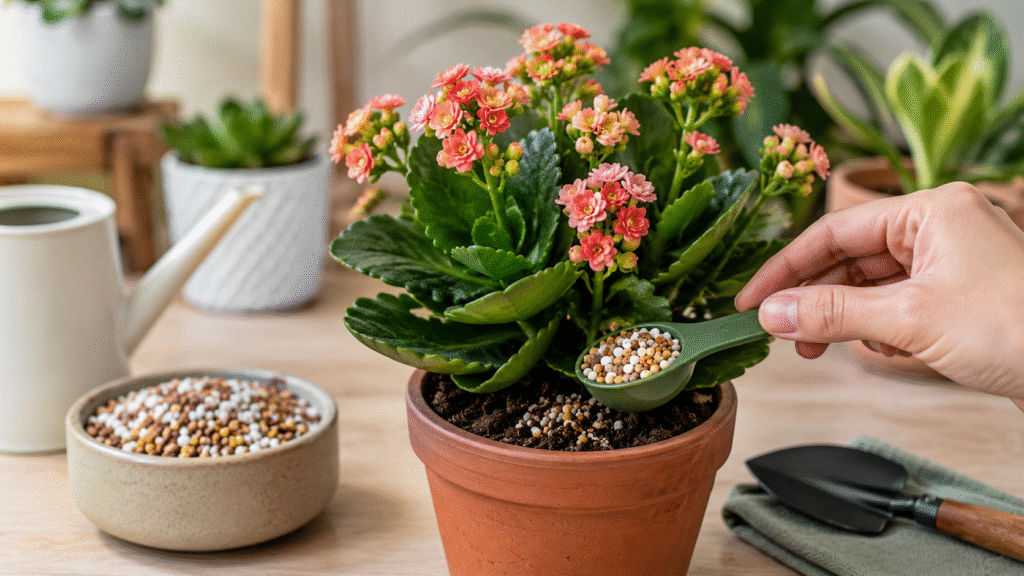
How to Fertilise a Kalanchoe Plant
Feeding your Kalanchoe plant gives it the extra nutrients it needs to produce those beautiful, long-lasting blooms. But do not overdo it too much fertiliser can actually harm the plant.
- Feed your Kalanchoe plant once a month during spring and summer, which is its active growing season.
- Use a balanced liquid fertiliser (like a 10-10-10 or 20-20-20 formula) diluted to half the recommended strength.
- Do not fertilise during autumn and winter, when the plant is resting.
- If you want more flowers, switch to a fertiliser higher in phosphorus (the middle number) during the growing season.
A well-fed Kalanchoe plant will reward you with more flowers and healthier, greener leaves. Just remember less is more when it comes to fertilising succulents.
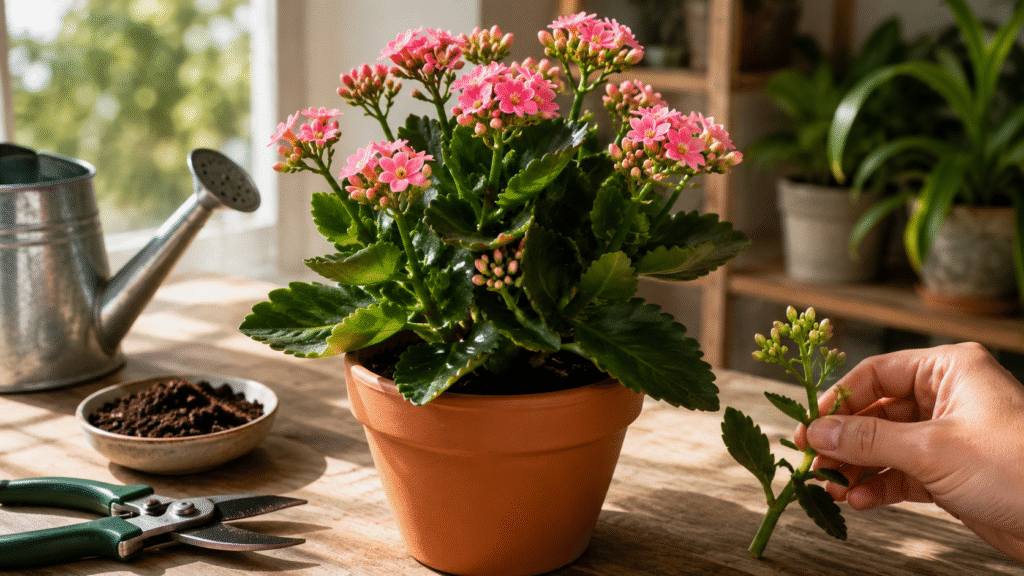
How to Make Your Kalanchoe Plant Bloom Again
One of the most common questions people ask about the Kalanchoe plant is: “My plant stopped blooming. What do I do?” The good news is, you can definitely get it to flower again with a little patience.
Here is the step-by-step process:
- After the flowers die off, cut the dead flower stems back to the nearest leaf. This is called deadheading, and it encourages new growth.
- Give the plant a rest period of about 6 weeks. During this time, keep watering and feeding it as normal.
- Then, for 6 weeks, give your Kalanchoe plant 14 hours of complete darkness every night. You can do this by placing a box over it or moving it to a dark cupboard each evening.
- During the day, make sure it still gets bright indirect light.
- After 6 weeks of this “dark treatment,” you should start to see new flower buds forming.
This process works because the Kalanchoe plant is triggered to bloom by shorter days, just like it would experience in its natural habitat during certain seasons. With a bit of effort, your plant can bloom multiple times a year!
Repotting Your Kalanchoe Plant
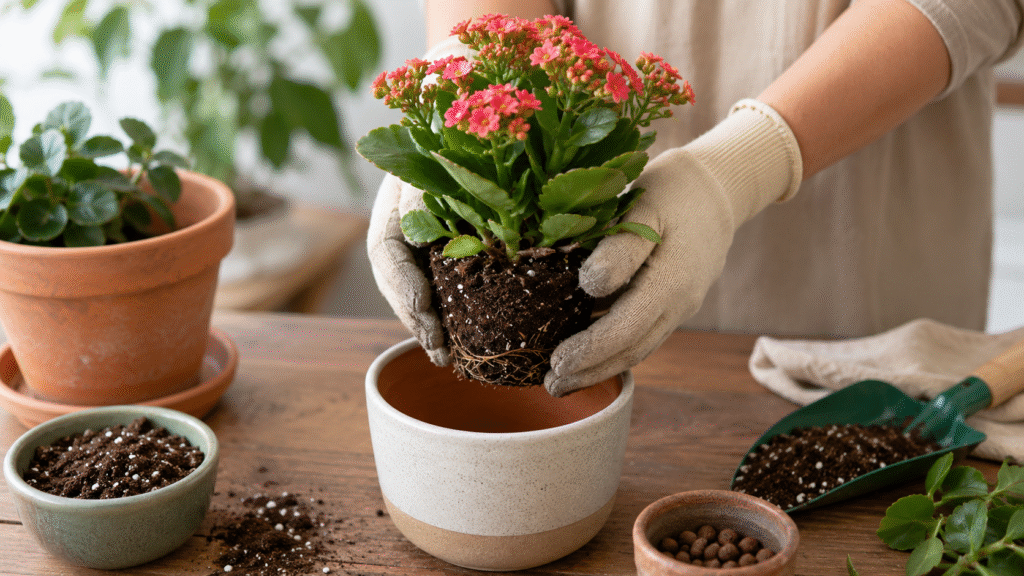
A Kalanchoe plant does not need to be reported very often. In fact, it grows quite well in a slightly snug pot. But if you notice the roots coming out of the drainage holes or the plant looks too cramped, it is time to move it to a bigger home.
- The best time to report a Kalanchoe plant is in spring, just before the growing season begins.
- Choose a pot that is only 1 to 2 inches larger than the current one. Going too big can cause the soil to hold too much water.
- Gently remove the plant, shake off old soil from the roots, and place it in fresh succulent mix.
- Do not water for a day or two after repotting, as this helps the roots settle and reduces the risk of rot.
Common Problems with a Kalanchoe Plant (and How to Fix Them)
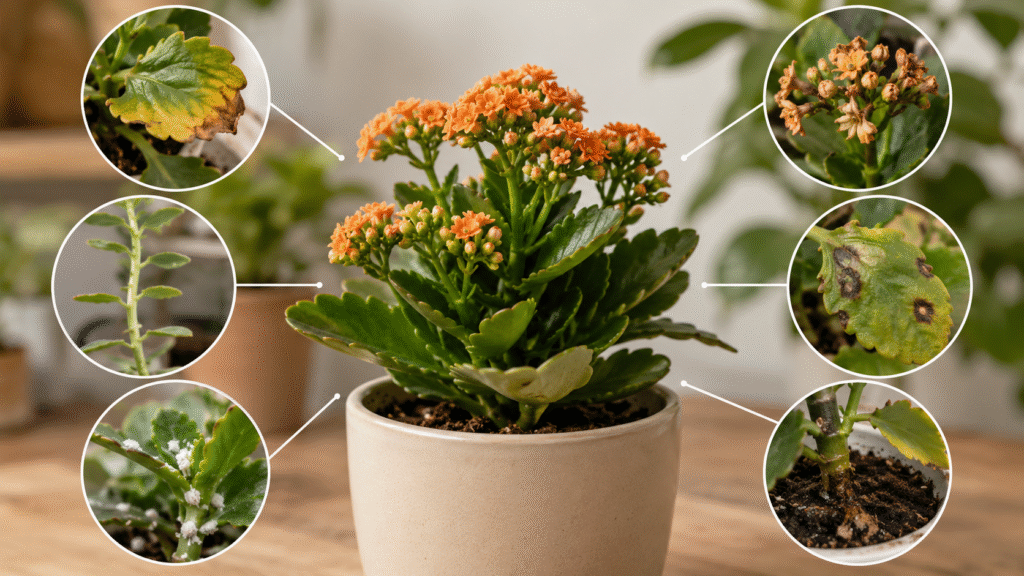
Even though the Kalanchoe plant is tough, it can sometimes run into problems. Here are the most common ones and how to deal with them:
1. Yellow Leaves
This is usually a sign of overwatering. Let the soil dry out completely before watering again. Check if the pot has proper drainage.
2. Leggy, Stretched-Out Stems
This happens when the Kalanchoe plant is not getting enough light. Move it to a brighter spot near a window.
3. Soft, Mushy Stems
This is a sign of root rot, which is caused by too much water. Remove the plant from the pot, trim off any rotten roots, let them dry for a day, and repot in fresh soil.
4. Pests (Mealybugs or Aphids)
If you see white cottony spots or tiny insects on your Kalanchoe plant, wipe the leaves with a cotton ball dipped in rubbing alcohol. You can also spray the plant with a mild neem oil solution.
5. No Flowers
As mentioned earlier, your Kalanchoe plant needs long dark nights to bloom. Follow the dark treatment steps described in the blooming section above.
Is a Kalanchoe Plant Safe for Pets?
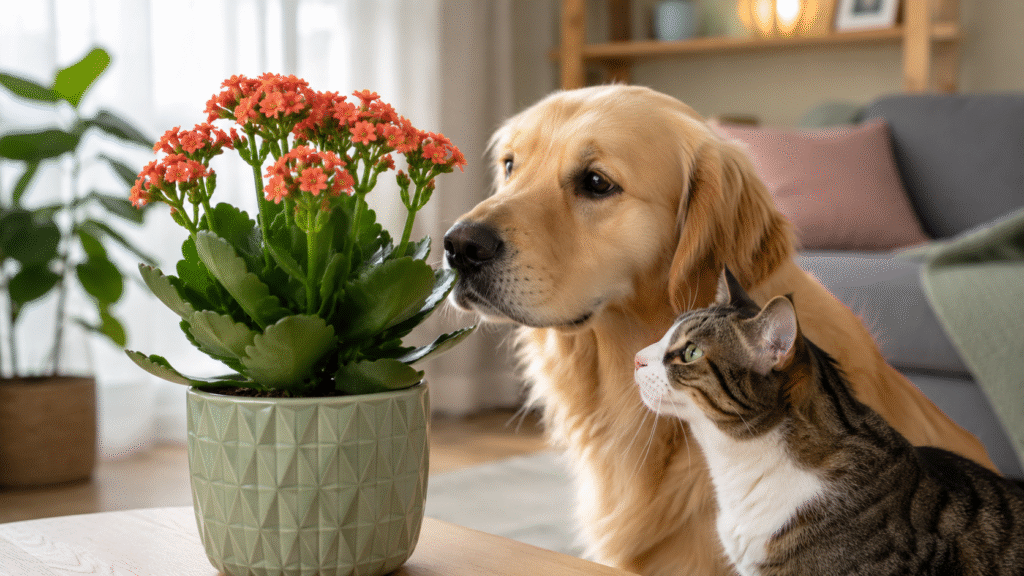
This is really important to know if you have cats or dogs at home. The Kalanchoe plant is toxic to pets, especially cats and dogs. If a pet chews on the leaves, it can cause vomiting, diarrhoea, and in serious cases, heart problems.
For humans, the Kalanchoe plant is not very dangerous unless you eat a large amount of it. But it is still a good idea to keep it out of reach of small children.
If you have pets, place your Kalanchoe plant on a high shelf or in a room where pets cannot go.
Quick Care Summary for Your Kalanchoe Plant
Here is a simple cheat sheet you can refer to anytime:
- Light: Bright indirect sunlight, 6 hours per day
- Water: Every 10–14 days in summer, every 2–3 weeks in winter
- Soil: Well-draining succulent or cactus mix
- Temperature: 18°C to 29°C (65°F to 85°F)
- Fertiliser: Monthly in spring and summer, none in winter
- Repotting: Every 1–2 years in spring
- Toxicity: Toxic to cats and dogs
Final Thoughts from Maalibhaiya
Taking care of a Kalanchoe plant is honestly one of the most rewarding things you can do as a plant lover. It is forgiving, low-maintenance, and brings a burst of colour to any room. As long as you give it the right amount of light, avoid overwatering, and use well-draining soil, your Kalanchoe plant will thrive for many years.
And when it stops blooming, do not give up on it. A little patience and the dark-treatment trick will bring those beautiful flowers back before you know it. Whether you are gifting one to someone or growing it for yourself, the Kalanchoe plant is truly a plant that gives back more than you put in.
Happy growing! 🌱
FAQ About Kalanchoe Plant
FAQ 1 Q: How often should I water my Kalanchoe plant?
You should water your Kalanchoe plant once every 10 to 14 days during summer and once every 2 to 3 weeks in winter. Always check the top inch of soil before watering if it still feels moist, wait a few more days. Overwatering is the most common mistake people make with this plant.
FAQ 2 Q: Why is my Kalanchoe plant not blooming?
Your Kalanchoe plant needs long periods of darkness to produce flowers. If it has stopped blooming, try giving it 14 hours of complete darkness every night for 6 weeks. During the day, keep it in bright indirect light. After this “dark treatment,” you should start to see new flower buds forming.
FAQ 3 Q: Is a Kalanchoe plant safe for cats and dogs?
No, the Kalanchoe plant is toxic to cats and dogs. If a pet chews on its leaves, it can cause vomiting, diarrhoea, and in serious cases, heart problems. Always keep your Kalanchoe plant on a high shelf or in a room your pets cannot access.
FAQ 4 Q: What type of soil is best for a Kalanchoe plant?
The best soil for a Kalanchoe plant is a well-draining succulent or cactus potting mix. If you only have regular potting soil, mix it with coarse sand or perlite in a 50-50 ratio. The plant does not like soil that holds too much water, as this can lead to root rot.
FAQ 5 Q: Can a Kalanchoe plant grow indoors?
Yes, The Kalanchoe plant is one of the best plants for growing indoors. It needs bright indirect sunlight for about 6 hours a day, making a south or east-facing window the ideal spot. It handles average indoor temperatures between 18°C and 29°C very well and does not need high humidity, which makes it a perfect low-maintenance houseplant.