
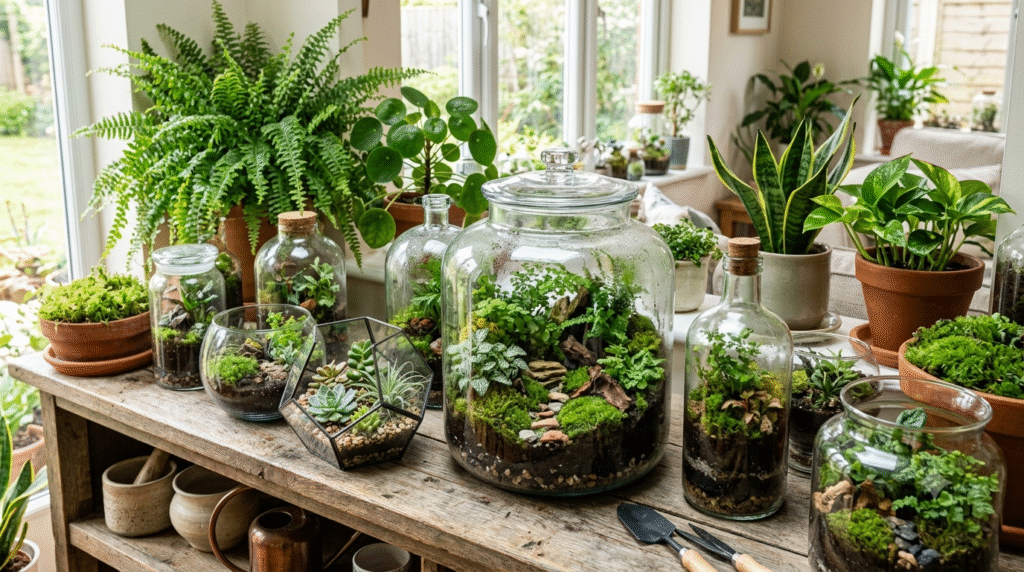
Imagine having a lush green garden that fits on your coffee table, office desk, or bookshelf. That’s exactly what a terrarium offers—a miniature ecosystem enclosed in a stylish glass container. More than just a decorative piece, a terrarium brings nature indoors, improves your home’s aesthetics, and creates a calming atmosphere.
The secret to building a thriving terrarium isn’t the container itself—it’s choosing the right terrarium plants. Different plants have different environmental needs. Some flourish in humid, enclosed spaces, while others prefer dry conditions with plenty of airflow. Selecting compatible plants is the first step toward creating a beautiful and low-maintenance indoor garden.
Whether you’re a beginner looking to start your first terrarium or an experienced plant enthusiast searching for the best plant varieties, this guide has everything you need. We’ll explore the 25 best terrarium plants, explain which ones are ideal for open and closed terrariums, and share practical care tips to keep your miniature garden healthy and vibrant for years.
What Are Terrarium Plants?
Terrarium plants are small, slow-growing plants that thrive inside glass containers. These plants are chosen because they remain compact, adapt well to indoor environments, and require relatively little maintenance.
Unlike regular houseplants, terrarium plants are grown in a controlled environment where humidity, moisture, and temperature are more stable. This makes them an excellent choice for busy homeowners, apartment dwellers, or anyone who loves greenery but doesn’t have much space.
The best terrarium plants typically have these characteristics:
- Compact growth habit
- Slow-growing nature
- Attractive foliage
- Adaptability to indoor conditions
- Minimal maintenance requirements
- Suitable humidity tolerance depending on the terrarium type
With the right combination of plants, soil, and lighting, your terrarium can become a self-sustaining miniature ecosystem that remains beautiful throughout the year.
Benefits of Growing Terrarium Plants
Terrariums are becoming increasingly popular, and it’s easy to see why. They offer numerous benefits beyond their visual appeal.
1. Perfect for Small Spaces
Not everyone has a backyard or balcony. Terrariums make it possible to enjoy gardening even in apartments, dorm rooms, or offices.
2. Low Maintenance
Most terrarium plants require less frequent watering than traditional houseplants. Closed terrariums can even recycle moisture naturally, reducing maintenance.
3. Improve Indoor Décor
A glass terrarium filled with vibrant green plants instantly adds elegance and freshness to any room.
4. Enhance Air Quality
Many indoor plants help improve air quality by absorbing carbon dioxide and releasing oxygen. While a terrarium won’t replace proper ventilation, it contributes to a healthier indoor environment.
5. Stress Relief
Studies suggest that spending time around plants can help reduce stress and improve mental well-being. Caring for a terrarium is also a relaxing and rewarding hobby.
Open vs Closed Terrarium Plants
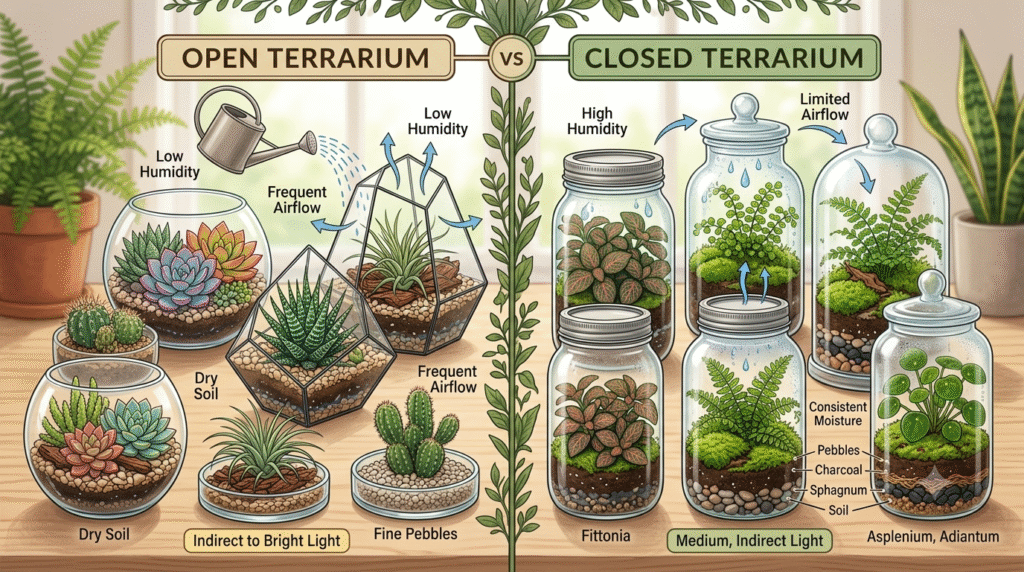
Choosing the right type of terrarium is just as important as selecting the plants.
Closed Terrarium
A closed terrarium features a lid that traps moisture inside, creating a humid environment similar to a tropical rainforest. This humidity allows water to evaporate from the soil and leaves, condense on the glass, and drip back into the soil, creating a natural water cycle.
Best Plants for Closed Terrariums
- Moss
- Fittonia
- Ferns
- Peperomia
- Pilea
- Baby Tears
- Prayer Plant
- Selaginella
Advantages
- Requires very little watering
- Creates a self-sustaining environment
- Perfect for tropical plants
- Maintains consistent humidity
Open Terrarium
An open terrarium has no lid, allowing fresh air to circulate freely. These terrariums are better suited for plants that prefer dry conditions and dislike excessive humidity.
Best Plants for Open Terrariums
- Haworthia
- Echeveria
- Jade Plant
- Air Plants
- Cacti
- String of Pearls
Advantages
- Better airflow
- Reduced risk of fungal diseases
- Suitable for succulents
- Easier to maintain for beginners
25 Best Terrarium Plants
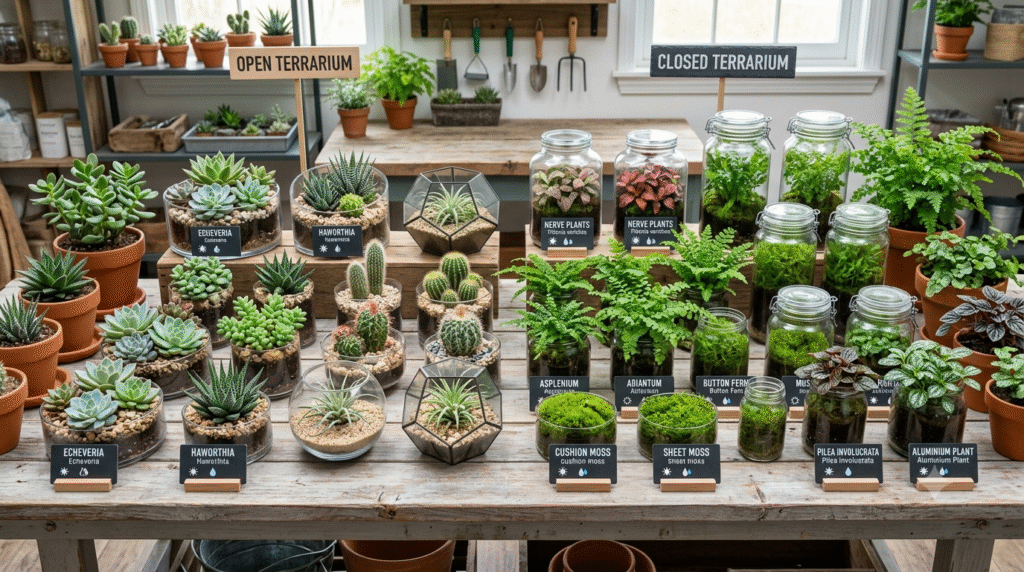
Here are the top plants that thrive in terrariums.
1. Fittonia (Nerve Plant)
Fittonia is one of the most popular choices for closed terrariums because of its colorful leaves decorated with white, pink, or red veins. Native to tropical rainforests, this plant thrives in warm, humid environments with indirect sunlight.
Why Choose Fittonia?
- Bright and colorful foliage
- Compact size
- Excellent humidity tolerance
- Easy to maintain
Light: Bright indirect light
- Light: Bright indirect light
- Water: Keep soil slightly moist
- Best For: Closed terrariums
2. Moss
Moss is a timeless favorite for terrariums because it creates a lush, carpet-like appearance that transforms any glass container into a miniature forest. It thrives in consistently moist conditions and requires very little maintenance. Moss also helps retain soil moisture, making it an excellent companion plant for tropical species. Best For: Closed terrariums
3. Baby Tears (Soleirolia soleirolii)
Baby Tears produces tiny, delicate leaves that spread quickly across the soil surface, creating a beautiful green carpet.
It prefers consistently moist soil and high humidity, making it an excellent ground cover in enclosed terrariums.
- Light: Medium to bright indirect light
- Water: Keep evenly moist
- Best For: Closed terrariums
4. Ferns
Miniature ferns are among the most elegant terrarium plants. Their delicate fronds add texture, height, and movement to your miniature garden.
Popular varieties include:
- Button Fern
- Lemon Button Fern
- Maidenhair Fern
- Rabbit’s Foot Fern
Ferns naturally grow on forest floors where humidity remains consistently high. Best For: Closed terrariums
5. Peperomia
Peperomia is loved for its decorative leaves and easy-going nature. Available in hundreds of varieties, it offers endless design possibilities. Its compact growth makes it ideal for small containers.
Why Gardeners Love It
- Attractive foliage
- Slow-growing
- Easy care
- Doesn’t require frequent pruning
6. Pilea (Friendship Plant)
Pilea features textured, vibrant green leaves and grows beautifully inside humid glass containers. Unlike many tropical plants, it adapts well to average indoor conditions while still appreciating high humidity. It is also easy to propagate, allowing you to create new plants from stem cuttings.
7. Polka Dot Plant
If you’re looking to add color to your terrarium, the Polka Dot Plant is an excellent choice. Its leaves feature splashes of pink, white, or red that contrast beautifully against green foliage. This plant appreciates high humidity and bright indirect light.
8. Creeping Fig
Creeping Fig adds a magical jungle effect to larger terrariums. As it grows, it climbs rocks, driftwood, and glass surfaces, creating a natural forest appearance. Because it spreads relatively quickly, occasional pruning helps maintain its shape.
9. Mini Orchid
Mini orchids bring elegance and sophistication to terrariums. Although they require slightly more attention than other plants, their delicate blooms make the extra care worthwhile. Maintain high humidity and avoid direct sunlight for best results.
10. Selaginella (Spike Moss)
Often mistaken for moss, Selaginella is actually a primitive vascular plant. Its soft, feathery texture creates a beautiful woodland appearance inside terrariums. It thrives in humid environments with consistently moist soil.
11. Prayer Plant (Maranta)
The Prayer Plant is famous for its fascinating leaf movements. During the day, its leaves lie flat, but at night they fold upward, resembling praying hands. Its colorful patterns also make it one of the most decorative terrarium plants available.
12. Jewel Orchid
Unlike most orchids grown for flowers, Jewel Orchids are prized for their stunning foliage. Their dark green leaves feature shimmering gold or silver veins that create an eye-catching display throughout the year.
13. English Ivy
English Ivy is a trailing vine that creates dramatic cascading effects inside larger terrariums. Because it grows relatively fast, regular trimming keeps it neat and prevents overcrowding. Its climbing habit also makes it ideal for decorating rocks and branches inside glass containers.
14. Baby Rubber Plant (Peperomia obtusifolia)
The Baby Rubber Plant is a compact houseplant with glossy, thick green leaves that bring a fresh and vibrant look to any terrarium. Despite its name, it isn’t related to the traditional rubber plant, but it shares the same attractive foliage. This plant is slow-growing, making it perfect for small glass containers where space is limited. It prefers bright, indirect light and moderate humidity. While it can tolerate occasional dry soil, keeping it slightly moist will encourage healthy growth.
Best for: Closed or semi-open terrariums
Care Tips:
- Water when the top layer of soil feels slightly dry.
- Avoid direct sunlight to prevent leaf scorch.
- Trim occasionally to maintain a compact shape.
15. Aluminum Plant (Pilea cadierei)
The Aluminum Plant stands out because of its striking silver markings that resemble brushed aluminum on its dark green leaves. This decorative foliage makes it a favorite among terrarium enthusiasts. It enjoys warm temperatures, indirect sunlight, and moderate to high humidity. With proper care, it grows into a dense, attractive plant that adds texture and brightness to your miniature garden.
Best for: Closed terrariums
16. Haworthia
If you’re building an open terrarium, Haworthia is one of the safest choices. This small succulent is known for its thick green leaves decorated with white stripes or raised bumps. Unlike many succulents, Haworthia tolerates indoor lighting conditions well and doesn’t require intense sunlight.
Why it’s popular:
- Drought-tolerant
- Beginner-friendly
- Slow-growing
- Minimal maintenance
Best for: Open terrariums
17. Echeveria
Echeveria is admired for its symmetrical rosette shape and pastel-colored leaves. It instantly adds elegance to any open terrarium. These succulents prefer dry soil, excellent airflow, and bright sunlight. Overwatering is the biggest mistake people make with Echeveria.
Best for: Open terrariums
18. Jade Plant (Crassula ovata)
The Jade Plant is often associated with prosperity and good luck. Miniature varieties fit beautifully into open terrariums and require very little care.
Its thick, water-storing leaves allow it to survive occasional neglect, making it an excellent choice for beginners.
Best for: Open terrariums
19. Zebra Plant (Haworthiopsis attenuata)
The Zebra Plant features bold white stripes across dark green leaves, creating a striking visual contrast. Because it stores water in its leaves, it requires very little watering and performs best in bright locations with good airflow.
Best for: Open terrariums
20. Air Plants (Tillandsia)
Air Plants are unique because they don’t require soil to grow. Instead, they absorb moisture and nutrients directly from the air through specialized leaf structures. You can place them on decorative stones, driftwood, or shells inside your terrarium for a modern, artistic display.
Best for: Open glass terrariums
Care Tip: Mist once or twice a week and ensure proper ventilation.
21. Burro’s Tail
Burro’s Tail is a trailing succulent with long stems covered in plump, bead-like leaves. It creates a beautiful cascading effect in larger open terrariums or hanging glass containers. Handle it gently, as the leaves fall off easily.
22. String of Pearls
One of the most eye-catching succulents, String of Pearls features long vines covered with small, round leaves that resemble green pearls. It thrives in bright light and well-draining soil.
Best for: Open terrariums
23. Mini Cactus
Mini cacti are classic choices for open terrariums because they thrive in dry conditions and require minimal watering. There are hundreds of miniature cactus varieties available, allowing you to create unique desert-inspired displays.
Best for: Open terrariums
24. Panda Plant
The Panda Plant has soft, fuzzy leaves with brown edges, making it one of the most unique succulents for indoor gardening.
It enjoys bright light and dry soil and adds interesting texture to succulent arrangements.
25. String of Hearts
String of Hearts is a graceful trailing plant with delicate heart-shaped leaves. Its long vines make it ideal for larger glass bowls where the stems can drape naturally over the edges.
Best for: Open terrariums
Best Plants for Closed Terrariums
Closed terrariums create a humid, tropical environment where moisture is constantly recycled. Plants that naturally grow in rainforests perform exceptionally well in these conditions.
Recommended Closed Terrarium Plants
- Fittonia
- Moss
- Baby Tears
- Button Fern
- Maidenhair Fern
- Peperomia
- Pilea
- Prayer Plant
- Selaginella
- Jewel Orchid
- Polka Dot Plant
- Creeping Fig
These plants thrive in high humidity and require very little watering once established.
Best Plants for Open Terrariums
Open terrariums allow fresh air to circulate, making them ideal for drought-tolerant plants.
Recommended Open Terrarium Plants
- Haworthia
- Zebra Plant
- Echeveria
- Jade Plant
- Air Plants
- Mini Cactus
- Panda Plant
- Burro’s Tail
- String of Pearls
- String of Hearts
Avoid placing humidity-loving tropical plants in open terrariums, as they may dry out quickly.
How to Choose the Right Terrarium Plants
Choosing compatible plants is essential for creating a healthy, long-lasting terrarium.
1. Match the Humidity Requirements
Never combine tropical plants with succulents in the same terrarium. Tropical plants need moisture, while succulents require dry conditions.
2. Consider Plant Size
Choose miniature or slow-growing varieties to prevent overcrowding. Large plants can quickly outgrow the container and compete for space.
3. Check Light Requirements
Most terrarium plants prefer bright, indirect sunlight. Placing your terrarium in direct afternoon sun can overheat the glass and damage the plants.
4. Choose Similar Watering Needs
Plants with similar watering requirements are easier to care for and are more likely to thrive together.
Complete Terrarium Care Guide
Light
Most terrarium plants grow best in bright, indirect light. Avoid placing the terrarium in direct sunlight, especially during hot afternoons, as the glass can act like a magnifying lens and overheat the plants.
Watering
Watering frequency depends on the type of terrarium.
Closed Terrariums
- Water every few weeks or even months.
- If you notice heavy condensation on the glass all day, leave the lid open for a few hours to reduce excess moisture.
Open Terrariums
- Water every 1–3 weeks.
- Allow the soil to dry slightly between waterings, especially for succulents and cacti.
A spray bottle works well for watering delicate terrarium plants without disturbing the soil.
Humidity
Humidity is naturally high inside closed terrariums. Open terrariums rely on the surrounding indoor humidity. If your tropical plants appear dry, lightly mist them rather than soaking the soil.
Soil
Choosing the right soil is essential.
- Tropical plants prefer moisture-retaining potting mix.
- Succulents and cacti need fast-draining soil mixed with sand or perlite.
A drainage layer made of pebbles and activated charcoal helps prevent root rot and keeps the terrarium fresh.
Fertilizing
Terrarium plants generally require very little fertilizer. Apply a diluted liquid fertilizer once or twice during the growing season if growth slows. Avoid over-fertilizing, as it encourages rapid growth that can overcrowd the container.
Pruning
Regular pruning keeps plants healthy and maintains the appearance of your terrarium.
Trim:
- Overgrown stems
- Yellow leaves
- Dead foliage
- Fast-growing vines
Pruning also improves airflow and reduces the risk of mold.
Common Terrarium Mistakes to Avoid
Many beginners unknowingly shorten the life of their terrarium by making simple mistakes.
Avoid these common problems:
❌ Overwatering
❌ Mixing succulents with tropical plants
❌ Using containers without drainage layers
❌ Placing terrariums in direct sunlight
❌ Ignoring mold growth
❌ Choosing plants that outgrow the container
❌ Overcrowding plants
❌ Poor airflow in open terrariums
With proper planning and care, these issues are easy to prevent.
Frequently Asked Questions
What are the easiest terrarium plants for beginners?
Fittonia, Moss, Peperomia, Haworthia, Air Plants, and Pilea are all excellent beginner-friendly choices because they require minimal maintenance.
Can I mix succulents and tropical plants?
No. Succulents need dry soil and good airflow, while tropical plants require higher humidity and consistently moist soil.
How often should I water a terrarium?
Closed terrariums may only need watering every few months. Open terrariums usually require watering every one to three weeks, depending on the plants and indoor conditions.
Do terrarium plants need sunlight?
Yes, but they should receive bright, indirect sunlight. Direct sunlight can overheat the glass container and damage the plants.
How long do terrarium plants live?
With proper care, many terrarium plants can live for several years. Some closed terrariums have remained healthy for decades because they create a stable, self-sustaining environment.
Can I grow flowering plants in a terrarium?
Yes. Mini Orchids and some tropical flowering plants can bloom successfully in humid closed terrariums if they receive enough light.