
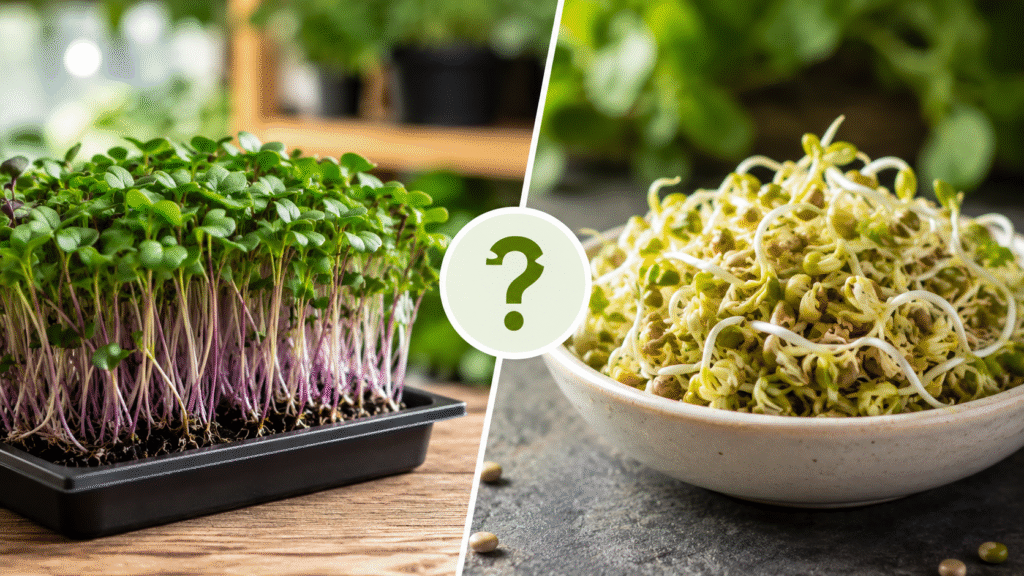
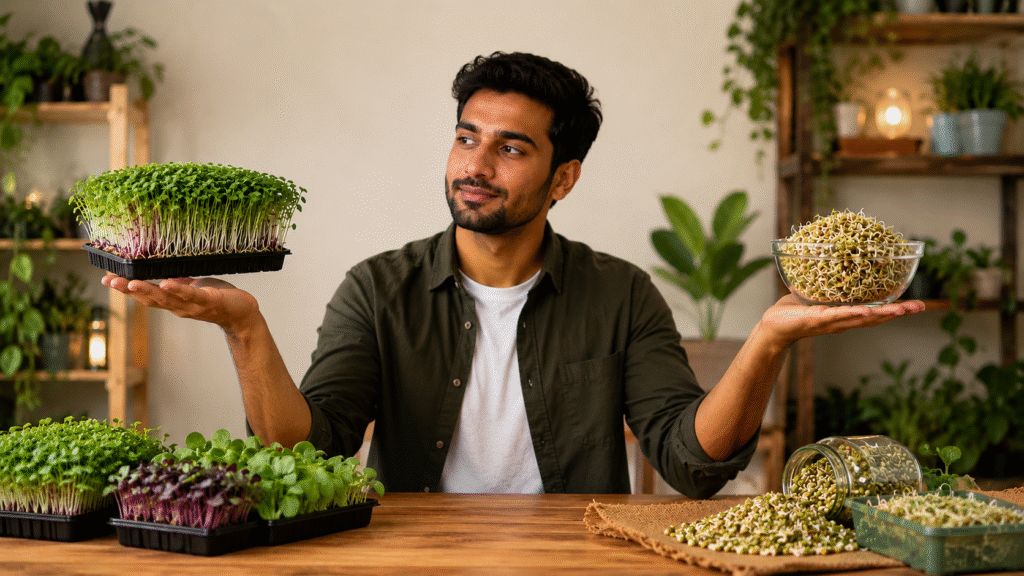
If you love eating healthy and want to grow your own food at home, you have probably heard about microgreens and sprout farming, Both are getting very popular these days and for a good reason. In fact,They are easy to grow, great for your body, and you do not need a big farm or garden to start. Even a small corner of your kitchen or a tiny shelf near your window is enough. Howeve, many people do not realise sprout farming and microgreens farming are not the same thing. They look a little similar, but they are grown differently, they taste different, and they give you different benefits. Therefore, before you pick up those seeds and get started, it is important to understand what makes each one special.
In this blog, we are going to break everything down in the simplest way possible. We will look at what sprout farming actually is, how microgreens are grown, and what the real differences are between the two. We will also help you figure out which one is the right choice for you whether your goal is to eat something nutritious every morning, cut down your grocery bill, or even build a small business from the comfort of your home. By the time you finish reading, you will feel confident enough to take your first step into urban farming.
Now, let us talk about where most of you reading this live Delhi NCR. This includes cities like Delhi, Noida, and Gurugram. Delhi NCR is one of the busiest urban regions in India. People here live in flats, apartments, and gated societies. Most homes do not have a big garden or a piece of open land where you can dig soil and plant things freely. And that is totally okay. Because both sprout farming and microgreens farming were practically made for people like you. You do not need outdoor space. You do not need expensive equipment. You just need a window sill, a small shelf in your kitchen, or maybe a tiny corner of your balcony or terrace and you are good to go.
What Is Sprout Farming? A Quick and Easy Way to Grow Food
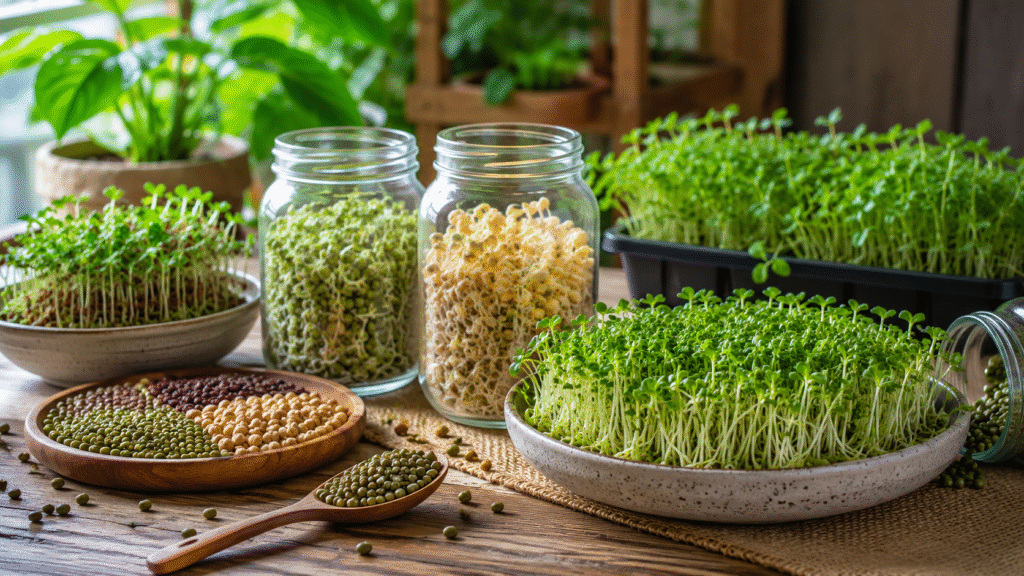
Sprout farming is the process of germinating seeds in water and letting them grow for just 2 to 7 days. You do not need soil, sunlight, or even a pot. Just a jar, some water, and seeds that’s it.
Sprouts are basically the baby version of a plant. When a seed soaks in water, it starts to wake up and grow. The tiny shoot that comes out is called a sprout. Common sprouts include moong (green gram), chana (chickpea), methi (fenugreek), and wheat.
Here is how simple sprout farming is:
- Soak seeds in water for 8 to 12 hours.
- Drain the water and keep the seeds in a jar or container.
- Rinse them with water 2 to 3 times a day.
- In just 2 to 7 days, your sprouts are ready to eat.
Sprouts are usually eaten raw in salads, sandwiches, or just as a snack. They are rich in protein, vitamins, and enzymes that help with digestion. In Indian homes, moong sprouts are very popular and easy to make.
The best part? Sprout farming costs almost nothing. You just need seeds and water. This makes it one of the most budget-friendly ways to grow your own food perfect for people living in flats or small homes in cities like Delhi, Noida, and Gurugram.
What Is Microgreens Farming?
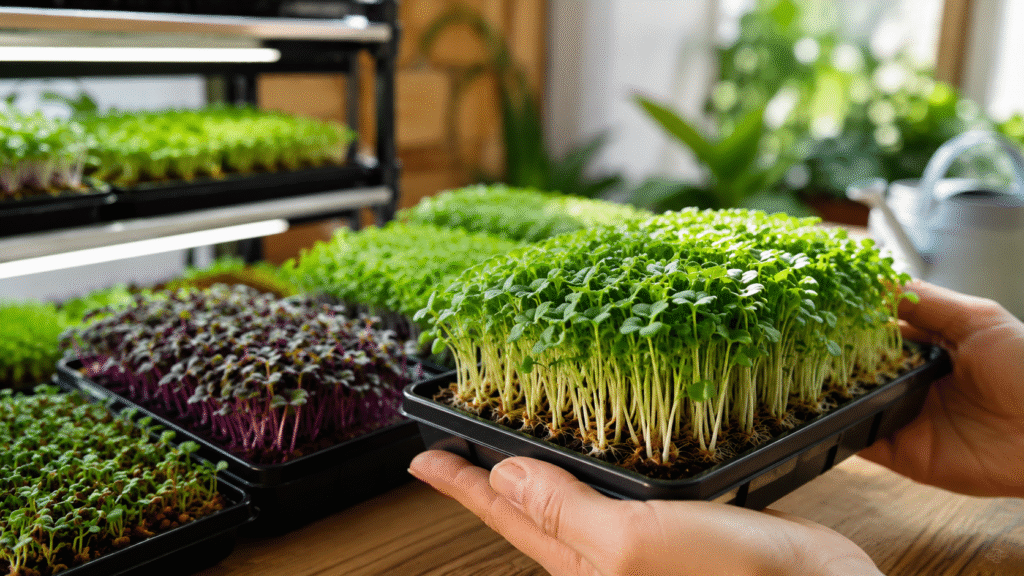
Microgreens are young vegetable plants that are grown a little longer than sprouts. They are harvested after 7 to 21 days, once the first set of true leaves appear. Unlike sprouts, microgreens need soil (or a growing medium like coco peat), light, and a tray to grow in.
Some popular microgreens include sunflower, radish, pea shoots, fenugreek, basil, and mustard. They are full of vitamins, minerals, and antioxidants often more than the fully grown plant.
Here is how microgreens farming works:
- Fill a tray with coco peat or soil.
- Spread seeds evenly on top and press them gently.
- Water them lightly every day.
- Place the tray near a window or under a grow light.
- Harvest with scissors after 7 to 21 days.
Microgreens taste amazing they are full of flavour and can be used in salads, soups, juices, and even as garnish in restaurants. In fact, many hotels and restaurants in Delhi NCR are now buying microgreens directly from small home growers. This makes microgreens farming a great option if you want to earn money from home.
Sprout Farming vs Microgreens Farming: The Key Differences
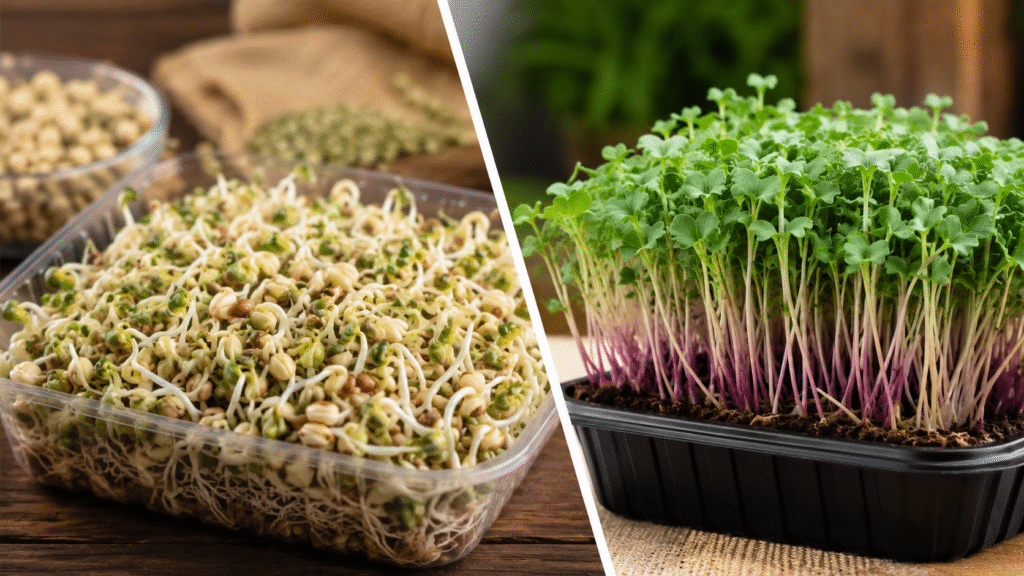
Now that you know what both of them are, let us compare them side by side. This way, you can easily decide which option suits your needs better.
1. Time to Grow
Sprout farming takes only 2 to 7 days. Microgreens take 7 to 21 days. Therefore, if you want faster results, sprouts are the better option.
2. What You Need
For sprout farming, you only need seeds, a jar, and water. For microgreens farming, you need seeds, a tray, coco peat or soil, water, and some sunlight or a grow light. Sprouts are simpler to set up.
For sprout farming, you only need seeds, a jar, and water. In contrast, microgreens farming requires a tray, growing medium, and light as well.
3. Space Needed
Both can be grown indoors. But sprout farming takes very little space just a jar on your kitchen counter. Microgreens need a tray, but they can still be grown on a window sill or shelf.
Both can be grown indoors. However, sprout farming requires even less space than microgreens farming.
4. Cost
Sprout farming is nearly free. You just need seeds and water. Microgreens farming costs a little more you need to buy trays and coco peat. But the profit from selling microgreens is also much higher.
Sprout farming is nearly free. Meanwhile, microgreens farming involves a small initial investment.
5. Nutrition
Both sprouts and microgreens are packed with nutrients. However, microgreens contain a higher concentration of vitamins and antioxidants because they get more time to absorb nutrients from the growing medium. Studies have shown that microgreens can have 4 to 40 times more nutrients than fully grown vegetables.
Both sprouts and microgreens are highly nutritious. However, microgreens generally contain a higher concentration of vitamins and antioxidants.
6. Taste
Sprouts have a mild, fresh taste. Microgreens have a stronger, more intense flavour depending on the variety radish microgreens are spicy, sunflower microgreens are nutty, and pea shoots are sweet.
Sprouts have a mild taste. By comparison, microgreens offer stronger and more distinct flavours.
7. Food Safety
Since sprouts are grown in moist and dark conditions, there is a slightly higher chance of bacterial growth if not handled properly. Microgreens are grown in soil and open air, which makes them safer to eat. Always wash both properly before eating.
Sprouts are grown in moist conditions. Therefore, proper hygiene is essential to avoid bacterial growth
8. Earning Potential
Sprout farming is mostly for personal use. Microgreens farming has a huge business potential. Restaurants, juice bars, and health-conscious people in Delhi NCR are always looking for fresh microgreens. You can easily sell them from home and make a good income.
Sprout farming is mostly for personal use. In contrast, microgreens farming offers strong earning potential.
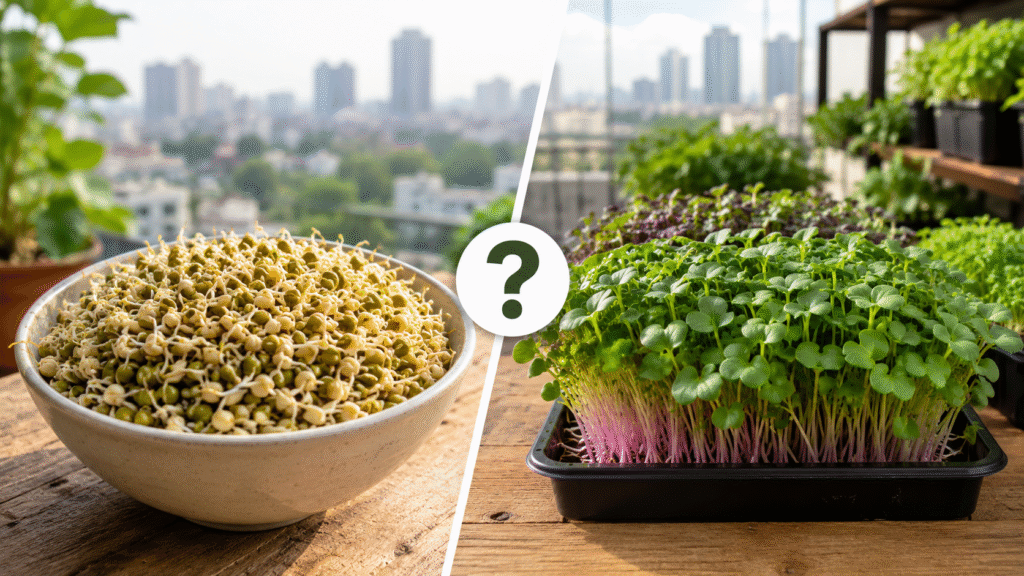
Which One Is Better for Home Growers in Delhi NCR?
This really depends on what you want to do.
If you are a beginner who just wants to eat something healthy every day without spending money, sprout farming is the way to go. It is simple, fast, and almost free. You can start today with moong or chana seeds that are already in your kitchen.
If you want to take your urban farming a little more seriously maybe sell your produce or experiment with new Flavors then microgreens farming is a better choice. Yes, it takes a little more time and money to set up. But the results are more rewarding, both in terms of health and income.
For people in Delhi, Noida, and Gurugram who live in flats and apartments, both options work well. You do not need outdoor space. A sunny window is enough to grow microgreens. A kitchen shelf is enough for sprout farming.
Ultimately, the answer depends on your goals.
If you are a beginner who wants healthy food without spending much money, sprout farming is the best choice. On the other hand, if you want to earn income from urban farming, microgreens farming may be a better option.
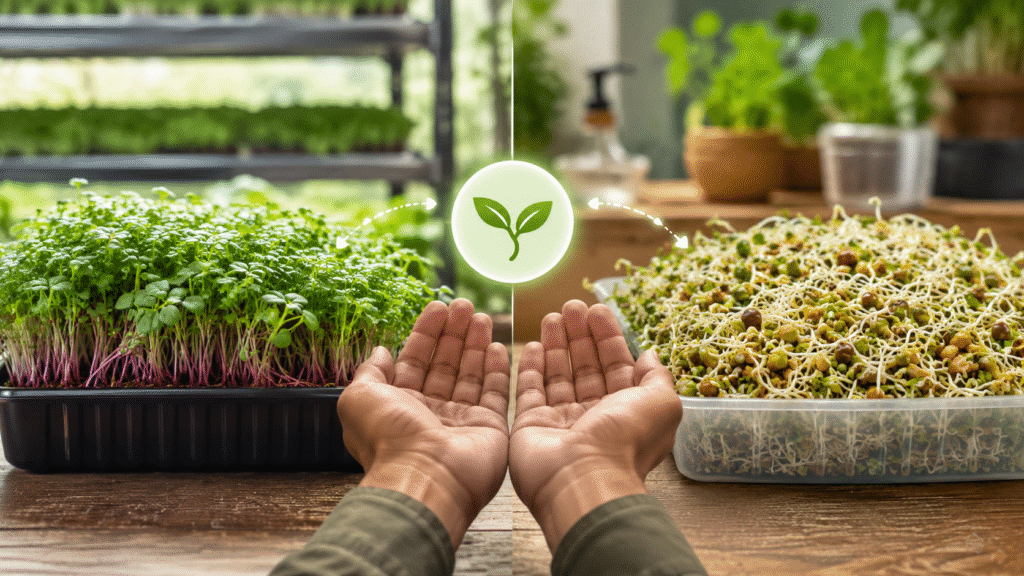
Can You Do Both? Yes, Absolutely!
Many home growers in India do both they do sprout farming every day for their morning salads, and they grow microgreens on the side for cooking and selling. This way, you always have fresh food at home and you also have something to sell or share.
Think of it this way: sprouts are your daily habit, and microgreens are your small home business. Together, they can change the way you eat and live.
You can start small. Try moong sprouts this week. Then next week, set up a small tray of radish microgreens near your window. Within a month, you will see how easy and fun urban farming really is.
In fact, many home growers in India do both. They grow sprouts for daily consumption and microgreens for cooking or selling. As a result, they enjoy both health benefits and extra income opportunities.
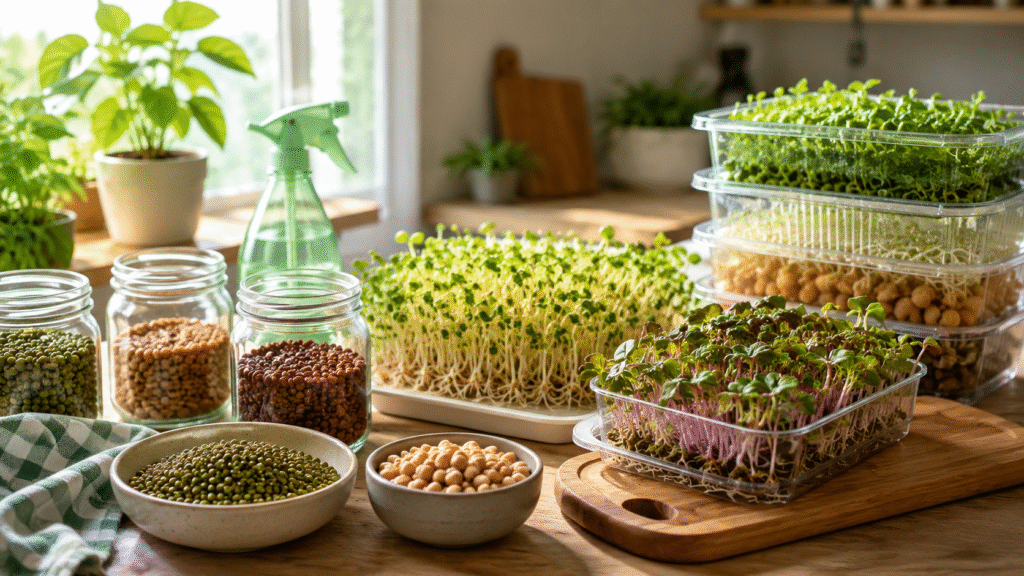
Tips to Get Started With Sprout Farming at Home
Here are some easy tips to begin your sprout farming journey at home:
- Start with moong dal or whole chana they are easy to find and sprout quickly.
- Use a clean glass jar with a mesh lid or muslin cloth tied on top for drainage.
- Keep the jar away from direct sunlight. Sprouts do not need light.
- Rinse the seeds 2 to 3 times a day with fresh water to prevent any smell or bacteria.
- Harvest when the sprouts are about 1 to 2 inches long. Do not wait too long or they become bitter.
- Store unused sprouts in the fridge and eat within 2 to 3 days.
Sprout farming is so simple that even kids can do it. If you have children at home, this is a great activity to teach them about plants and healthy food.
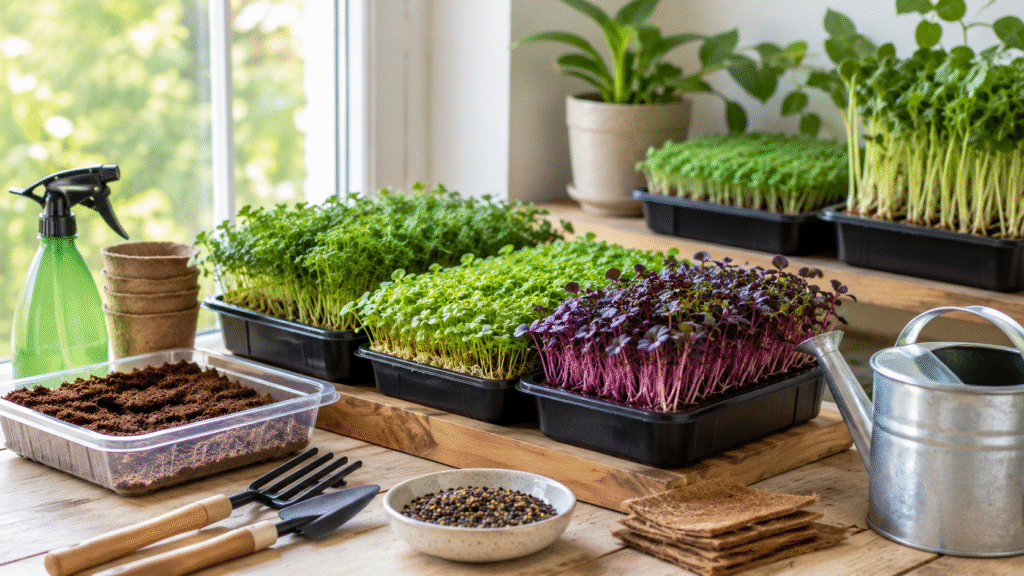
Tips to Get Started With Microgreens Farming at Home
Ready to try microgreens farming? Here is how to begin:
- Buy a few seeds sunflower, radish, or fenugreek are good for beginners.
- Get a shallow tray and fill it with coco peat or a mix of coco peat and compost.
- Spread seeds densely on the surface. Mist with water using a spray bottle.
- Cover the tray with another tray or a cloth for 2 to 3 days (this is called the blackout period). This helps the seeds germinate faster.
- After 3 days, uncover and place near a bright window or under a grow light.
- Water once a day and harvest with scissors when the leaves are fully open usually in 7 to 14 days.
- Rinse and use fresh. Microgreens taste best when eaten on the same day.

The Business Side: Can You Earn From Sprout Farming or Microgreens Farming?
Yes, And this is where it gets really exciting.
Sprout farming at home is mostly for personal use. It is hard to sell sprouts commercially because they need to be delivered very fresh and the price per kg is low. However, if you know your neighbours or local area, you can sell homemade sprouts to people who trust you.
Microgreens farming, on the other hand, has a serious business angle. In cities like Delhi, Noida, and Gurugram, there is a growing demand for fresh, clean microgreens from restaurants, cafes, smoothie bars, and health-conscious families. You can sell microgreens for Rs. 200 to Rs. 800 per tray depending on the variety and your customer.
Many people in Delhi NCR have already started small microgreens businesses from their terrace or spare room. They post on Instagram, sell on WhatsApp groups, and deliver locally. The startup cost is low and the returns are steady once you build a customer base.
So, if you are looking for a way to earn from home, microgreens farming is a much better business idea than sprout farming.
Sprout farming is mostly suitable for personal use. However, microgreens farming has significant business potential. In fact, demand for fresh microgreens is increasing across Delhi, Noida, and Gurugram. Therefore, many people have started successful home-based microgreens businesses.
Final Thoughts: Which One Should You Try?
If you are just starting out, try sprout farming first. It is fast, free, and easy. Once you get comfortable, move to microgreens farming especially if you want more variety, better nutrition, and even a chance to earn money.
The good news is that you do not have to choose just one. Many urban farmers in Delhi NCR do both. Sprouts for daily eating, microgreens for cooking, sharing, and selling.
Whether you live in a flat in Noida, a house in Delhi, or an apartment in Gurugram you have everything you need to start growing your own food today. All you need is a few seeds, some water, and the desire to live a healthier life.
So go ahead start small, grow fresh, and eat well. Your urban farming journey starts right here.
To sum up, both sprout farming and microgreens farming are excellent choices for urban growers. Sprout farming is simple, affordable, and beginner-friendly. Meanwhile, microgreens farming offers greater variety, nutrition, and earning potential. Ultimately, many people choose to grow both and enjoy the benefits of each.
Common Questions People Ask About Sprout Farming and Microgreens
Q: Is sprout farming better than microgreens farming for nutrition?
Both are healthy. But microgreens generally have more concentrated nutrients because they grow longer and absorb more from the growing medium.
Q: Can I do sprout farming without sunlight?
Yes, Sprouts do not need sunlight. They grow in the dark. This is one reason sprout farming is so easy for people in flats.
Q: How much does it cost to start microgreens farming at home?
A basic microgreens setup trays, coco peat, and seeds can cost around Rs. 500 to Rs. 1,500. It is a very affordable way to start growing your own food or business.
Q: Which seeds are best for beginners in sprout farming?
Moong (green gram), chana, methi, and wheat are the best seeds to start with. They are cheap, widely available, and easy to sprout.
Q: Can microgreens farming be done without soil?
Yes, You can grow microgreens in coco peat, hemp mats, or even just jute cloth. Many people prefer coco peat because it is clean and easy to handle.
Q: Is sprout farming safe to eat?
Sprouts are safe if you grow and handle them properly. Always rinse them well, keep your equipment clean, and eat them fresh. Do not let them sit in water too long as this can cause bacterial growth.