
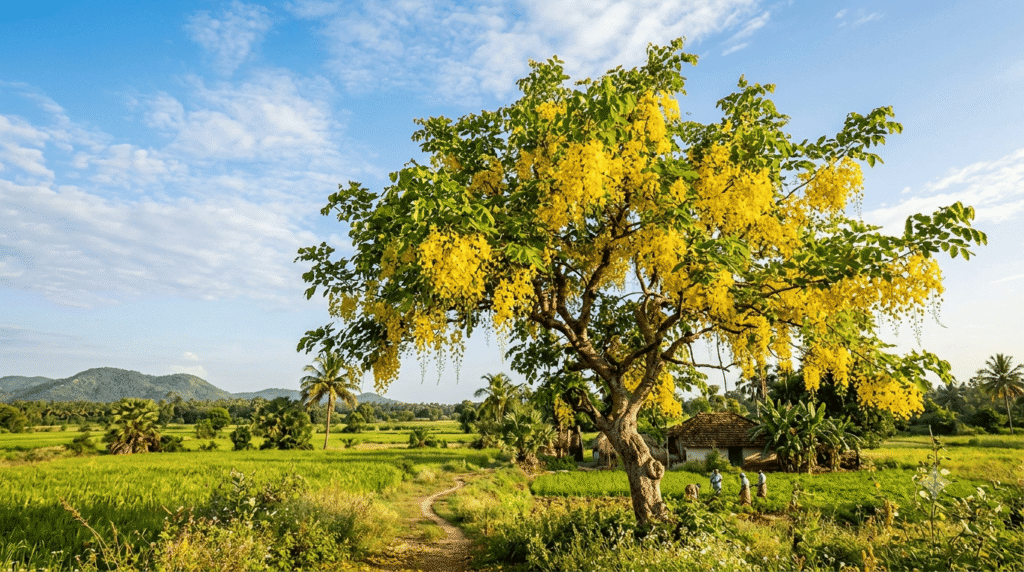
If you’ve ever walked through Delhi NCR in the peak of summer and spotted a tree dripping with cascades of bright yellow blossoms, you’ve likely seen the golden shower flower in full bloom. Known botanically as Cassia fistula and commonly called Amaltas in India, this tree is one of the most striking and symbolic flowering plants found across South Asia and Southeast Asia.
At Maali Bhaiya, our horticulture team works with this tree regularly across gardens in Noida, Gurugram, and Delhi NCR. This guide answers the most common questions homeowners ask us — what the flower means, how to identify it, and exactly how to grow and care for it.
Quick Facts: Golden Shower Flower at a Glance
- Botanical name: Cassia fistula
- Common names: Amaltas, Indian laburnum, Kanikonna, Sarakondrai
- Plant type: Deciduous flowering tree
- Height: 10–20 feet
- Bloom season: April to June (North India)
- Flower color: Bright yellow, hanging clusters up to 12 inches long
- Sunlight need: Full sun (6+ hours/day)
- Water need: Regular for first 1–2 years; drought-tolerant once mature
- Climate: Tropical and subtropical; well-suited to Delhi NCR
- National flower of: Thailand
What Is the Golden Shower Flower?
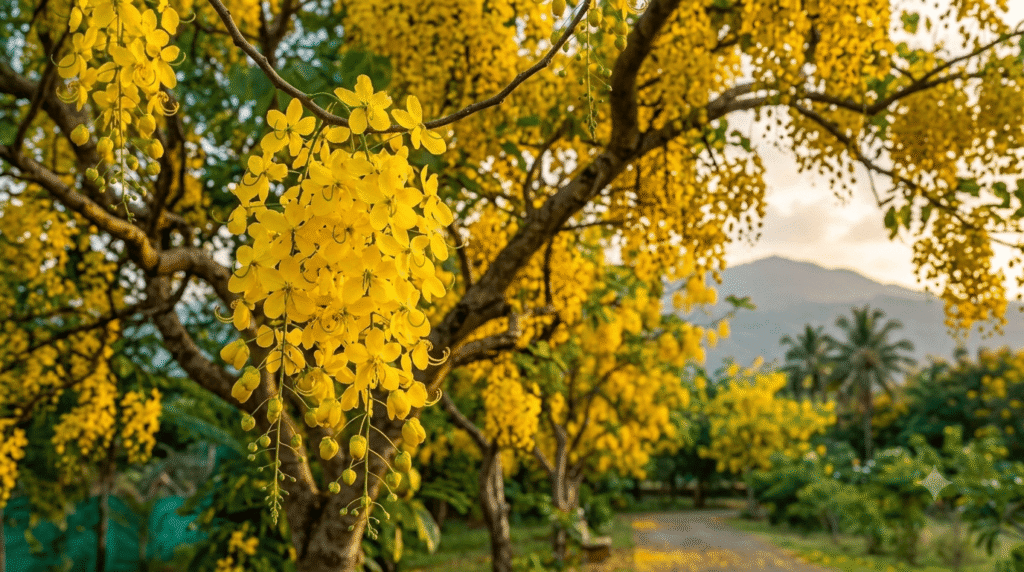
The golden shower flower is the bloom of Cassia fistula, a deciduous tree native to South Asia known for its long, cascading clusters of bright yellow flowers that appear in early summer. It belongs to the legume family (Fabaceae) and is called Amaltas in Hindi, along with several regional names:
- Amaltas (Hindi)
- Indian laburnum (English)
- Kanikonna (Malayalam)
- Konna poovu (Kerala regional name)
- Sarakondrai (Tamil)
The tree typically grows 10–20 feet tall, with flower clusters stretching up to a foot in length. It’s also the national flower of Thailand, where it carries deep royal and cultural significance.
What Does the Golden Shower Flower Symbolize?
The golden shower flower symbolizes prosperity, resilience, and renewal — it’s associated with wealth and good fortune in Indian tradition, and with royalty and unity in Thailand. A closer look at its symbolism across cultures:
- Prosperity and renewal — Its golden blooms are linked to wealth and the arrival of summer in Indian tradition.
- Royalty and honor — In Thailand, the flower represents royalty and dignity and appears in national ceremonies.
- Purity — In Ayurveda, parts of the tree are traditionally associated with cleansing practices.
- Resilience — Blooming vividly during the hottest, driest months, it symbolizes strength under pressure.
This blend of beauty and meaning is why homeowners often choose Amaltas as a centerpiece tree in a decorative garden or backyard landscape.
How Do You Identify a Golden Shower Tree?
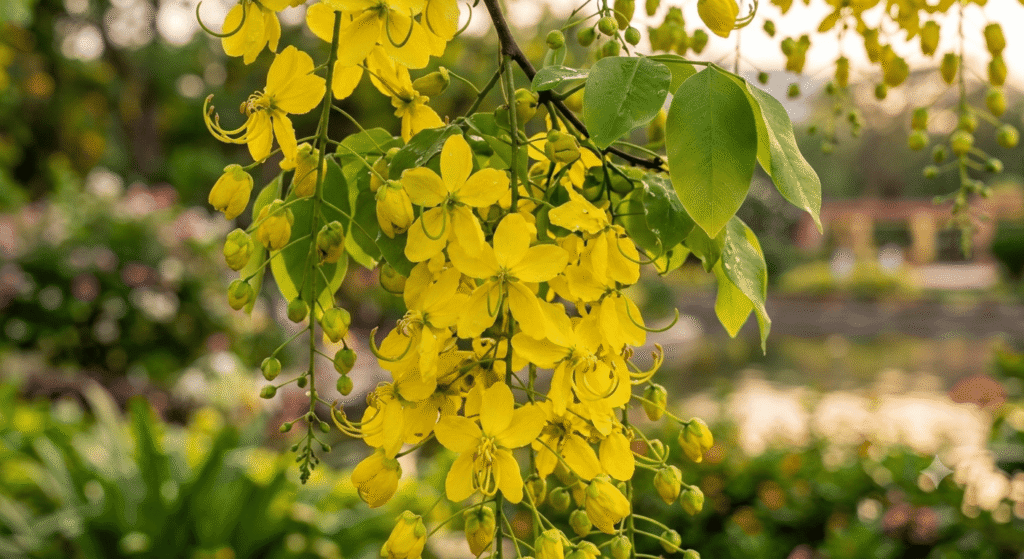
A golden shower tree is identified by its long, drooping clusters of bright yellow flowers, pinnate green leaves, and distinctive dark brown cylindrical seed pods that can grow up to 2 feet long. Key identifying features:\
| Feature | Description |
|---|---|
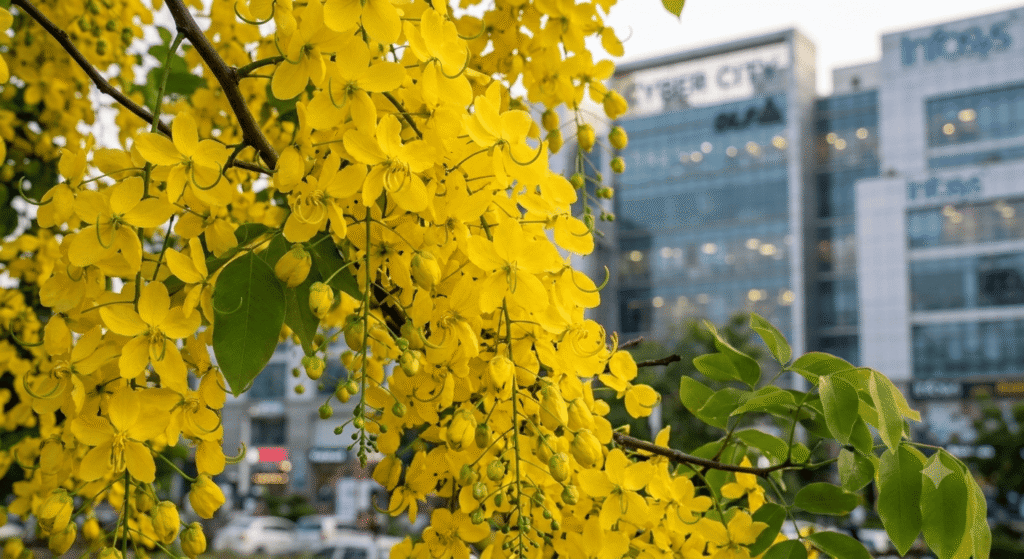
| Flowers | Bright yellow, 5-petaled, in hanging clusters up to 12 inches |
| Leaves | Pinnate, compound, bright green; shed briefly before flowering |
| Bark | Smooth greyish-brown when young; rougher with age |
| Seed pods | Long, dark brown, cylindrical, up to 2 feet — visible even out of bloom |
| Bloom season | April–June in North India |
How Do You Grow and Care for a Golden Shower Tree?
Golden shower trees need full sun, well-drained soil, regular watering while young, and minimal care once mature — making them one of the lowest-maintenance flowering trees for Delhi NCR gardens. Here’s the complete care breakdown:
How much sunlight does a golden shower tree need?
At least 6 hours of direct sunlight daily. Shaded spots produce fewer, sparser blooms.
What soil does a golden shower tree need?
Well-drained soil — sandy or loamy works well. Waterlogging is the leading cause of root rot in this species.
How often should you water a golden shower tree?
Water regularly during the first 1–2 years while the tree establishes. Once mature, it’s drought-tolerant and needs only occasional deep watering in dry spells.
Is the golden shower tree suitable for Delhi NCR’s climate?
Yes. It thrives in tropical and subtropical climates and tolerates high summer temperatures well — which is why it blooms so vividly during peak summer heat.
When should you prune a golden shower tree?
After the flowering season, to maintain shape and remove dead branches. Avoid heavy pruning right before bloom season, as it can reduce flower density.
Does the golden shower tree need fertilizer?
A balanced, organic fertilizer at the start of the growing season supports flowering. Avoid excess nitrogen, which favors leaf growth over blooms.
What pests affect golden shower trees?
They’re relatively pest-resistant, though aphids and scale insects occasionally appear. Organic pest control is safest for pets, kids, and surrounding plants — the approach our team uses on every garden we maintain.
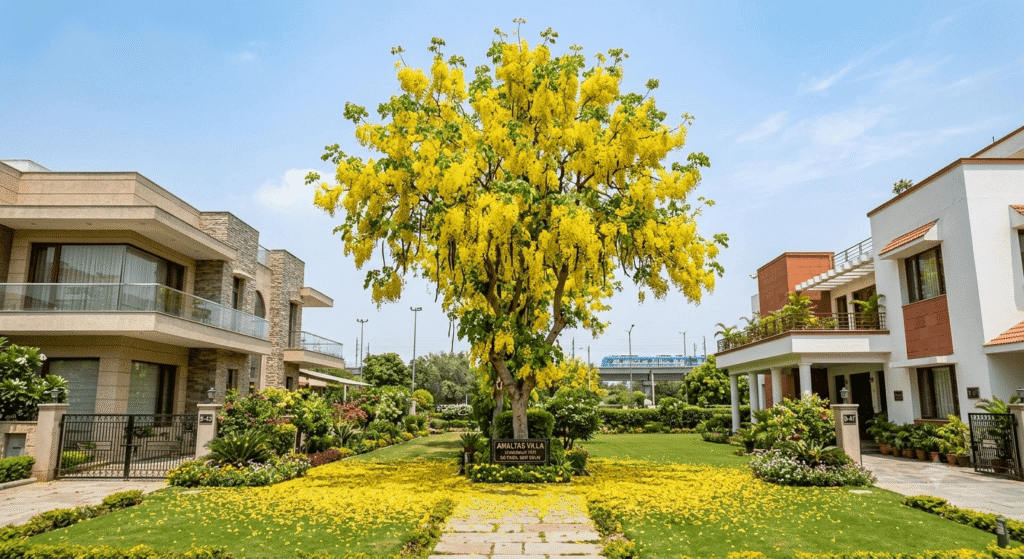
What Are the Benefits of the Golden Shower Tree?
The golden shower tree offers ornamental value, shade, pollinator support, and traditional medicinal use, while requiring low ongoing maintenance once established.
- Ornamental landscaping — A dramatic seasonal centerpiece for terrace gardens, backyards, and public spaces
- Shade tree — Moderate height and canopy suit larger gardens and commercial landscapes
- Traditional/Ayurvedic use — Historically used in Indian traditional medicine (always consult a qualified practitioner before any medicinal use)
- Pollinator-friendly — Attracts bees, supporting garden biodiversity
- Low-maintenance — Drought tolerance means high visual impact without heavy upkeep
Where Should You Plant a Golden Shower Tree?
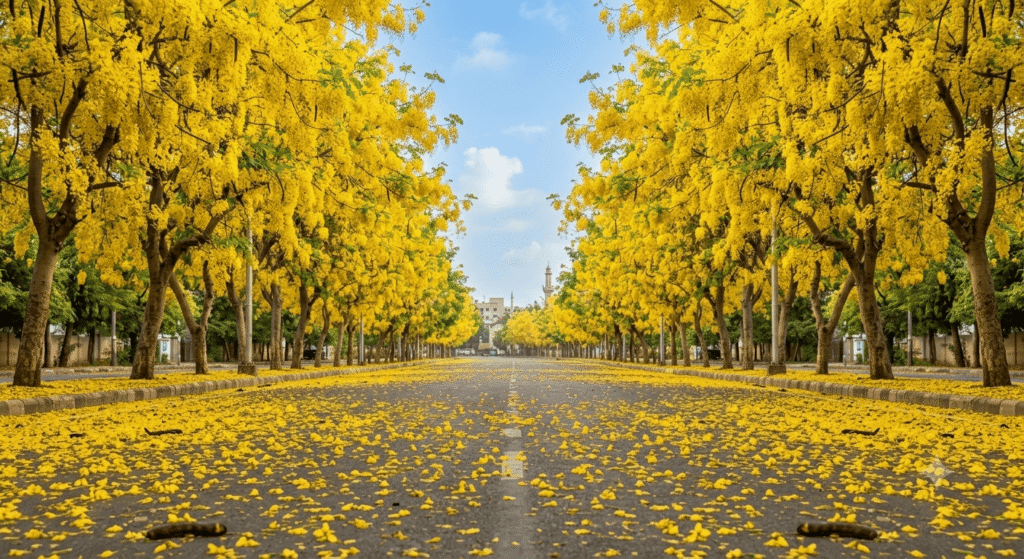
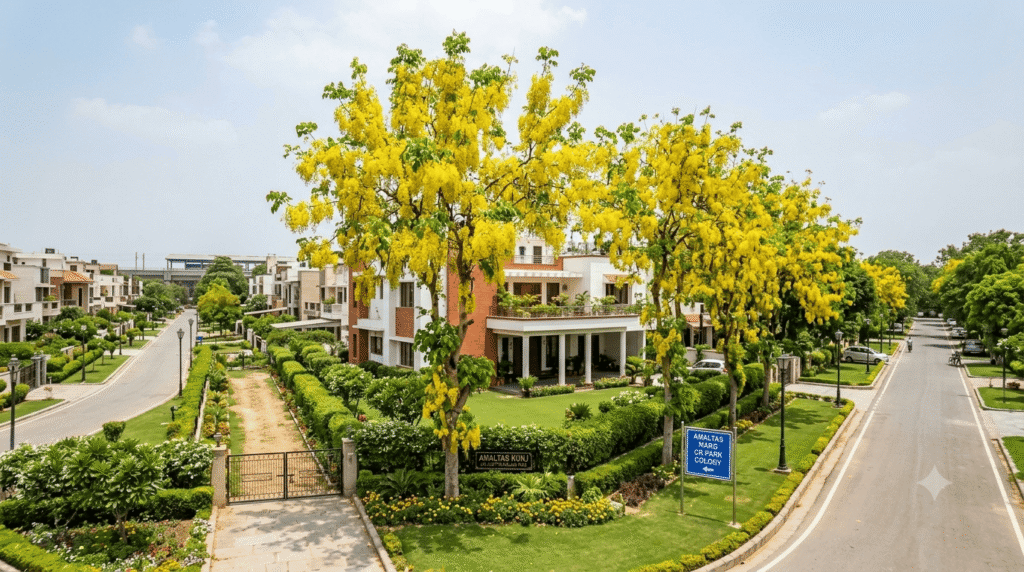
Plant a golden shower tree as a standalone feature tree with full sun exposure — ideal spots include near a sit-out area, as a backyard centerpiece, or spaced along garden pathways.
- Near a sit-out area, where the canopy adds shade and seasonal drama
- As the centerpiece of a backyard or front yard design
- Along pathways, spaced to form a canopy effect during bloom
- In commercial landscaping — offices, hotels, and public spaces — for strong seasonal impact
A professional landscape design consultation helps determine exact placement, spacing, and companion planting for your specific plot.
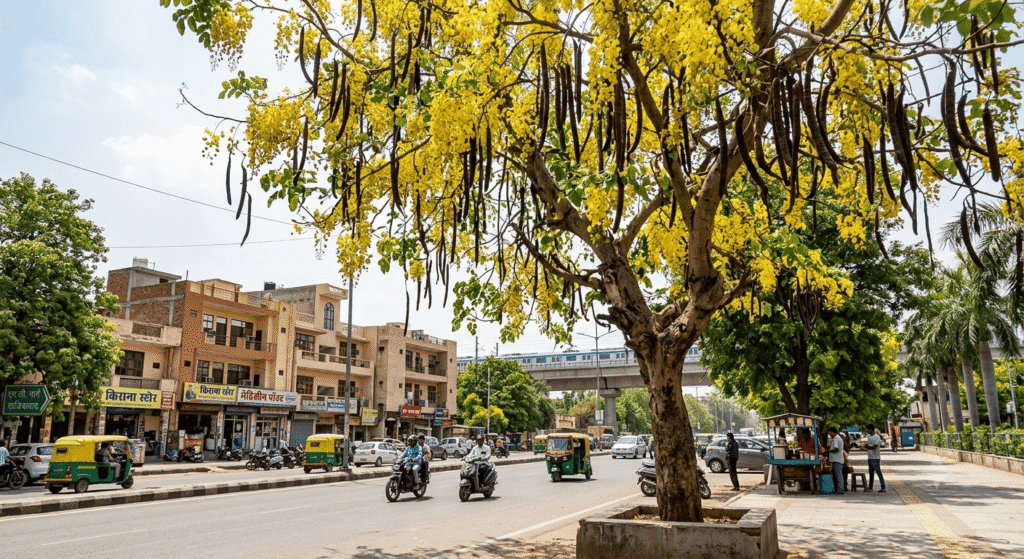
Best Companion Plants for a Golden Shower Tree
Pairing the tree with the right companions extends your garden’s appeal beyond its short bloom window:
- Evergreen shrubs at the base for greenery once leaves shed pre-bloom
- Bougainvillea on walls or pergolas for color in other seasons
- Flowering groundcover near the base to keep lower garden interest when the canopy is bare
- Ornamental grasses or lawn underneath, since the canopy allows filtered light through
Common Mistakes to Avoid
- Planting in poorly drained soil — the top cause of root rot in this species
- Overwatering mature trees — they’re naturally drought-tolerant once established
- Heavy pruning before bloom season — reduces flower density that year
- Planting in shade — the tree survives but rarely produces dense blooms
- Neglecting young sapling care — the first 1–2 years are critical for long-term growth
Frequently Asked Questions
Yes. Amaltas is the Hindi name for the golden shower tree, Cassia fistula.
Typically between April and June, during peak Indian summer.
Yes — it suits the region’s climate, tolerates heat well, and needs low maintenance once established.
About 3–5 years for a young sapling to mature into a full bloom display.
No. It’s drought-tolerant once mature, though young trees need regular watering in their first 1–2 years.
Parts of Cassia fistula, including the seed pods, are considered toxic if ingested in large quantities by pets and livestock. Keep an eye on curious pets around fallen pods, and consult a vet if ingestion is suspected.
Bring the Golden Shower Tree to Your Garden with Maali Bhaiya
The golden shower flower is more than a beautiful bloom — it’s a symbol of resilience and prosperity that transforms any garden, terrace, or commercial landscape. Our horticulture team at Maali Bhaiya provides expert, 100% chemical-free gardening and landscaping services across Noida, Gurugram, and Delhi NCR — from plant selection and placement to ongoing care.
📞 Contact Maali Bhaiya today for a free consultation and start planning a garden that blooms with beauty and meaning, season after season.