
Indoor vs Outdoor Palm Trees: Which Is Right for Your Space?
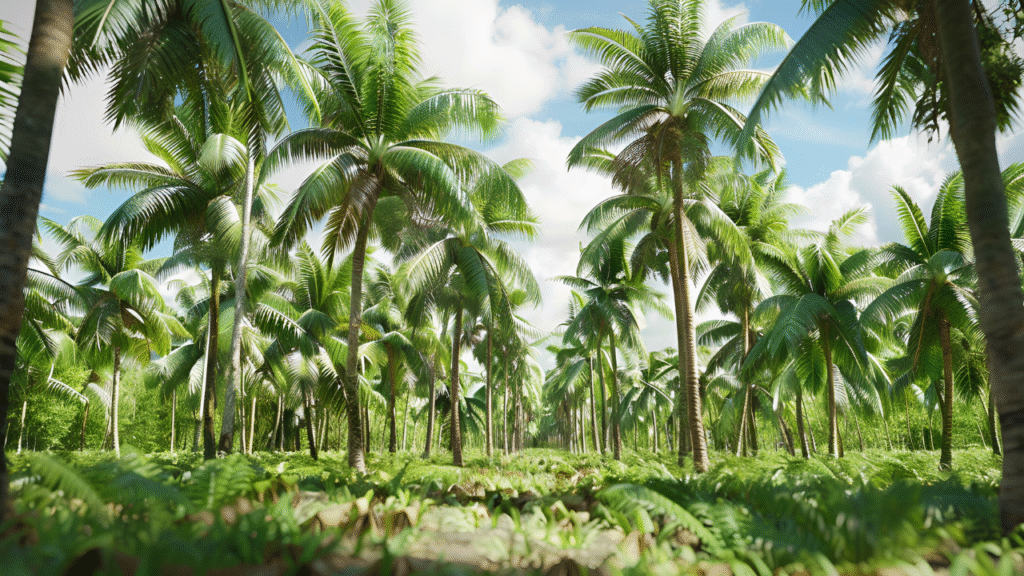
Palm trees bring a tropical feel to any space. Whether you want to add greenery to your living room or create a paradise in your backyard, choosing between Indoor vs Outdoor Palm Trees can be tricky. Both options have their own benefits and challenges. In this guide, we’ll help you understand everything you need to know to make the best choice for your home.
The choice between indoor and outdoor palm trees affects more than just where you place your plant. It influences how much time you’ll spend on care, how much money you’ll invest, and even whether your palm will survive in your environment. Many new plant owners rush into buying a palm tree without understanding these crucial differences, leading to disappointment and wasted money.
Indoor palm trees offer the convenience of year-round beauty and controlled growing conditions. You can enjoy tropical vibes even if you live in a cold climate where outdoor palms would freeze. These plants purify your air, brighten your rooms, and require no yard space. However, they need regular attention, proper lighting, and the right humidity levels to thrive.
Outdoor palm trees, on the other hand, create stunning landscape features that can transform your entire property. They grow larger, require less daily maintenance, and add significant value to your home. But they demand the right climate, plenty of space, and can be damaged by extreme weather conditions.
What Are Palm Trees?
Palm trees are tropical plants that belong to the Aceraceae family. They’re known for their long, feather-like or fan-shaped leaves and tall trunks. While many people think palm trees only grow on beaches, the truth is different. These beautiful plants can thrive in various environments, both inside your home and outside in your garden.
There are over 2,600 species of palm trees worldwide. Some are small enough to fit in a corner of your bedroom, while others can grow as tall as a building. This variety makes palms perfect for different purposes and spaces.
Understanding Indoor Palm Trees
Indoor palm trees are varieties that can survive and grow inside your home. They’ve adapted to live with less sunlight and controlled temperatures. These plants are perfect for people who want to enjoy the tropical vibe without stepping outside.
Popular Types of Indoor Palm Trees
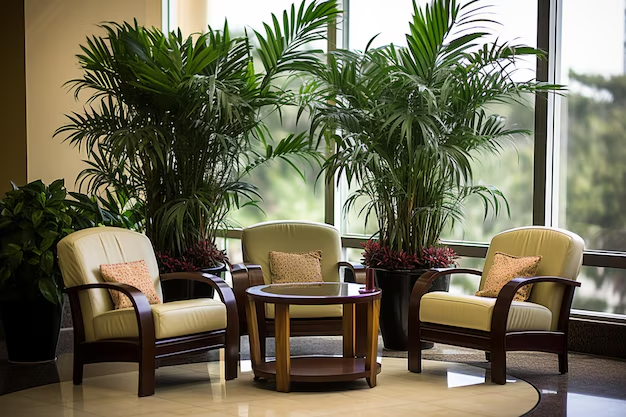
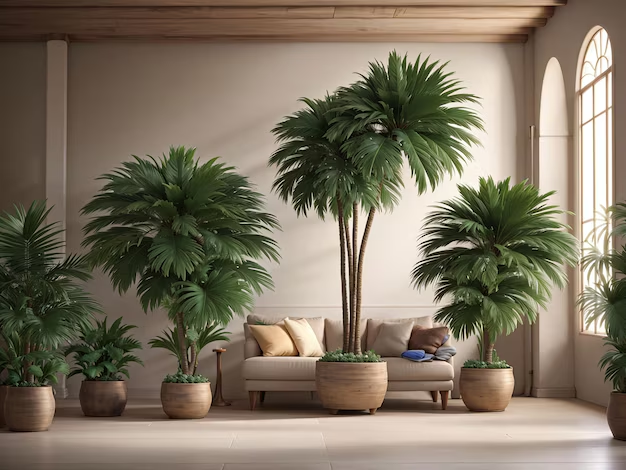
Areca Palm: This is one of the most common indoor palms. It has beautiful, feathery leaves and can grow up to 6-7 feet indoors. It’s also great at cleaning the air in your home.
Parlor Palm: This small palm is perfect for beginners. It doesn’t need much light and can handle some neglect. It grows slowly and stays relatively small, making it ideal for apartments.
Kentia Palm: Known for its elegant appearance, this palm can tolerate low light conditions. It’s a favourite in hotels and offices because it looks sophisticated and requires minimal care.
Majesty Palm: With its bright green fronds, this palm adds a cheerful touch to any room. However, it needs more humidity than other indoor varieties.
Benefits of Indoor Palm Trees
When you choose indoor palm trees, you get several advantages:
Air Purification: Indoor palms naturally clean the air by removing toxins. They absorb carbon dioxide and release fresh oxygen, making your home healthier.
Year-Round Beauty: Unlike outdoor plants that may die in winter, indoor palms stay green all year. You don’t have to worry about seasonal changes affecting their appearance.
Controlled Environment: You have complete control over the growing conditions. Temperature, humidity, and light can all be adjusted to keep your palm happy.
Space Flexibility: Indoor palms come in various sizes. You can choose a small palm for a desk or a large one to fill an empty corner.
No Weather Worries: Rain, wind, and storms won’t damage your indoor palms. They’re protected inside your home.
Challenges of Growing Indoor Palm Trees
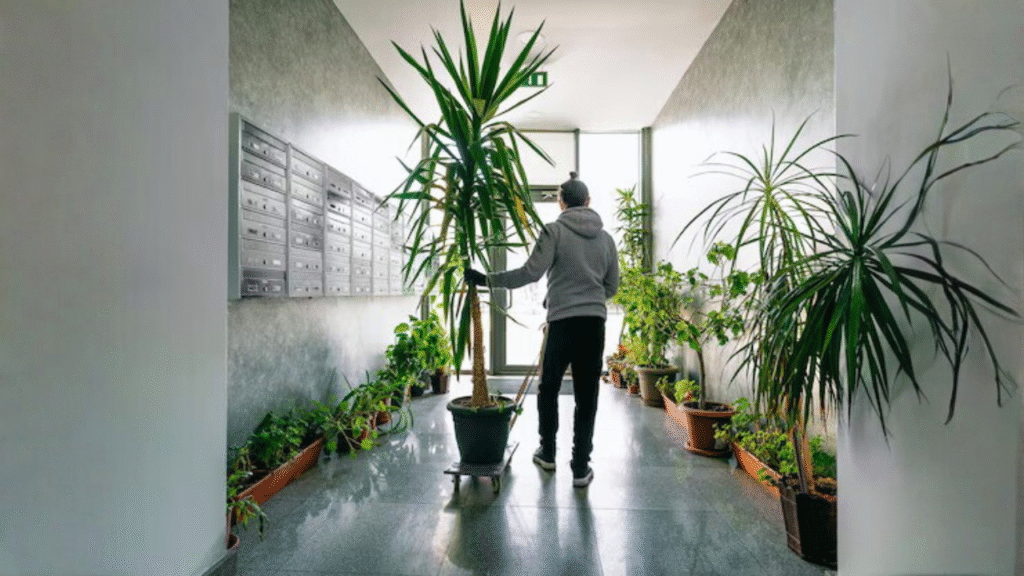
While indoor palms are wonderful, they do come with some challenges:
Limited Space: Indoor palms can only grow as big as your ceiling allows. If you want a massive palm tree, indoor growing might not work.
Artificial Lighting: Most homes don’t have perfect natural light. You might need to supplement with grow lights, which adds to your electricity bill.
Humidity Issues: Palms love humidity, but most homes are quite dry, especially in winter. You’ll need to mist your plants regularly or use a humidifier.
Pest Problems: Spider mites and scale insects love indoor palms. You’ll need to watch for these pests and treat them quickly.
Limited Growth: Even healthy indoor palms grow slower than their outdoor cousins because they don’t get as much light and space.
Understanding Outdoor Palm Trees
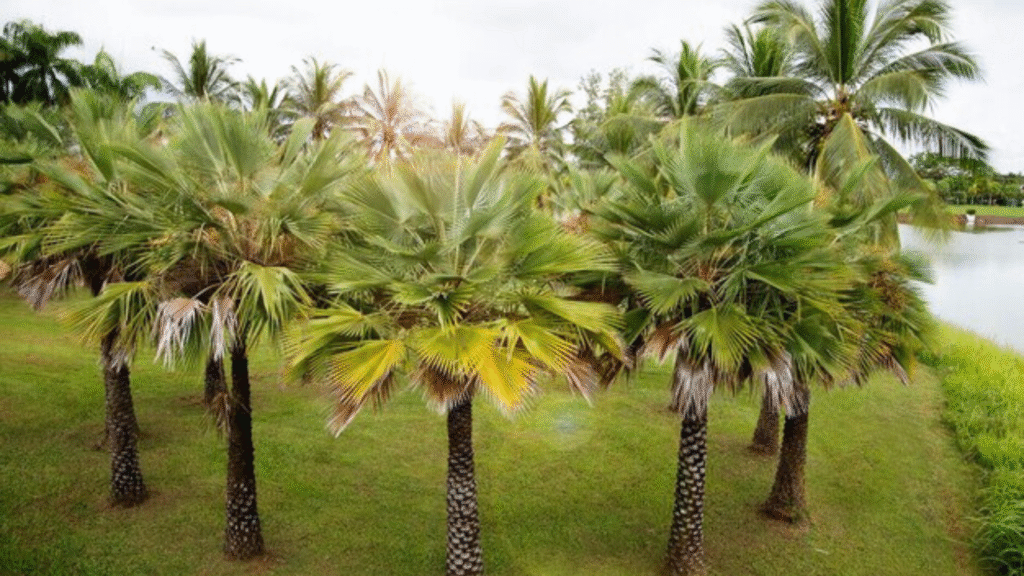
Outdoor palm trees grow in your garden, yard, or patio. They experience natural weather conditions and have access to unlimited sunlight. These palms can grow much larger than indoor varieties.
Outdoor palms create a dramatic visual impact that’s impossible to achieve with indoor plants. A single mature palm tree can become the focal point of your entire landscape. They provide natural shade during hot summer months, reduce energy costs by cooling your home, and create privacy screens that block unwanted views. Many homeowners find that outdoor palms attract beautiful birds and butterflies, adding life and movement to their gardens.
The growing process for outdoor palms follows nature’s rhythm. They respond to seasonal changes, growing vigorously during warm months and slowing down when temperatures drop. In tropical and subtropical regions, outdoor palms thrive with minimal human intervention. Once their root systems are established, which typically takes 6-12 months, they become remarkably self-sufficient plants.
Popular Types of Outdoor Palm Trees
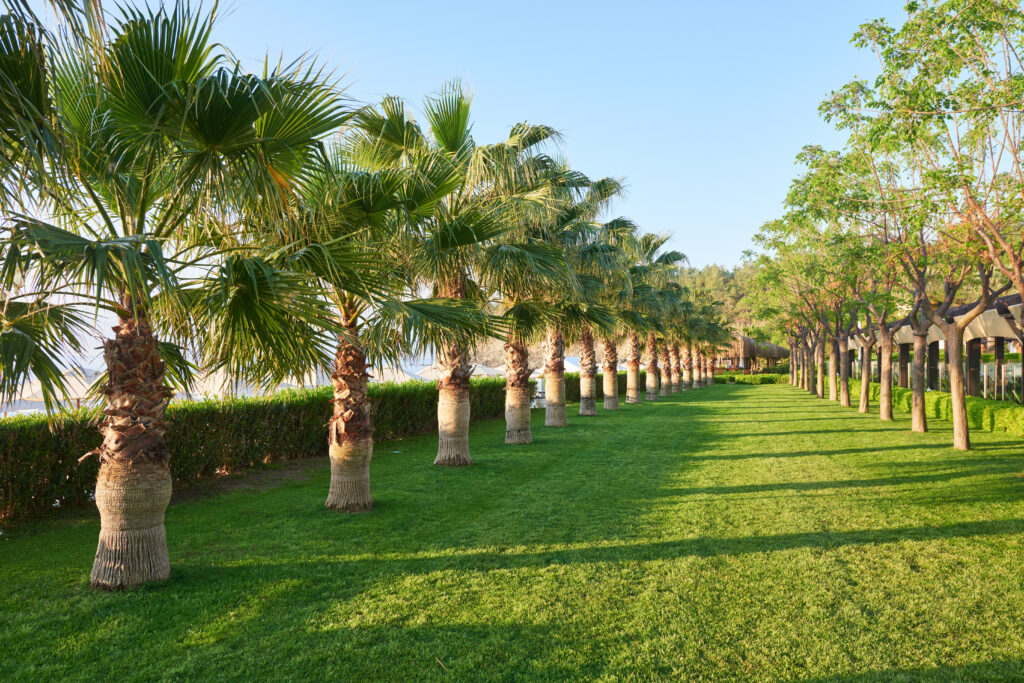
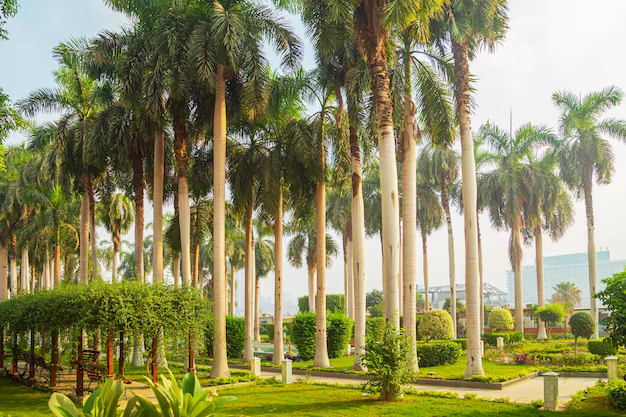
Coconut Palm: This is the classic beach palm you see in tropical postcards. It needs warm temperatures and lots of space but produces delicious coconuts.
Date Palm: Known for producing sweet dates, this palm is tough and can handle some cold. It’s popular in Mediterranean climates.
Windmill Palm: One of the hardiest palms, it can survive in cooler climates. It has beautiful fan-shaped leaves and grows well in many regions.
Royal Palm: This tall, majestic palm is perfect for large properties. It can grow over 50 feet tall and creates an impressive landscape feature.
Benefits of Outdoor Palm Trees
Outdoor palm trees offer unique advantages:
Natural Growth: Outdoor palms can reach their full potential size. They grow faster and larger than indoor palms because they have unlimited space and natural sunlight.
Low Maintenance: Once established, outdoor palms need less daily attention. Rain provides water, and natural air circulation prevents many pest problems.
Property Value: Mature palm trees can increase your home’s value. They create an attractive landscape that buyers love.
Ecosystem Support: Outdoor palms provide homes for birds and beneficial insects. They contribute to the local ecosystem in positive ways.
Natural Beauty: There’s nothing quite like seeing a real palm tree swaying in the breeze. It creates an authentic tropical atmosphere.
Challenges of Growing Outdoor Palm Trees
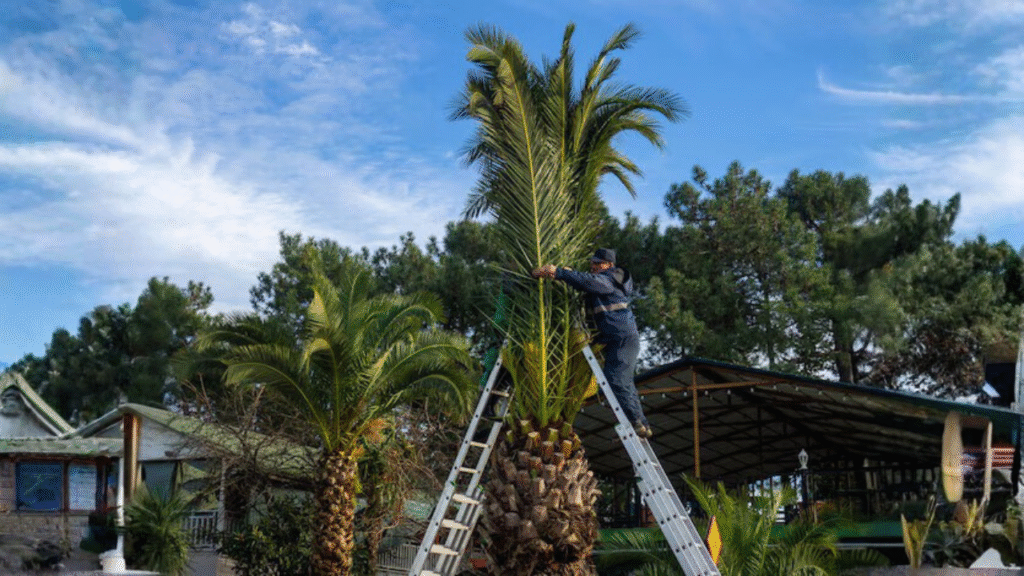
Outdoor palms also have their difficulties:
Climate Restrictions: Not all regions can support outdoor palms. If you live in a cold climate, your options are very limited.
Weather Damage: Storms, heavy winds, and extreme temperatures can damage or kill outdoor palms. You can’t control nature.
Space Requirements: Many outdoor palms need lots of space to grow properly. Small yards might not be suitable.
Seasonal Changes: In some climates, outdoor palms may look less attractive in winter. Some varieties go dormant or show cold damage.
Initial Cost: Buying and planting a large outdoor palm can be expensive. Professional installation might be necessary.
Key Differences Between Indoor vs Outdoor Palm Trees
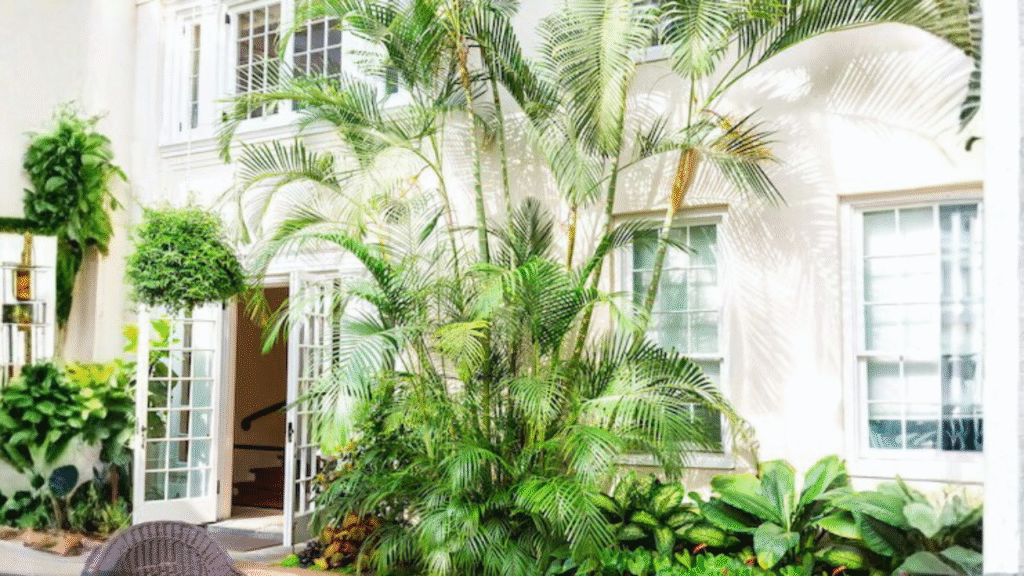
Understanding the main differences helps you make the right choice:
Size and Growth Rate
Indoor palms typically grow 2-8 feet tall and grow slowly. Outdoor palms can reach 20-80 feet and grow much faster when conditions are right. The space available determines which type works for you.
Light Requirements
Indoor palms adapt to lower light conditions. They can survive with bright indirect light or even artificial lighting. Outdoor palms love full sun and need at least 6-8 hours of direct sunlight daily.
Watering Needs
Indoor palms need careful watering. You must check the soil regularly and water when the top inch feels dry. Outdoor palms often get watered by rain, though you may need to supplement during dry periods.
Temperature Tolerance
Indoor palms enjoy stable temperatures between 60-80°F. Outdoor palms must handle temperature fluctuations, from hot summer days to cool winter nights.
Maintenance Time
Indoor palms need regular dusting, misting, and inspection for pests. Outdoor palms need occasional pruning, fertilizing, and protection from extreme weather.
How to Choose Between Indoor vs Outdoor Palm Trees
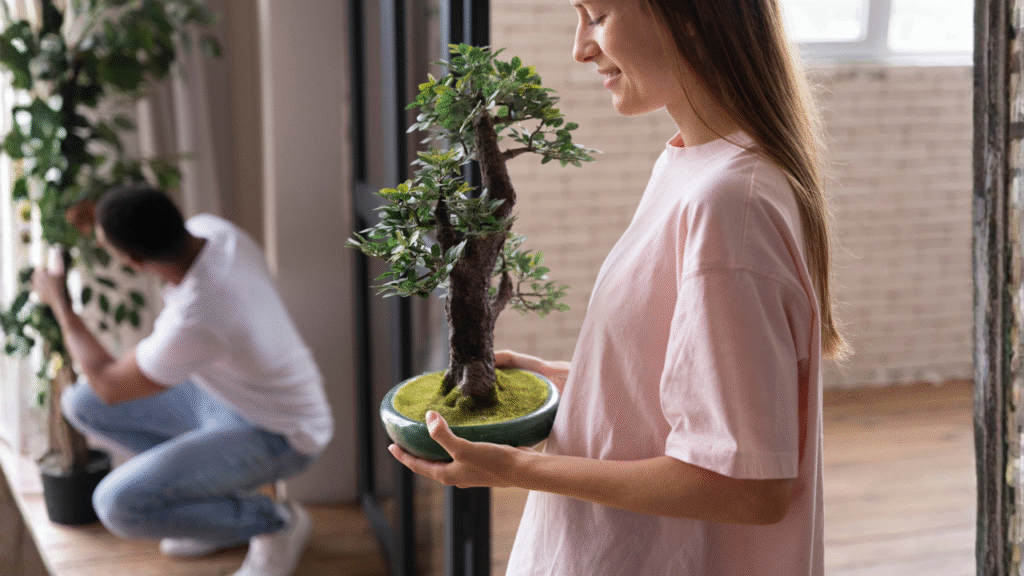
Making the right choice depends on several factors:
Consider Your Climate
Your local weather is the first thing to consider. Check your USDA hardiness zone. If you live in zones 8-11, many outdoor palms will thrive. In colder zones, indoor palms are your better option.
Research which palm species can survive in your area. Some palms handle cold better than others. The Windmill Palm, for example, can survive temperatures as low as 10°F.
Evaluate Your Space
Measure the area where you want your palm tree. Indoor spaces have height and width limitations. Make sure your chosen palm won’t outgrow the space.
For outdoor palms, consider:
- How much yard space you have
- Whether there are power lines or buildings nearby
- How the mature palm will affect sunlight to other plants
- Root spread and potential damage to foundations
Think About Your Lifestyle
Be honest about how much time you can dedicate to plant care. Indoor palms need regular attention with watering, misting, and cleaning. If you travel frequently or have a busy schedule, low-maintenance outdoor palms might suit you better.
However, if you enjoy daily plant care and find it relaxing, indoor palms could be perfect. They allow you to interact with your plant regularly.
Budget Considerations
Indoor palms are generally cheaper to start. A small indoor palm costs $15-50, while a mature outdoor palm can cost $100-1,000 or more.
Consider these costs:
- Initial purchase price
- Pot or planting costs
- Soil and fertilizer
- Grow lights (for indoor)
- Irrigation systems (for outdoor)
- Professional installation (for large outdoor palms)
Your Goals and Preferences
What do you want from your palm tree?
Choose indoor palms if you want:
- Year-round greenery inside your home
- Air purification benefits
- A plant you can move around
- Something to care for as a hobby
- Greenery in an apartment or rental
Choose outdoor palms if you want:
- Dramatic landscape features
- To increase property value
- Low-maintenance tropical atmosphere
- Trees that produce coconuts or dates
- Natural wildlife habitat
Care Tips for Indoor vs Outdoor Palm Trees
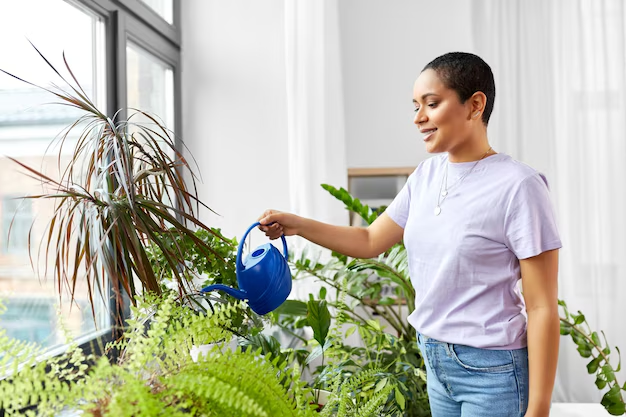
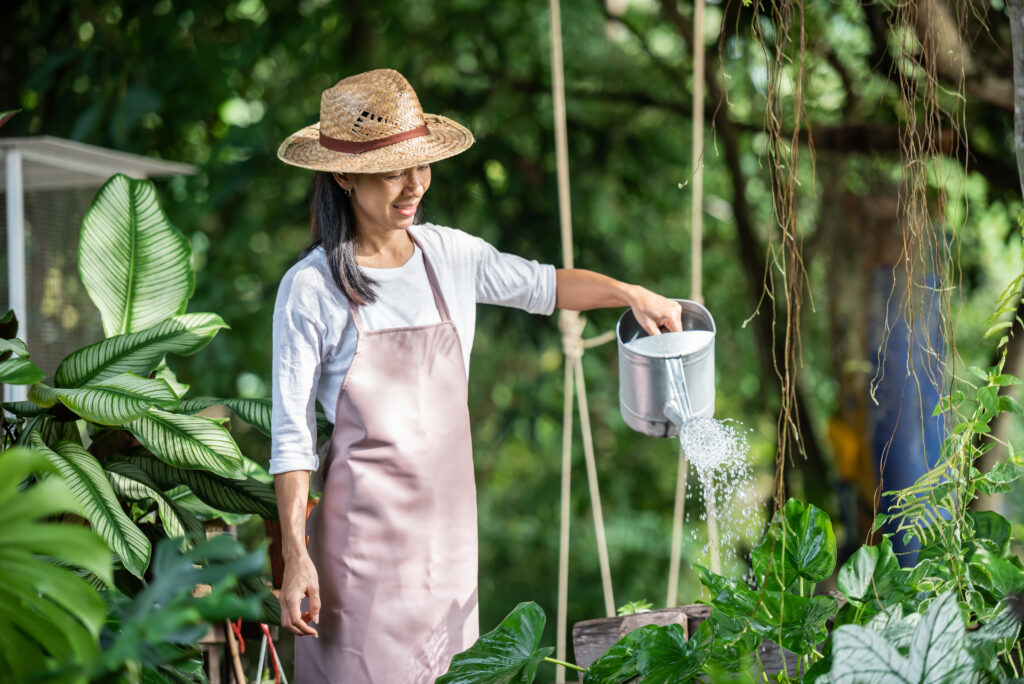
Caring for Indoor Palm Trees
Light: Place your indoor palm near a bright window, but avoid direct afternoon sun which can burn leaves. East or west-facing windows work best. If natural light is limited, use LED grow lights for 12-14 hours daily.
Watering: Check soil moisture weekly. Water when the top 1-2 inches feel dry. Use room-temperature water and ensure excess drains out. Never let the palm sit in standing water.
Humidity: Increase humidity by misting leaves 2-3 times weekly, using a pebble tray with water, or running a humidifier. Aim for 40-50% humidity.
Feeding: Feed indoor palms monthly during spring and summer with a balanced liquid fertilizer. Reduce feeding to every 2-3 months in fall and winter.
Cleaning: Wipe leaves with a damp cloth monthly to remove dust. This helps the plant breathe and photosynthesize better.
Repotting: Repot every 2-3 years or when roots come out of drainage holes. Choose a pot 2 inches larger than the current one.
Caring for Outdoor Palm Trees
Planting: Dig a hole twice as wide as the root ball but the same depth. Plant at the same level the palm was growing at the nursery. Water deeply after planting.
Watering: Water deeply 2-3 times weekly for the first three months. Once established, water weekly during dry periods. Mature palms are quite drought-tolerant.
Fertilizing: Use a palm-specific fertilizer 3-4 times yearly. Apply in early spring, late spring, mid-summer, and early fall. Follow package directions carefully.
Pruning: Remove only dead or dying fronds. Never cut green fronds as this stresses the tree. Prune in late spring or early summer.
Winter Protection: In borderline climates, wrap the trunk with burlap or use frost cloth during cold snaps. Some gardeners use Christmas lights wrapped around the trunk for extra warmth.
Mulching: Apply 2-3 inches of mulch around the base, keeping it away from the trunk. Mulch helps retain moisture and regulates soil temperature.
Common Problems and Solutions
For Indoor Palms
Brown Leaf Tips: Usually caused by low humidity or fluoride in tap water. Increase humidity and use filtered or rainwater.
Yellow Leaves: Often a sign of overwatering or poor drainage. Let soil dry between waterings and ensure proper drainage.
Slow Growth: Likely due to insufficient light or nutrients. Move to a brighter location or increase fertilizer frequency.
Spider Mites: These tiny pests create webbing on leaves. Spray with water or use insecticidal soap weekly until gone.
For Outdoor Palms
Frizzle Top: Caused by manganese deficiency. Use palm fertilizer containing micronutrients.
Cold Damage: Brown or black leaves after a cold snap. Prune damaged fronds and protect better next time.
Wind Damage: Tattered or broken fronds from storms. Trim damaged areas and consider staking young palms.
Nutrient Deficiency: Yellowing or spotted leaves often indicate missing nutrients. Apply balanced palm fertilizer and check soil pH.
Making Your Final Decision on Indoor vs Outdoor Palm Trees
After reading this guide, you should have a clear picture of what works for your situation. Let’s summarize the key points:
Choose indoor palms if you live in a cold climate, have limited outdoor space, want year-round greenery inside, enjoy hands-on plant care, or need air purification benefits.
Choose outdoor palms if you live in zones 8-11, have ample yard space, want dramatic landscape features, prefer low-maintenance plants, or want to increase property value.
Remember, you don’t have to choose just one option. Many palm enthusiasts enjoy both indoor and outdoor palms. You could have small indoor palms for winter enjoyment and outdoor palms for summer beauty.
The decision between Indoor vs Outdoor Palm Trees ultimately depends on your personal circumstances, climate, available space, and commitment level. Both options can bring tropical beauty to your life.
Conclusion For Indoor VS Outdoor Palm Trees
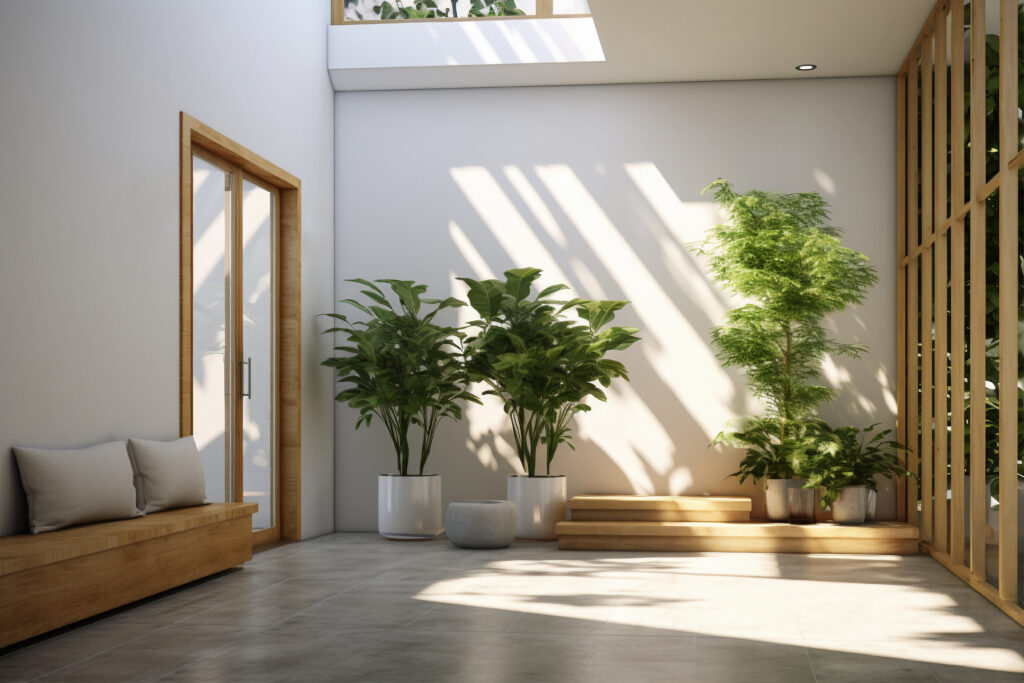
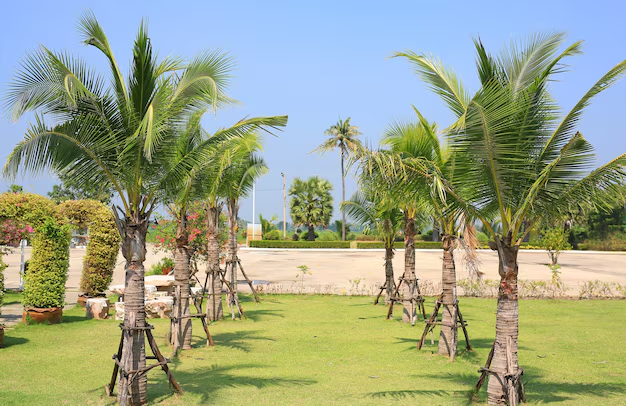
Whether you choose indoor or outdoor palm trees, you’re adding beautiful tropical plants to your life. Indoor palms bring nature inside and purify your air while requiring regular care and attention. Outdoor palms create stunning landscapes and need less frequent maintenance but require the right climate.
Consider your climate zone, available space, time commitment, and budget when making your choice. Think about what you want to achieve with your palm tree. Are you looking for indoor decoration, outdoor landscaping, or both?
Both indoor and outdoor palms have their place in creating your personal paradise. With proper care and the right variety for your situation, your palm tree will thrive and bring you joy for years to come.
Start small if you’re unsure. Try one indoor palm or plant one outdoor palm. As you gain experience and confidence, you can expand your collection. The tropical beauty of palm trees is worth the effort, whether they’re growing in your living room or your backyard.
Now that you understand the differences between Indoor vs Outdoor Palm Trees, you’re ready to make an informed decision. Choose the option that fits your lifestyle, and enjoy the tropical atmosphere these wonderful plants bring to your space.
Frequently Asked Questions About Indoor VS Outdoor Palm Trees
Can I move my indoor palm outside in summer?
Yes, but do it gradually. Place it in shade for a week, then partial sun, then full sun. This prevents leaf burn. Bring it back inside before temperatures drop below 50°F.
How long do palm trees live?
Indoor palms typically live 5-15 years with good care. Outdoor palms can live 50-100 years or more, depending on the species.
Do palm trees need a lot of water?
It depends on the variety and location. Indoor palms need moderate watering, while outdoor palms become quite drought-tolerant once established.
Can palm trees grow in pots outside?
Yes, many palms grow well in large containers outdoors. This gives you flexibility to move them for winter protection or redesign your patio.
Are palm trees hard to grow?
Not really. Once you understand their basic needs, both indoor and outdoor palms are relatively easy. Indoor palms need more regular attention, while outdoor palms are more hands-off.